Under The Yoke
Ruling a dynasty from the bottom up sounds romantic until you realize your serf can't bake bread without lord's permission. Worth it for players who want history modeled at the peasant level, not the throne room.
GamerScout Verdict
Best for historically-minded sim players who enjoy self-directed learning and don't mind wrestling with an under-documented UI.
Compare Prices(5 stores)
Every store in this table quotes us in euros, so the EUR figure is the price the seller actually set, not our arithmetic — which is why EUR is also the currency we rank in. We only list an offer here when the store gives us its price in euros, so nothing in this table is a number we invented.
Pick USD, PLN, GBP, CAD or AUD in the header and we convert from EUR at the European Central Bank reference rate — converted amounts are prefixed with ~. Your bank or the store may apply a different rate at checkout. We never hide offers based on where you are: everyone sees this whole table.
We may earn a commission when you buy games through links on this page — at no extra cost to you. It never affects our rankings or verdicts.
Price History
Screenshots & Media
About Under The Yoke
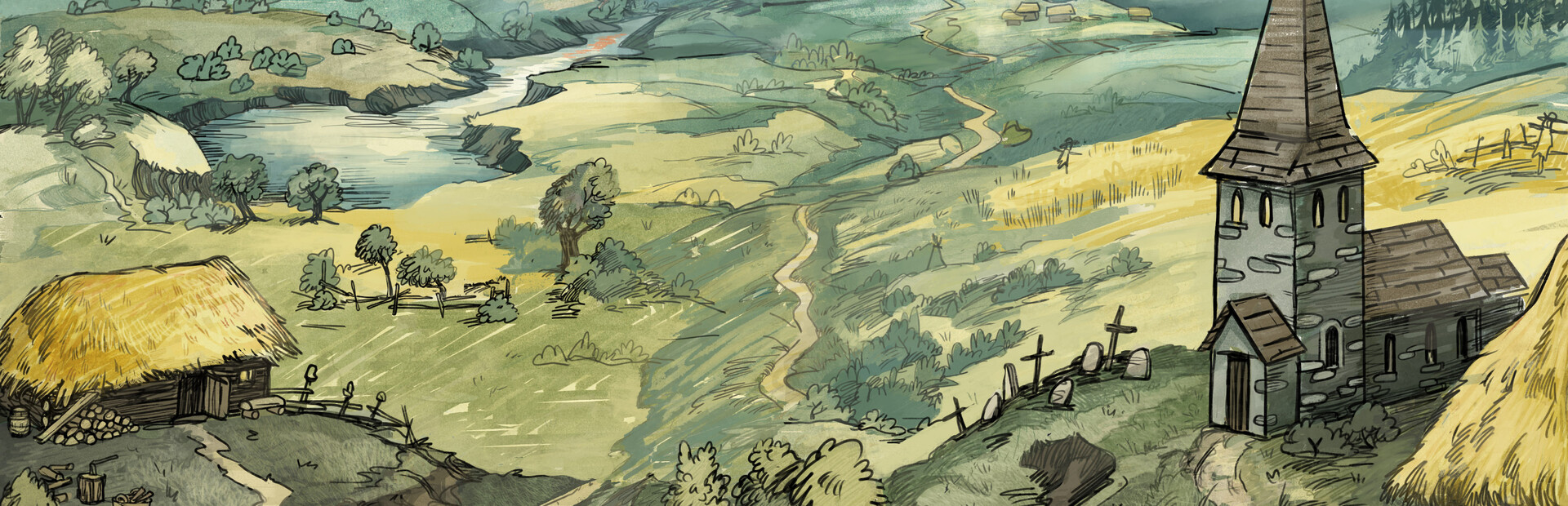
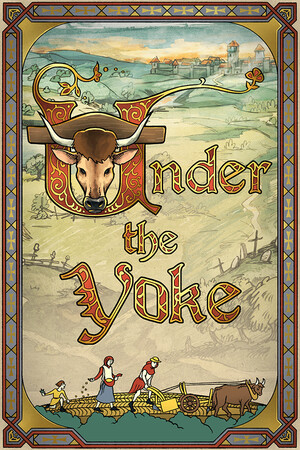
I spend a lot of time with games where you command armies or manage nations, so sitting down with Under The Yoke felt like a deliberate gear-shift. No armies here. No treasury. Just one acre of crumbling farmland, a cottage that barely survives winter, and a character whose entire social mobility hinges on whether his lord finds him sufficiently obedient. That inversion of the usual power fantasy is the strongest thing this game has going for it. The mechanical foundation is deeper than the 2D art style suggests. Each family member runs on a Mind, Body and Spirit stat spread that shapes personality, unlocks dialogue options, and governs relationships. On top of that, every character carries individual needs across food, rest, faith, and social life. You manage those needs while also routing your people into professions: farming, herbalism, cooking, husbandry, carpentry, tailoring. Skill progression is gradual and specialization matters. A dedicated carpenter will eventually self-furnish the cottage, raising the quality of crafted goods and, in turn, your economic position. It is a proper nested resource loop, not a simple checklist, and that loop rewards the kind of player who likes tracing cause-and-effect chains through four or five intermediate steps. The social layer adds a political dimension you do not expect from something marketed as a farming sim. Rival families compete for village election seats and jury positions, so reputation management is not soft flavor. You are negotiating feudal dues with your lord, building alliances, and watching out for households that want the same civic offices your family needs to climb the freedom ladder. The path from serfdom to freeman status, which unlocks rights like independent bread-baking and forest hunting, functions as the mid-game progression spine. It is a smart design choice: rights as rewards rather than loot. Here is where I have to be honest about the ceiling. The tutorial is the game's most obvious weakness. Pop-up text covers the basics, but plenty of mechanics go unexplained, including how to cook, where house upgrade menus live, and what specific materials icons actually represent. The developer has acknowledged this openly and has shown genuine responsiveness to patches, but at the time of writing you should expect a meaningful self-directed learning curve. Players who bounce off unexplained systems will bounce hard. The UI has also drawn criticism for being unintuitive in places, with some menus clipping at screen edges depending on where your character is located. These are fixable problems, and Priory Games has a track record of addressing community feedback promptly, but they are real friction points right now. The historical grounding covers Norman England from 1085 to 1335, and a dynamic event system drops hundreds of period-specific events into each run, from church obligations to social intrigues, so successive playthroughs do not feel identical. The art style draws on medieval painting aesthetics rather than pixel work, giving it a distinctive look that fits the subject matter even if it means there are no animations to speak of. For players who enjoy reading their way through a sim rather than watching it, that is a reasonable trade. My honest take: this sits in the same neighbourhood as Crusader Kings but zoomed down to the serf, not the king. The depth of decision-making is genuine for a small indie release. The rough tutorial edges mean I would not hand it to a newcomer without warning, but anyone comfortable with learning a system through deliberate experimentation will find a surprisingly well-modeled historical sandbox here.

Strategy & simulation
Tags
System Requirements
Minimum
Windows 7
Keep exploring
Community Discussion
Be the first to comment on Under The Yoke.
Reviews & Ratings
No ratings available
Game Info
- Developer
- Priory Games
- Publisher
- Priory Games
- Release Date
- Mar 28, 2024