UFO: Afterlight
If your spreadsheet still has a tab labeled 'X-COM clones ranked', UFO: Afterlight belongs near the top, a Mars colony manager with real teeth, dated edges and all.
GamerScout Verdict
Best for X-COM veterans who want deeper logistics and named-roster stakes, and can forgive dated presentation.
Compare Prices(0 stores)
Loading prices...
We may earn a commission when you buy games through links on this page — at no extra cost to you. It never affects our rankings or verdicts.
Price History
Screenshots & Media
About UFO: Afterlight
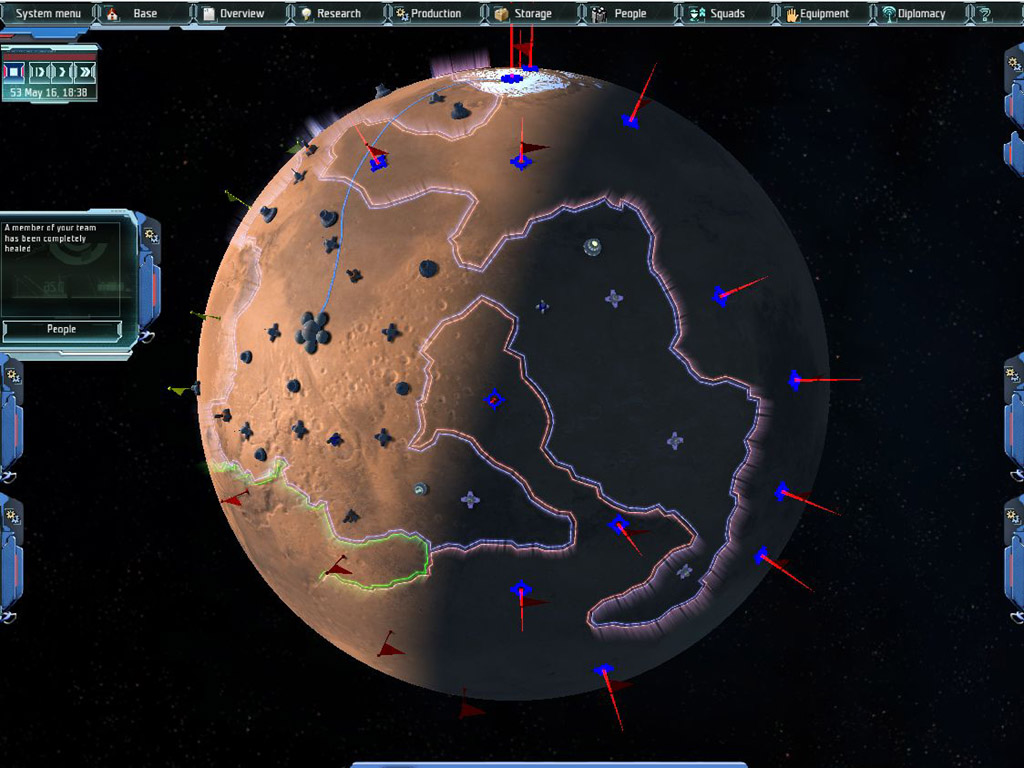
I've spent enough time with real-time-with-pause strategy games to know when one is quietly doing something clever under an ugly hood, and UFO: Afterlight qualifies. Altar Games took the X-COM formula, dropped it onto Mars with a single fixed base, stripped out the luxury of buying fresh recruits at will, and forced you to actually care about a small, named roster of Soldiers, Technicians, and Scientists who can hold dual classes. That constraint alone shifts the whole feel from anonymous cannon-fodder management to something that scratches the same itch as an ironman Jagged Alliance run. The two-layer structure is where the depth lives. On the strategic side you are claiming Martian territory with rovers, dropping resource mines, juggling fuel logistics so your UFO transport can even reach a distant mission, and keeping terraforming stations online because late-game research gates sit behind specific terraforming thresholds (40, 48, 63, 70 percent, if you want the short version). Expand too slowly and your tech tree stagnates; push too hard and your supply lines get cut by enemies who will actively counter-attack your claimed regions. That tension between tempo and overextension is genuinely well-designed, and it only tightens as you hit the mid-game. On the tactical side, squads of up to seven deploy in real time with pause. Characters earn training points on level-up and spend them on specialisations ranging from heavy weapon mastery and sniping through to Reticulan technology research, and those choices are permanent, so a little forward planning before you lock in a Gunman or a Medic build goes a long way. The community is generally warm toward Afterlight, though with caveats that veteran players repeat like a checklist: patch to the latest version, and look seriously at the Total Rebalance mod, which irons out the roughest balance edges. The Steam version that launched in 2014 is already in a better state than the original 2007 release, smoother and less punishing at the outset, but the path-finding for units still requires babysitting when a squad tries to move in formation. The voice acting is memorably bad in a way that either charms or grates depending on your tolerance, and the cartoony art direction reads as a mismatch against the survival premise. Mission variety also thins out over long playthroughs; the maps per region are fixed, so you will recognise them. For strategy veterans the honest comparison is less "modern XCOM" and more "older, stranger cousin of Xenonauts with a logistics model worth studying." The diplomacy system with Martian factions, the terraforming progression that physically changes mission environments from barren red rock to something greener, and the drone units that level up alongside human soldiers all add layers that repay attention. Newcomers to the genre will struggle without reading the in-game library screen carefully, since there is no UFOpedia and the tutorial tips cover only the basics. That said, the game is genuinely approachable once you accept that the first hour is the hardest and that the early Reticulan weapons you scavenge are intentionally your primary firepower until production comes online. At a Metacritic score of 71, Afterlight sits in the respectable-but-not-celebrated tier, which feels about right. The bones are good. The execution is uneven. The late game, once terraforming unlocks its full strategic logic and the Beastmen start pressing hard, is legitimately compelling. If you want a meaty, old-school alien strategy sim that rewards careful personnel management and punishes passive play, this is a solid pick. If you need sharp visuals and polished UX before you commit, look elsewhere.

Strategy & simulation
Tags
System Requirements
Minimum
- OS
- Windows 10
- Memory
- 512 MB RAM
- Storage
- 2550 MB available space
- Graphics
- nVidia® GeForce™ 5700 or ATI Radeon® 9500 *
- Processor
- Intel Pentium® III or AMD® Athlon - 1GHz
Recommended
- OS
- Windows 10
- Memory
- 768 MB RAM
- Storage
- 2550 MB available space
- Graphics
- nVidia® GeForce™ 6600 or ATI Radeon® 9700 Pro or better*
- Processor
- Intel Pentium® III or AMD® Athlon - 2GHz
Keep exploring
Community Discussion
Be the first to comment on UFO: Afterlight.
Reviews & Ratings
Game Info
- Developer
- Altar Games
- Publisher
- Bohemia Interactive
- Release Date
- Jan 6, 2014