

Tycoon City: New York
A nostalgia-laced Manhattan business sim that flatters newcomers but leaves anyone chasing real strategic depth staring at an empty spreadsheet.
GamerScout Verdict
A visually charming but toothless business sim best suited to casual players who want a relaxing Manhattan sandbox, not a genuine economic challenge.
Compare Prices(3 stores)
Every store in this table quotes us in euros, so the EUR figure is the price the seller actually set, not our arithmetic — which is why EUR is also the currency we rank in. We only list an offer here when the store gives us its price in euros, so nothing in this table is a number we invented.
Pick USD, PLN, GBP, CAD or AUD in the header and we convert from EUR at the European Central Bank reference rate — converted amounts are prefixed with ~. Your bank or the store may apply a different rate at checkout. We never hide offers based on where you are: everyone sees this whole table.
We may earn a commission when you buy games through links on this page — at no extra cost to you. It never affects our rankings or verdicts.
Price History
Screenshots & Media
About Tycoon City: New York
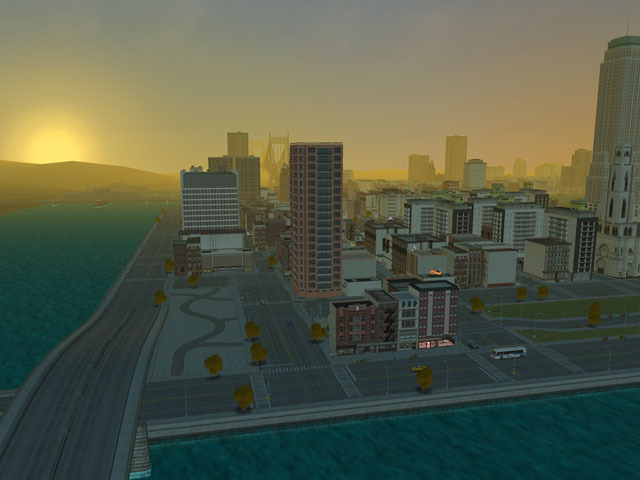
I have a soft spot for city-building games that strip out the civil-engineering textbook and focus purely on the money side of the map, and Tycoon City: New York scratches that itch in the most surface-level way possible. You are a property mogul working district by district across Manhattan, starting in Greenwich Village and unlocking thirteen neighborhoods as you complete business "Opportunities" - small mission chains that ask you to, say, raise four fashion stores in Chelsea to a 75% rating, or snap up ten businesses across the city to prove yourself in the Financial District. The two modes available are "Build New York," the structured campaign, and a full Sandbox where you control competitor count, their build speed, and your starting bankroll. On paper, that Sandbox configuration sounds like the kind of knob-turning a sim fan lives for. In practice, the variables barely matter because you cannot meaningfully lose. The core loop is build, upgrade, repeat. You place a building on a tile almost instantly, then spend upgrade credits on storefront add-ons - extra seating, canopies, satellite dishes, rotating spotlights, flower beds - to boost three stats: appeal (customer draw radius), satisfaction, and beauty. Cluster the right business types together and you get zoning bonuses; put a sleazy bar next to luxury apartments and foot traffic suffers. There is a demographic layer too, where students gravitate toward art supply stores and coffee shops while wealthier citizens want high-end entertainment, which genuinely gives the first few hours a pleasant puzzley feel. Landmark bonds, earned by hitting population and financial milestones, let you place icons like the Empire State Building and the Chrysler Building, and those moments land with satisfying visual weight. The competitive AI runs over fifteen rival tycoons buying and upgrading properties alongside you, which creates some mild urgency to snap up desirable plots before opponents do. That is, honestly, the ceiling of the strategic tension here. The fundamental problem is that the economic model has no real teeth. You cannot go into debt. Money accrues faster than you can spend it within the first couple of hours, and reviewers across the board noted that simply placing any building and leaving the game running is a legitimate path to owning the entire city. The upgrade system sounds meaningful - appeal, satisfaction, beauty each pulling distinct levers - but in practice the optimal move is just stacking as many low-cost decorations as the building slots allow, with no penalty for sloppy execution. The campaign Opportunities provide structure, but some progress gates are invisible: you can complete every visible quest in a district and still not know what triggers the unlock to the next neighborhood, which is a genuine usability failure. The Steam version compounds frustration with a well-documented crash bug that requires manually deleting a file before the game is stable; that is a cold shower for anyone who just installed it without reading the community threads first. Where the game genuinely earns goodwill is its presentation. The fully rotatable 3D engine lets you zoom from a bird's-eye panorama all the way down to street level, where pedestrians go about their routines and day-night lighting shifts from harsh noon sunlight to the neon-and-taillight glow that makes Manhattan look like a postcard. Real-world brand tie-ins - Lacoste, NBA stores, Virgin Megastore - add an authenticity that a generic building list would not. For a player who just wants a low-friction creative toy to build a personal vision of New York and watch it fill with foot traffic, this is genuinely pleasant for ten to fifteen hours. For anyone expecting the demand-and-supply pressure of a proper business sim, or the cascading consequence systems of a grand strategy title, the shallow economic model will feel like a broken promise within the same session.

Strategy & simulation
Tags
System Requirements
Minimum
- Sound
- DirectX® version 9.0c-compatible sound card
- Memory
- 256 MB RAM
- Graphics
- 64 MB Hardware T&L-compatible video card
- Processor
- Intel Pentium 4 1.8 GHz or AMD Athlon XP™ +1900 or higher
- Hard Drive
- 600 MB free
- Supported OS
- Windows 2000/XP
- DirectX Version
- DirectX® version 9.0c (included) or higher
Keep exploring
Community Discussion
Be the first to comment on Tycoon City: New York.
Reviews & Ratings
Game Info
- Developer
- Deep Red Games Ltd.
- Publisher
- Atari
- Release Date
- Mar 12, 2008