Train Life: A Railway Simulator
Half Euro Truck Simulator, half railway management sim - but a community forum full of 'why did they let this game die' threads tells you most of what you need to know before buying.
GamerScout Verdict
A decent casual entry point into railway sims, but shallow mechanics and a stalled post-launch roadmap make it a hard sell at full price.
Compare Prices(9 stores)
Every store in this table quotes us in euros, so the EUR figure is the price the seller actually set, not our arithmetic — which is why EUR is also the currency we rank in. We only list an offer here when the store gives us its price in euros, so nothing in this table is a number we invented.
Pick USD, PLN, GBP, CAD or AUD in the header and we convert from EUR at the European Central Bank reference rate — converted amounts are prefixed with ~. Your bank or the store may apply a different rate at checkout. We never hide offers based on where you are: everyone sees this whole table.
We may earn a commission when you buy games through links on this page — at no extra cost to you. It never affects our rankings or verdicts.
Price History
Screenshots & Media
About Train Life: A Railway Simulator
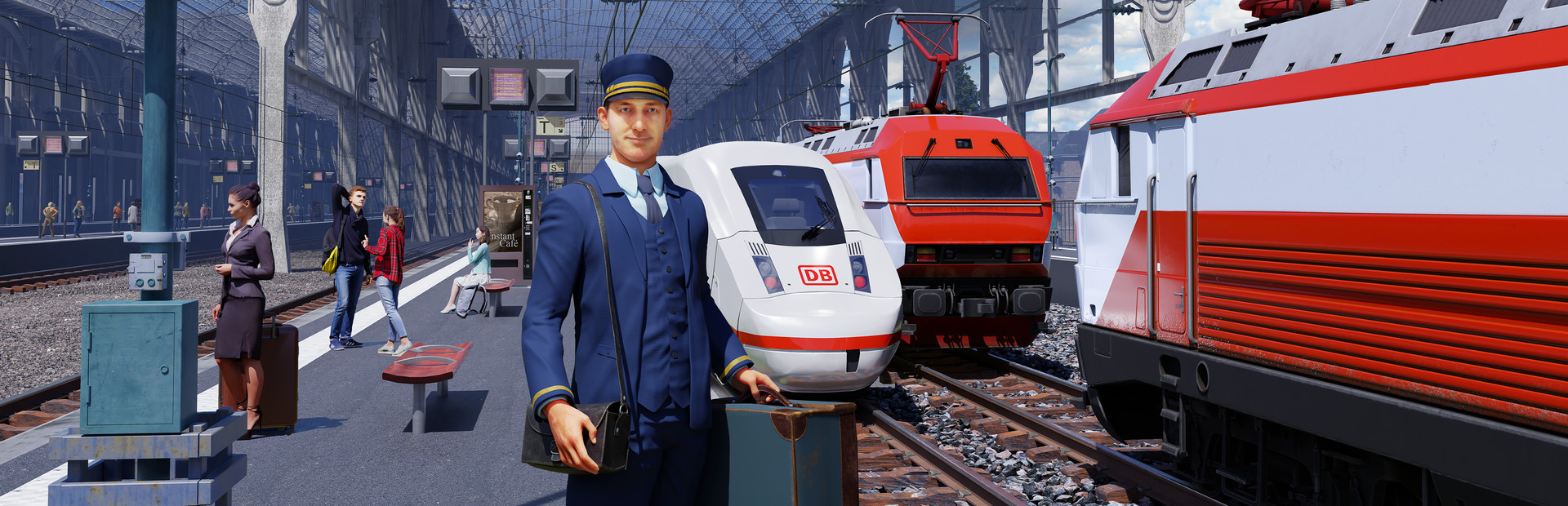
I came to Train Life: A Railway Simulator with a checklist in my head: depth of economic decisions, quality of progression systems, how punishing the simulation layer actually is. The pitch sounded genuinely interesting - run European rail routes while also managing the company behind them, hiring drivers, accepting contracts, and reinvesting profits into a small fleet. That dual-role loop works better in practice than it sounds on paper, and for a certain type of player it clicks into a satisfying rhythm. The problem is everything surrounding it. On the driving side, the game lands closer to a casual arcade experience than a proper simulation. Throttle, brakes, horn, and track switching are your main inputs - there is no multi-step startup procedure, no complex brake notching, nothing that would scare off someone who bounced off Train Sim World. Each locomotive does carry distinct power and braking characteristics that you need to account for, especially when managing stopping distance into stations, and dynamic weather plus a day/night cycle add some texture to each run. Random events - stalled vehicles at crossings, animals on the track, incoming trains requiring a last-second switch - keep you from zoning out entirely. But hard-core sim fans will feel underserved. The signal system in particular drew consistent complaints: the game occasionally fires penalty warnings when no collision was ever geometrically possible, and speed limit signage does not always align with what the HUD is actually telling you. The management half is where Train Life earns its replay value, even if that layer is thinner than a dedicated tycoon game would offer. You start small, accept cargo and passenger contracts from competing companies, level up to unlock lower fuel costs and better deals, then gradually purchase new locomotives and assign hired employees to run routes autonomously while you drive your own. The smart trick here is that company management stays accessible from the same menu you use while driving, so there are no dead stops between the two roles. Progression feels tangible early on. The late-game ceiling, however, arrives faster than you would want, and the European-only map - centered heavily on Germany - means the route variety eventually runs dry. No American lines, no historical locomotives beyond the Orient-Express DLC. Presentation is a mixed picture. The countryside scrolling past is genuinely pleasant in motion, and cab interiors have a reasonable level of detail. Up close, though, building textures are basic, NPC models are stiff, and performance is inconsistent, with frame rate drops when switching between cab and exterior camera. These were documented by players at launch and, based on community discussions still active years later, have not been fully resolved. The Steam forum situation is also worth noting plainly: threads titled 'why did they let this game die' and 'roadmap before abandonment' are among the most recent pinned discussions, which is not a sign of a healthy post-launch support cycle. If you need ongoing updates, mod tools, or a growing content slate, those are not coming. For a newcomer to train sims who wants a light introduction to both driving and business management without the DLC-heavy pricing model of Train Sim World, Train Life still offers a reasonable onboarding path. The tutorial is voiced, adjustable difficulty keeps crashes from being punishing, and the career mode structure gives clear short-term goals. Just go in knowing the simulation depth ceiling is low, the map is geographically limited, and the developers appear to have moved on.

Strategy & simulation
Tags
System Requirements
Minimum
- OS
- Windows 10
- Memory
- 8 GB RAM
- DirectX
- Version 10
- Graphics
- NVIDIA GTX 770 | AMD Radeon RX 570
- Processor
- Intel Core i5-4690 @ 3.5 GHz or AMD Ryzen 5 1500X @ 3.7 GHz
Recommended
- OS
- Windows 10
- Memory
- 16 GB RAM
- DirectX
- Version 10
- Graphics
- NVIDIA GeForce GTX 970 or AMD Radeon RX 480 with 4 GB VRAM or more
- Processor
- Intel Core i7-4790 @ 3.6 GHz or AMD Ryzen 7 1700 @ 3.8 GHz
DLC & Add-ons for Train Life: A Railway Simulator3
Expansions, DLC packs and add-on content for this game. Click any item to see store offers.
Keep exploring
Community Discussion
Be the first to comment on Train Life: A Railway Simulator.
Reviews & Ratings
No ratings available
Game Info
- Developer
- Simteract
- Publisher
- Nacon
- Release Date
- Aug 25, 2022