Train Fever
A Transport Tycoon heir with genuine simulation depth, buried under a UI that fights you every step of the way. Worth it only if you are willing to learn on your own terms.
GamerScout Verdict
For hardcore transport sim fans who can stomach a punishing UI - everyone else should start with Transport Fever 2 instead.
Compare Prices(6 stores)
Every store in this table quotes us in euros, so the EUR figure is the price the seller actually set, not our arithmetic — which is why EUR is also the currency we rank in. We only list an offer here when the store gives us its price in euros, so nothing in this table is a number we invented.
Pick USD, PLN, GBP, CAD or AUD in the header and we convert from EUR at the European Central Bank reference rate — converted amounts are prefixed with ~. Your bank or the store may apply a different rate at checkout. We never hide offers based on where you are: everyone sees this whole table.
We may earn a commission when you buy games through links on this page — at no extra cost to you. It never affects our rankings or verdicts.
Price History
Screenshots & Media
About Train Fever
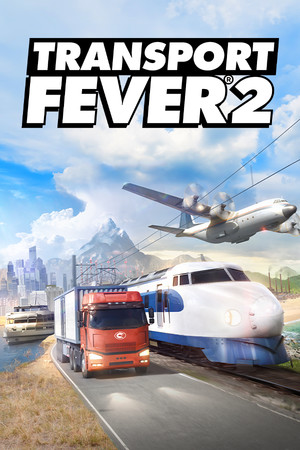
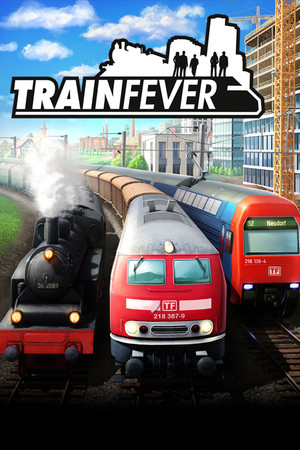
I have color-coded spreadsheets for Paradox games and I still felt the friction of Train Fever within the first twenty minutes. That friction is the defining characteristic of this game, and it shapes every honest thing I can say about it. Urban Games built something technically ambitious for a tiny Swiss studio, a grid-free engine where tracks curve freely across procedurally generated terrain, where every simulated resident has an assigned home and workplace, and where city districts are divided into residential, commercial, and industrial zones that actually inform where you place your stations and bus stops. That ambition is real. The follow-through is uneven. The core loop starts in 1850 with seed money and a scattered map of towns. Your job is to link them profitably. Rail is the headline act, but the game makes clear early that a train line is only as good as the feeder network behind it. Horse-drawn omnibus routes into each town district determine whether passengers can reach your station within the game's strict travel-time window, and if they cannot, they simply do not board. That mechanic is smart and surprisingly realistic. Cargo works similarly: you manage supply chains for goods like coal, iron ore, wood, and finished goods, and demand at each city is low enough that you genuinely have to study the cargo overlay before committing capital to a freight line. The map overlays for terrain contours and land-use zoning are genuinely helpful when they work, though the information they surface feels incomplete compared to what you actually need to make confident routing decisions. World size is selectable at the start, flat or hilly, small or large, and you can begin in 1850, 1900, or 1950 depending on how much early-game horse-cart management you want to tolerate. The problems are consistent across reviews and community discussion: the track-laying tool is the most complained-about system in the game. Terrain collision errors appear constantly, the tool offers no undo function, and steep inclines that look manageable will quietly tank your train's frequency and profitability. Road bridges are notoriously difficult to build. Upgrading existing track sections can trigger cascading conflict errors with no clear resolution path. The UI stacks overlapping menus and buries common functions behind multiple clicks. For a game that asks you to manage freight supply chains and feeder bus networks simultaneously, the interface imposes serious overhead. There is a tutorial, but it is shallow enough that most players end up consulting external guides or community YouTube videos to understand how the economics actually function. Late-game performance also degrades on large maps, because every single resident on the map is individually simulated. What saves Train Fever from being a write-off is the same thing that makes its sequels worth playing: the world feels alive in a way that most transport sims do not. Cities grow organically along curved roads, buildings adapt to land-use zones, car traffic increases as decades advance and passenger rail becomes comparatively less profitable, which forces you to adapt your strategy across the timeline from 1850 to the modern era. Watching that evolution at street level, zoomed all the way in on cobblestone roads filling with horse carts and then automobiles, is genuinely compelling. Mod support was praised at launch and the community has added vehicles and map content. If you tolerate the roughness, there are real decisions here about line frequency, rolling stock selection, and feeder route geometry that carry strategic weight. It is also worth noting that Urban Games went on to build Transport Fever and Transport Fever 2 on this same engine, each iteration polishing what Train Fever left rough. If you are curious about the series, the sequels are the better entry points. Train Fever makes sense as a purchase only if you want the historical starting point, accept that ships and aircraft are absent entirely, and have the patience to learn a system that will not teach itself to you.

Strategy & simulation
Tags
System Requirements
Minimum
- OS
- Windows XP, Vista, 7 or 8
- Memory
- 2 GB RAM
- Graphics
- Nvidia GeForce 8800 512 MB, ATI Radeon HD 3850 512 MB
- Processor
- Intel Core 2 Duo
Keep exploring
Community Discussion
Be the first to comment on Train Fever.
Reviews & Ratings
Game Info
- Developer
- Urban Games
- Publisher
- Good Shepherd Entertainment
- Release Date
- Sep 4, 2014