Compare Total War: MEDIEVAL II – Definitive Edition prices across 50+ stores and find the best deal. Developed by CREATIVE ASSEMBLY. Published by SEGA. Released on 11/15/2006. Available on PC, Mac, Linux. Genres: Strategy.

Nearly two decades old and still the benchmark strategy fans reach for first. Medieval II packs a turn-based empire and real-time battlefield into one package that most modern successors still haven't bettered.

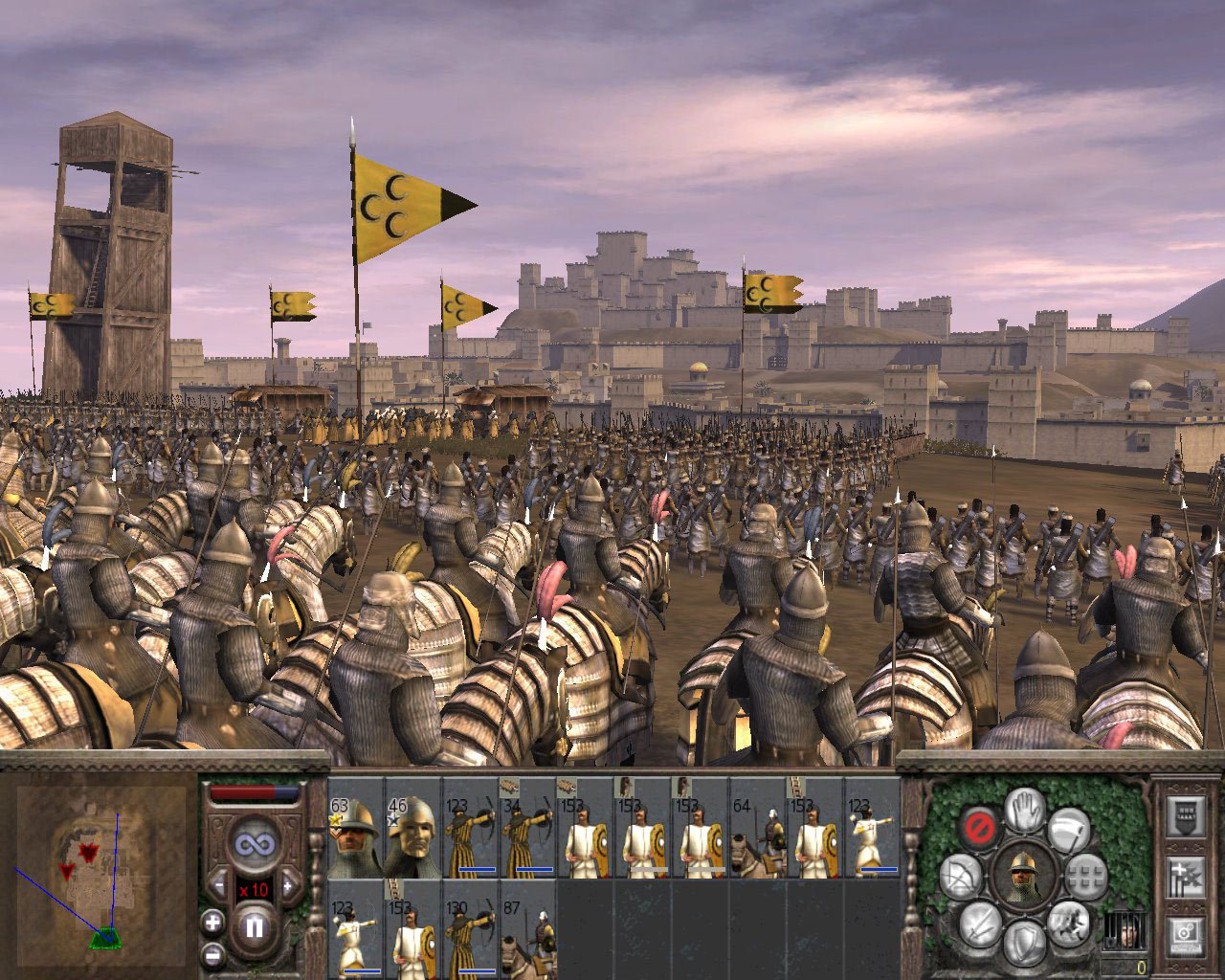
I keep a short list of strategy games I'd recommend to someone who has never touched the genre, and Medieval II sits near the top of it, which is a strange thing to say about a title released in 2006. The dual-layer design, a turn-based campaign map where you manage cities, agents, trade, and papal relations, combined with real-time tactical battles that can field up to ten thousand soldiers, still holds up as one of the most elegant structural decisions in the genre's history. You are never just doing one thing. Every turn on the campaign map is a negotiation between economic growth, military readiness, and the ever-present threat of the Pope excommunicating you for being too aggressive with Christian neighbours. The seventeen playable factions in the grand campaign each pull meaningfully in different directions. England and France push heavy cavalry and longbowmen. The Byzantine Empire leans on its unique Varangian Guard and heavily armoured infantry that most Western factions simply cannot match. The Mongols arrive mid-campaign as a late-game shock event that will flatten an unprepared eastern flank with terrifying speed. Settlements split into towns and castles, and that distinction matters: towns generate income while castles unlock the deeper military unit trees, so your building decisions on day one ripple through your campaign for dozens of hours. The Kingdoms expansion included in this Definitive Edition adds four additional campaigns covering the British Isles, Teutonic Northern Europe, the Crusades, and the Americas, where factions like the Aztecs, Apaches, and Mayans become playable. That is a substantial amount of additional content on top of the base game's already lengthy run time. Now for the honest part of the ledger. The AI is, and has always been, the game's most significant structural weakness. Battlefield pathfinding produces cavalry that occasionally ignores flanking lanes in favour of charging walls, and diplomatic AI will sign peace treaties and break them within two turns with no apparent logic. The UI is unambiguously a 2006 product: no in-game encyclopedia worth trusting, no tooltip that tells you the actual combat calculations, and a camera that still requires manual adjustment via keyboard shortcuts most newcomers will not discover without a guide. These are not dealbreakers, but they are real friction that players coming from Total War: Warhammer III or Shogun 2 will feel immediately. What keeps Medieval II alive in 2025 is its mod ecosystem, and it is one of the richest in the strategy genre without qualification. Third Age: Total War transforms the campaign into a Lord of the Rings conflict across fourteen factions including Gondor, Mordor, and the Dwarves. Stainless Steel 6.4 remains a comprehensive historically focused overhaul that many veterans consider the definitive way to play the European campaign. Europa Barbarorum II shifts the clock to antiquity with research-backed unit rosters. Newer total conversions like Tsardoms focus on the Balkans and Eastern Europe with a level of regional detail the base game never attempted. ModDB and TWCenter together host hundreds of active projects, and new releases were still appearing as recently as mid-2026. This is the game's real longevity engine, and if you factor in the modding headroom, the hour count becomes genuinely open-ended. For newcomers worried about the learning curve: start the grand campaign as England or France, follow the in-game tutorial, and accept that your first campaign will end messily somewhere around turn sixty. That is fine. The game teaches through failure faster than its tutorial does, and by campaign two you will already have a build order in your head and a clear opinion on whether knights or infantry form your preferred backbone. The ceiling is high but the floor is lower than its reputation suggests. Diego, Scout Team

Total War: MEDIEVAL II – Definitive Edition
Strategy

Total War: MEDIEVAL II – Definitive Edition

Nov 15, 2006CREATIVE ASSEMBLYSEGA
GamerScout Says

Nearly two decades old and still the benchmark strategy fans reach for first. Medieval II packs a turn-based empire and real-time battlefield into one package that most modern successors still haven't bettered.

PCMacLinux
Best Price Available
0.00
at N/A
Historical low: $

Compare Prices(0 stores)

Loading prices...

We may earn a commission when you buy games through links on this page — at no extra cost to you. It never affects our rankings or verdicts.

Screenshots & Media
Screenshot

About Total War: MEDIEVAL II – Definitive Edition

I keep a short list of strategy games I'd recommend to someone who has never touched the genre, and Medieval II sits near the top of it, which is a strange thing to say about a title released in 2006. The dual-layer design, a turn-based campaign map where you manage cities, agents, trade, and papal relations, combined with real-time tactical battles that can field up to ten thousand soldiers, still holds up as one of the most elegant structural decisions in the genre's history. You are never just doing one thing. Every turn on the campaign map is a negotiation between economic growth, military readiness, and the ever-present threat of the Pope excommunicating you for being too aggressive with Christian neighbours. The seventeen playable factions in the grand campaign each pull meaningfully in different directions. England and France push heavy cavalry and longbowmen. The Byzantine Empire leans on its unique Varangian Guard and heavily armoured infantry that most Western factions simply cannot match. The Mongols arrive mid-campaign as a late-game shock event that will flatten an unprepared eastern flank with terrifying speed. Settlements split into towns and castles, and that distinction matters: towns generate income while castles unlock the deeper military unit trees, so your building decisions on day one ripple through your campaign for dozens of hours. The Kingdoms expansion included in this Definitive Edition adds four additional campaigns covering the British Isles, Teutonic Northern Europe, the Crusades, and the Americas, where factions like the Aztecs, Apaches, and Mayans become playable. That is a substantial amount of additional content on top of the base game's already lengthy run time. Now for the honest part of the ledger. The AI is, and has always been, the game's most significant structural weakness. Battlefield pathfinding produces cavalry that occasionally ignores flanking lanes in favour of charging walls, and diplomatic AI will sign peace treaties and break them within two turns with no apparent logic. The UI is unambiguously a 2006 product: no in-game encyclopedia worth trusting, no tooltip that tells you the actual combat calculations, and a camera that still requires manual adjustment via keyboard shortcuts most newcomers will not discover without a guide. These are not dealbreakers, but they are real friction that players coming from Total War: Warhammer III or Shogun 2 will feel immediately. What keeps Medieval II alive in 2025 is its mod ecosystem, and it is one of the richest in the strategy genre without qualification. Third Age: Total War transforms the campaign into a Lord of the Rings conflict across fourteen factions including Gondor, Mordor, and the Dwarves. Stainless Steel 6.4 remains a comprehensive historically focused overhaul that many veterans consider the definitive way to play the European campaign. Europa Barbarorum II shifts the clock to antiquity with research-backed unit rosters. Newer total conversions like Tsardoms focus on the Balkans and Eastern Europe with a level of regional detail the base game never attempted. ModDB and TWCenter together host hundreds of active projects, and new releases were still appearing as recently as mid-2026. This is the game's real longevity engine, and if you factor in the modding headroom, the hour count becomes genuinely open-ended. For newcomers worried about the learning curve: start the grand campaign as England or France, follow the in-game tutorial, and accept that your first campaign will end messily somewhere around turn sixty. That is fine. The game teaches through failure faster than its tutorial does, and by campaign two you will already have a build order in your head and a clear opinion on whether knights or infantry form your preferred backbone. The ceiling is high but the floor is lower than its reputation suggests. Diego, Scout Team

Tags

singleplayermultiplayersteamGrand StrategyReal-Time TacticsHistoricalCampaign MapFaction VarietyMod SupportSiege BattlesDiplomacy SystemTurn-Based CampaignTotal Conversion ModsPapal Influence SystemTown vs Castle EconomyAgent GameplayLate-Game Faction EventsCrusades CampaignAI WeaknessBeginner-Accessible DepthKingdoms Expansion Included

System Requirements

System requirements for Total War: MEDIEVAL II – Definitive Edition aren't listed yet. Check the store page for the latest specs.

Reviews & Ratings

Steam
96%(35,797)

Game Info

Developer
CREATIVE ASSEMBLY
Publisher
SEGA
Release Date
Nov 15, 2006

Game Modes

singleplayer
multiplayer

Languages

Audio (8)
EnglishFrenchItalianGermanSpanish - SpainCzech+2 more
Subtitles (9)
EnglishFrenchItalianGermanSpanish - SpainCzech+3 more

Price Alert

Get notified when the price drops below your target!

Create Alert

More from CREATIVE ASSEMBLY