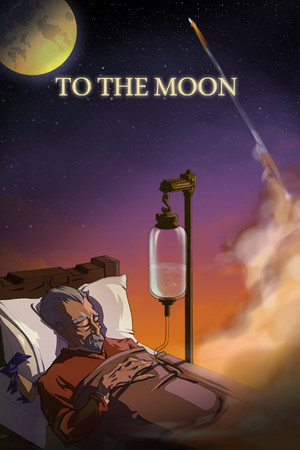
To the Moon
Four hours with a dying man's memories, and you will not walk away unchanged. The finest argument that games can do what novels do, built on an RPG Maker engine nobody will care about once the story lands.
GamerScout Verdict
Essential for anyone who believes a four-hour story well told outweighs fifty hours of content that isn't.
Compare Prices(7 stores)
Every store in this table quotes us in euros, so the EUR figure is the price the seller actually set, not our arithmetic — which is why EUR is also the currency we rank in. We only list an offer here when the store gives us its price in euros, so nothing in this table is a number we invented.
Pick USD, PLN, GBP, CAD or AUD in the header and we convert from EUR at the European Central Bank reference rate — converted amounts are prefixed with ~. Your bank or the store may apply a different rate at checkout. We never hide offers based on where you are: everyone sees this whole table.
We may earn a commission when you buy games through links on this page — at no extra cost to you. It never affects our rankings or verdicts.
Price History
Screenshots & Media
About To the Moon
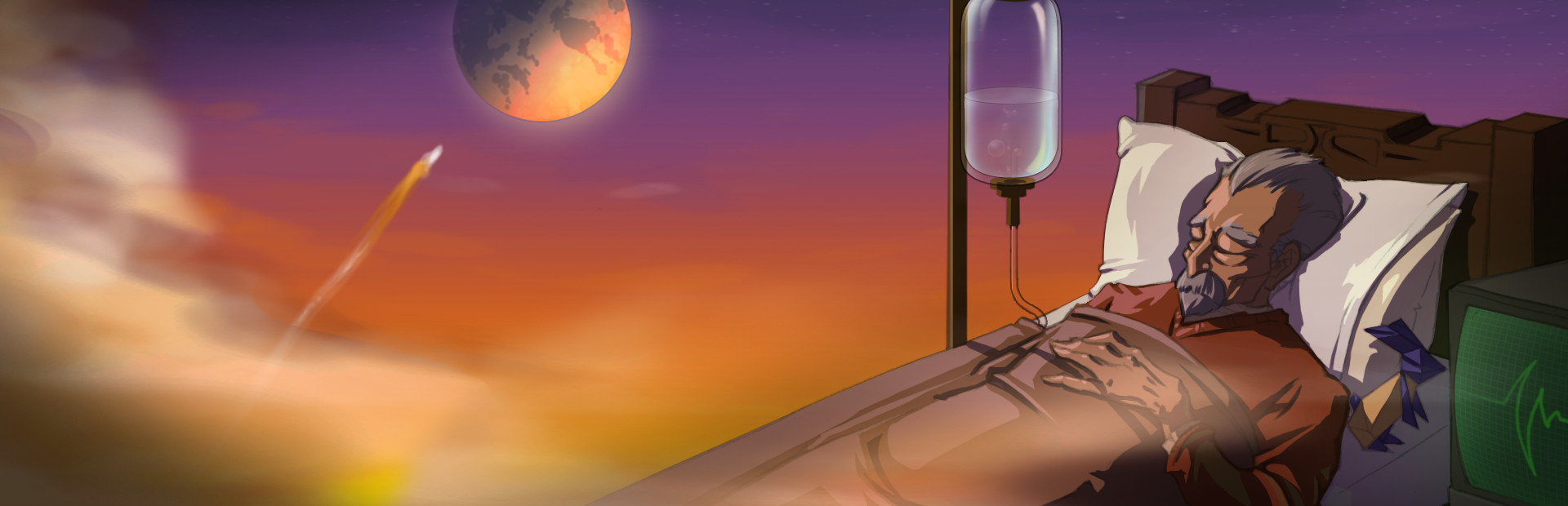
I keep a short list of games I genuinely struggle to recommend, not because they are bad, but because recommending them feels like handing someone a grenade. To the Moon is on that list. Kan Gao built this thing inside RPG Maker XP, a toolkit most developers use to clone 16-bit JRPGs, and he used it to tell one of the most quietly devastating stories interactive fiction has ever produced. You play as Dr. Eva Rosalene and Dr. Neil Watts, two scientists employed by Sigmund Corp. whose job is to enter dying patients' memories and rewire their past so they die believing their deepest wish came true. Your client here is an elderly man named Johnny, and his wish is to go to the moon. He cannot explain why. That unexplained why is the entire engine of the game. The structure works backwards through time, peeling layers of Johnny's life like sediment. Each memory era is a small contained environment where you hunt for interactable objects, collect glowing orbs called memory links, and feed them into a memento, an origami rabbit, a jar of pickled olives, a lighthouse silhouette, to unlock a tile-flip puzzle that cracks the layer open and drops you further into the past. The puzzles are honest enough to be nearly invisible. They are repetitive, uniform in difficulty, and exist mostly to give your hands something to do while your brain processes what the writing just told you. If you are here for mechanical depth, To the Moon will frustrate you within the first thirty minutes and that frustration will be valid. The controls carry the awkward ghost of RPG Maker navigation, character movement can feel sticky, and there is exactly one combat sequence in the entire runtime, a comedic mock-battle that the game plays as a winking self-aware joke. None of this is accidental. Gao made a deliberate trade: all the design budget went into the script and the score. The score is worth talking about on its own terms. Composer Kan Gao (the same person, wearing a second hat) built a piano-led soundtrack that knows exactly when to introduce strings and exactly when to strip back to a single note sustaining in silence. The recurring theme threads through Johnny's memories in different arrangements, and by the time you hear its final version you will know exactly what it costs. No piece overstays. Each cue earns its emotional weight through restraint rather than orchestral pressure. It is the kind of soundtrack that does not accompany a story so much as hold it upright. Where the game earns real complexity is in its two central characters beyond the doctors. Johnny's wife River is canonically autistic, and the game handles that with more care than most media manages, though not without debate. Some critics and players, particularly from autistic communities, have noted that River's inner life remains largely offscreen, her story filtered through how her neurodivergence affected the people around her rather than through her own perspective. That critique lands. It does not undo the emotional architecture of what Gao built, but it is worth sitting with. The bittersweet sting of the ending comes not just from whether Johnny gets his wish, but from the question the game quietly refuses to answer cleanly: does a fabricated happy memory mean anything? The Steam community has been arguing about that question since 2011 and showing no signs of stopping. The runtime sits at roughly four to five hours on a first playthrough. That is not a flaw. To the Moon knows exactly when to end, lands its final scene with precision, and leaves no padding. It spawned two direct sequels, Finding Paradise and Impostor Factory, both of which reward players who finish this one first. If you have any appetite for narrative-driven games, interactive fiction, or stories that handle grief, love, and memory with an adult hand, this is where the Freebird Games universe starts and it starts well.

Indie & narrative
Tags
System Requirements
Minimum
- OS
- Windows 98, XP, Vista, 7, 8, 10, 11
- Memory
- 512 MB RAM
- Graphics
- 1024x768 High Color +
- DirectX®
- 9.0
- Processor
- Intel Pentium III 800 MHz
- Hard Drive
- 100 MB HD space
Keep exploring
Community Discussion
Be the first to comment on To the Moon.
Reviews & Ratings
Game Info
- Developer
- Freebird Games
- Publisher
- Freebird Games
- Release Date
- Sep 7, 2012