
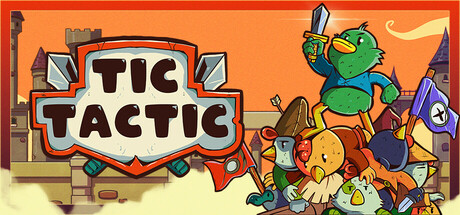
Tic Tactic
Tic-tac-toe dressed up as a roguelike deckbuilder sounds like a gimmick until the board refuses to clear and a shield tile you ignored two turns ago kills your run.
GamerScout Verdict
Best for roguelike deckbuilder fans who want a mechanically distinct premise and can tolerate a tile pool that will grow with post-launch updates.
Compare Prices(7 stores)
Every store in this table quotes us in euros, so the EUR figure is the price the seller actually set, not our arithmetic — which is why EUR is also the currency we rank in. We only list an offer here when the store gives us its price in euros, so nothing in this table is a number we invented.
Pick USD, PLN, GBP, CAD or AUD in the header and we convert from EUR at the European Central Bank reference rate — converted amounts are prefixed with ~. Your bank or the store may apply a different rate at checkout. We never hide offers based on where you are: everyone sees this whole table.
We may earn a commission when you buy games through links on this page — at no extra cost to you. It never affects our rankings or verdicts.
Price History
Screenshots & Media
About Tic Tactic
My first instinct when I saw this was skepticism. Tic-tac-toe has been a solved game since childhood, and grafting a deckbuilder onto a 3x3 grid sounds like a pitch that works better in a tweet than in practice. Fifty turns in on my first run, losing to a chicken elite because I misread a board state I thought I controlled, I stopped doubting it. The core rule that changes everything is simple: the board does not clear between attacks. Every tile you or your opponent places stays put, and combos deal damage rather than ending the match. That persistence transforms a grid you could solve in your sleep into a pressure cooker. You are no longer playing tic-tac-toe. You are managing a shared, cluttered battlefield where positioning decisions from three turns ago haunt your current options. The deck you build out of over two dozen unique tiles, each with its own ability, feeds directly into this tension. Defensive tiles like the shield hold their position across rounds, creating semi-permanent structures. Disruptive tiles like the earthquake or the rain shift board geometry mid-fight. The axe, a common weapon bonus, adds extra damage to diagonal combos and rewards players who build around that line rather than treating all three-in-a-rows as equal. Learning which tiles synergize with which board configurations is where the actual strategy lives, and there is more of it here than the pixel-art duck-vs-chicken veneer suggests. The roguelike structure is honest about what it is: a location-based run through escalating enemy tiers, from starter fodder in the Pond Ruins to elites and area bosses, each encounter dropping new tiles to fold into your deck. The enemy-preview system, which shows you upcoming opponent tiles up to three turns ahead, is a key design decision that keeps losses feeling fair rather than random. The black merchant handles deck thinning, but you cannot control which tiles get removed, which is a genuine strategic constraint, not a lazy one. A Challenge Mode strips out free heals and randomizes the world map for players who want runs without a safety net. A global leaderboard tracks score, with the scoring system rewarding efficiency, so completing runs in fewer turns yields higher scores. That is a clean incentive loop that encourages replaying with tighter, more deliberate builds rather than grinding the same strategy to death. The weak spots are real. Community feedback from the itch.io prototype period flagged asymmetric tile interactions, particularly rain-type tiles feeling stronger in enemy hands than the player's, and some per-turn tile timing oddities that the developer has been openly patching. The music was a recurring complaint throughout early development, and new tracks have been added since, though whether the soundtrack reaches the level of the gameplay is debatable. The pool of around two dozen tiles is enough for meaningful build variety at launch, but invested players will likely exhaust the synergy space faster than in comparable deckbuilders with larger card pools. The developer has a documented post-launch update cadence and has been actively responsive to the community, which matters for a small-team release at this stage. For the target audience, which is anyone who plays a Slay-the-Spire-adjacent roguelike and wants something genuinely mechanically distinct rather than a reskin, Tic Tactic earns its place. The concept is not a gimmick once the board state complexity kicks in. Newcomers to the deckbuilder genre will find the rules approachable since the grid is immediately readable and there is no wall of keyword text to parse on day one. Veterans will find the strategic ceiling higher than the box art implies. Solo developer, active patch history, a leaderboard for the competitive-minded, and reported compatibility with Steam Deck round out a package that punches above its budget tier.

Strategy & simulation
Tags
System Requirements
Minimum
- OS
- Windows 7
- Memory
- 4 GB RAM
- Storage
- 500 MB available space
- Graphics
- Integrated
- Processor
- Intel i3
Recommended
Requires a 64-bit processor and operating system
Keep exploring
Community Discussion
Be the first to comment on Tic Tactic.
Reviews & Ratings
No ratings available
Game Info
- Developer
- unbreaded
- Publisher
- indie.io
- Release Date
- Sep 18, 2025