
Thronefall
Tower defense stripped to its load-bearing walls: build your economy by day, ride into the night battle yourself, and ask whether that second mill was worth it when the catapults arrive.
GamerScout Verdict
Best for strategy newcomers and time-pressed veterans who want real build decisions without a 40-hour learning curve.
Compare Prices(5 stores)
Every store in this table quotes us in euros, so the EUR figure is the price the seller actually set, not our arithmetic — which is why EUR is also the currency we rank in. We only list an offer here when the store gives us its price in euros, so nothing in this table is a number we invented.
Pick USD, PLN, GBP, CAD or AUD in the header and we convert from EUR at the European Central Bank reference rate — converted amounts are prefixed with ~. Your bank or the store may apply a different rate at checkout. We never hide offers based on where you are: everyone sees this whole table.
We may earn a commission when you buy games through links on this page — at no extra cost to you. It never affects our rankings or verdicts.
Price History
Screenshots & Media
About Thronefall
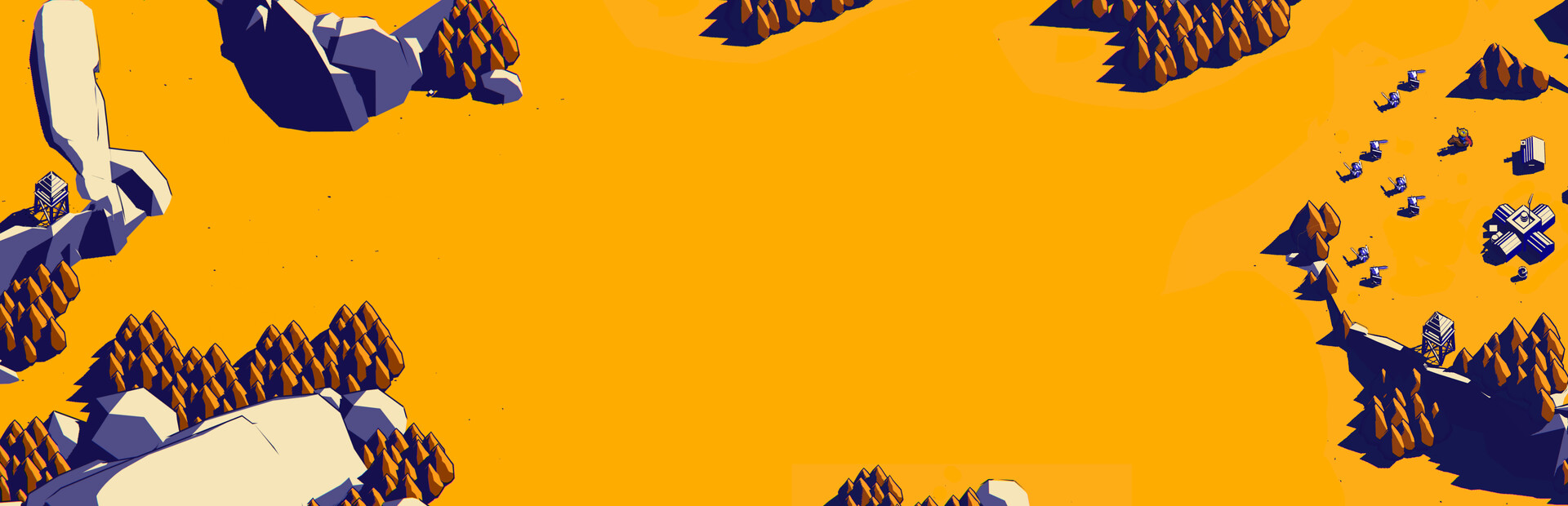
I came to Thronefall expecting a light snack between bigger strategy sessions and ended up losing a Saturday to it. That reaction is exactly what GrizzlyGames designed for, and it is worth unpacking why the formula works before cataloguing its limits. The loop is a strict day-night split. Daytime is a compressed city-planning phase: you ride your mounted king around predefined build slots, spending gold on houses, mills, mines, harbours, and barracks, or on walls, archer towers, and troop upgrades. Nighttime removes the build menu entirely and puts you directly in the fight, sword or spear or bow in hand, while your AI soldiers and towers defend autonomously. The three-variable economy (gold, upgrades, soldiers) sounds reductive until you are staring at wave eight and realising your mill-heavy opening left the southern approach completely naked. The community has coined the term "Mill Greed" for exactly this failure state, and it captures the game's central tension better than any tutorial slide could. Do you build a second barracks or upgrade the existing one to crossbowmen? Do you drop a wall on the chokepoint or push the castle to tier two to unlock the Builder Guild perk that auto-upgrades houses each night? Those are real decisions with downstream consequences, and they sit at the core of every run. For newcomers to strategy games, Thronefall is a genuinely friendly entry point, and I will spend a moment making that case. The auto-attack on the player king means you never need to juggle manual combat inputs alongside build decisions. Destroyed buildings resurrect at full health the next day, with the only penalty being lost revenue for that cycle, so a bad night does not snowball into an unrecoverable deficit. The tutorial is short and honest. Complexity is layered in gradually across biomes like the snowy Frostsee and coastal Durststein, each of which introduces map-specific mechanics without resetting what you already learned. Experienced strategy players will not be bored either: the mutation system stacks difficulty modifiers that can turn any map into a serious test, and the challenge quests per level (including a gold-maximisation run with no enemies at all) reward creative build thinking rather than brute repetition. The weaknesses are real, though. Building placement is fixed to predefined slots, so there is no freeform base design. On normal difficulty, a single dominant economic strategy tends to emerge per map, and some players will feel the routing become formulaic once that pattern clicks. The enemy roster is varied enough (peasants, barrel knights, explosive units, catapults, siege rams, mounted riders) but the AI does not adapt to your layout in the way a stronger strategy game would demand. There is no modding ecosystem to speak of, and the campaign is short enough that completionists will see most of what the base game offers in under ten hours. The perks and mutations extend that shelf life meaningfully, but players who want hundreds of hours of systemic depth should look elsewhere. What Thronefall does deliver is one of the cleanest feedback loops in the genre: every gold coin has a job, every wave teaches you something, and every run takes roughly thirty to forty minutes, making it one of the few strategy titles that genuinely respects a short session. Controller support is solid, Steam Deck play is comfortable, and the low-poly aesthetic ages better than most indie art directions because it was never trying to impress on resolution alone.

Strategy & simulation
Tags
System Requirements
Minimum
- OS
- Windows 10
- Memory
- 4 GB RAM
- Storage
- 1 GB available space
- Graphics
- Nvidia GeForce GTX970
- Processor
- Intel® Core™ i5-9600
- Sound Card
- Just whistle your favourite tune :)
Recommended
Requires a 64-bit processor and operating system
Keep exploring
Community Discussion
Be the first to comment on Thronefall.
Reviews & Ratings
No ratings available
Game Info
- Developer
- GrizzlyGames
- Publisher
- Mythwright
- Release Date
- Oct 11, 2024