
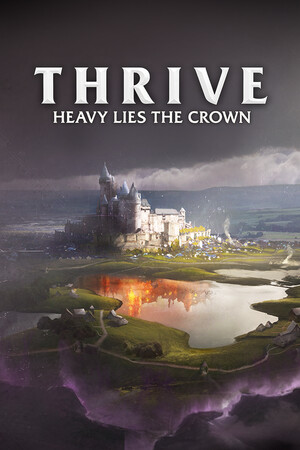
Thrive: Heavy Lies The Crown
A medieval city-builder that wants to be Age of Empires, Stronghold, and Civilization at once - the ambition is real, but execution is uneven enough that patient builders will enjoy it more than RTS veterans expecting polished combat.
GamerScout Verdict
Best for patient city-builder fans who can overlook a thin tutorial and late-arriving combat in exchange for solid co-op colony management.
Compare Prices(10 stores)
Every store in this table quotes us in euros, so the EUR figure is the price the seller actually set, not our arithmetic — which is why EUR is also the currency we rank in. We only list an offer here when the store gives us its price in euros, so nothing in this table is a number we invented.
Pick USD, PLN, GBP, CAD or AUD in the header and we convert from EUR at the European Central Bank reference rate — converted amounts are prefixed with ~. Your bank or the store may apply a different rate at checkout. We never hide offers based on where you are: everyone sees this whole table.
We may earn a commission when you buy games through links on this page — at no extra cost to you. It never affects our rankings or verdicts.
Price History
Screenshots & Media
About Thrive: Heavy Lies The Crown
My first instinct when loading into Thrive: Heavy Lies the Crown was to audit the production chains - food from orchards, flax and hemp feeding textile workshops, wells pulling groundwater for both drinking and fire suppression. The bones of a proper colony sim are here. Stockpile range matters, building footprints require genuine layout planning, and a tech tree steadily unlocks new structures and upgrades. For a studio cutting its teeth on a first release, the mechanical ambition is genuinely impressive. The problem is that ambition and polish are two very different things. At its core, this is a grid-based city-builder in the vein of Anno or Tropico, set in the low-fantasy world of Nysamor. You play as a ruler rebuilding after catastrophe, managing citizen happiness, taxes, food storage range, disease risk, and population growth. Citizens who lack at least two basic needs in range of their housing simply refuse to move in, which forces thoughtful district planning from the start. A Benevolence versus Tyranny narrative system runs in the background, with choices in a three-act story that nudge your kingdom's identity and unlock different event chains. The Waelgrim - a supernatural corruption mechanic - adds a layer of threat beyond rival factions. On paper, that is a compelling mix of Stronghold-style population management, light Crusader Kings-style consequence writing, and medieval survival pressure. In practice, the diplomacy options feel shallow, and reviewers across the board noted that moral choices rarely carry the weight the system implies. The RTS combat is the game's second big selling point, and the reality here is complicated. Military units like militia are a 1.0 addition, and fielding soldiers requires a sustained supply chain - your troops need food and water to stay combat-ready, which is a genuinely interesting economic constraint. The unit variety is solid enough, with controls that lean closer to the arcade simplicity of Age of Empires than the tactical depth of Total War. The catch is that meaningful combat pressure arrives very late in a run. Reviewers noted that you may need eight to ten hours of build-up before military action becomes relevant, and some found enemy aggression inconsistently triggered. Multiplayer supports up to four players in either shared-kingdom co-op on survival mode or multi-faction PvP, with alliance options in between - a flexible structure that works better with a dedicated group willing to save and resume sessions. The tutorial situation is the most honest warning I can give prospective buyers. It exists, but it does not do nearly enough to surface the game's intricacies. Range requirements, footprint rules, happiness thresholds - these are things you will discover by watching your settlers pack up and leave rather than by reading an explanation. The 1.0 release did bring a visual overhaul, difficulty settings, citizen revolts, an Influence system, and the option to skip narrative dialogue, which shows Zugalu is listening. But the UI inconsistencies and the gap between what the game promises and what it delivers in its first twenty hours remain real friction points that more methodical players will absorb better than anyone expecting a fast-paced RTS. If you have a tolerance for colony sims where the reward is a well-optimised settlement rather than a dramatic battle sequence, and you can bring a friend or two for the co-op mode, there is a genuinely interesting game hiding inside the rough edges. If you are here primarily for the combat, adjust expectations accordingly.

Strategy & simulation
Tags
System Requirements
Minimum
- OS
- Windows 10
- Memory
- 16 GB RAM
- Network
- Broadband Internet connection
- Storage
- 5 GB available space
- Graphics
- NVIDIA GeForce GTX 980
- Processor
- Intel Core i5 4690 @ 3.5 GHz | AMD Ryzen 5 1600x @ 3.6 GHz or better.
- Sound Card
- Integrated
Recommended
- OS
- Windows® 10 (64-bit)
- Memory
- 16 GB RAM
- DirectX
- Version 12
- Network
- Broadband Internet connection
- Storage
- 15 GB available space
- Graphics
- NVIDIA GeForce GTX 1060 (6 GB) / AMD Radeon RX 580 (8 GB)
- Processor
- Intel® Core™ i5-7600 (quad-core) / AMD® Ryzen™ 3 2200G (quad-core)
- Sound Card
- Integrated
Keep exploring
Community Discussion
Be the first to comment on Thrive: Heavy Lies The Crown.
Reviews & Ratings
No ratings available
Game Info
- Developer
- Zugalu Entertainment
- Publisher
- PlaySide
- Release Date
- Jun 18, 2025