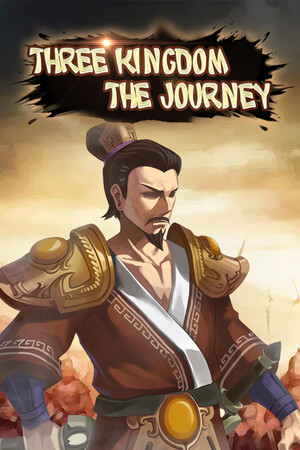
Three Kingdom: The Journey
Sitting around 79% positive on Steam, this Han Dynasty roguelike deckbuilder has the bones of something sharp, but rough edges and a tutorial that barely shows up will test your patience before the satisfying builds click.
GamerScout Verdict
Worth a look for deckbuilder fans hungry for a Three Kingdoms theme, but go in expecting rough edges and a tutorial that leaves you to figure out the key mechanics alone.
Compare Prices(6 stores)
Every store in this table quotes us in euros, so the EUR figure is the price the seller actually set, not our arithmetic — which is why EUR is also the currency we rank in. We only list an offer here when the store gives us its price in euros, so nothing in this table is a number we invented.
Pick USD, PLN, GBP, CAD or AUD in the header and we convert from EUR at the European Central Bank reference rate — converted amounts are prefixed with ~. Your bank or the store may apply a different rate at checkout. We never hide offers based on where you are: everyone sees this whole table.
We may earn a commission when you buy games through links on this page — at no extra cost to you. It never affects our rankings or verdicts.
Price History
Screenshots & Media
About Three Kingdom: The Journey
I've put time into enough Slay the Spire derivatives to know when one is simply wearing a costume versus actually adding something to the formula. Three Kingdom: The Journey lands somewhere in the middle of that spectrum, which makes it both frustrating and, in patches, genuinely interesting to think about. The strategic hook is the three-faction structure. Liu, Cao, and Sun each play differently in ways that matter mechanically, not just cosmetically. Liu leans on command points and card-strengthening effects, making it the clearest on-ramp for newcomers to the genre. Cao pivots around a discard engine, burning cards for damage and tempo, a style that rewards players who think a hand or two ahead. Sun is the most volatile of the three, built around combo sequencing where the order you play cards changes what they actually do. That combo architecture is the most distinctive thing the game offers, and when a Sun run clicks into place it genuinely feels earned. The three factions also alter how your unit types, Infantry, Ranged, and Cavalry, interact with status effects, so your pick at the character select screen shapes the entire run's logic, not just a single stat. The Morale mechanic is worth understanding early. Stacking Morale amplifies attack card damage in a way that scales sharply, and once you grasp that the game opens up considerably. The problem is the tutorial barely mentions it and gives you no way to revisit the explanation later. That is a real design failure. A mechanic central to winning runs should not require a community forum to demystify. The same goes for boss spawns: surprise bosses can appear immediately after clearing a wave of regular enemies, with no warning, and that kind of information asymmetry punishes first-time players before the game has had a chance to teach them anything. The map itself is structured around nine territory types with procedurally generated paths, and those territory nodes, cities, academic centers, rest sites, events, do give the run-to-run variety you want from the genre. Events specifically force choice under pressure, trading cards for penalties or rewards, which is the right kind of decision texture. The presentation is competent but uneven. The watercolor-style opening cinematic and character portraits carry some aesthetic weight, and the use of Chinese instrumentation in the soundtrack is a genuine plus that grounds the Han Dynasty setting. At the card level, though, the visuals skew toward a mobile aesthetic that reviewers have noted feels at odds with the setting's ambitions. Text on cards can be difficult to read due to font size, and there is no way to resize it. The English localization also has rough patches that suggest it was not the studio's first language, which occasionally undercuts clarity on card descriptions, a bigger problem in a game where reading correctly is the whole game. Steam achievements are absent, which removes a meaningful progression hook for players who want reasons to revisit runs beyond raw difficulty unlocks. The core loop is familiar but functional: travel the map, fight telegraphed turn-based battles, refine the deck at stops, hit the boss. If your Slay the Spire backlog is empty and the Three Kingdoms setting appeals to you, there is a workable session here. But the lack of post-run unlock variety, clearing a run with one general mostly just bumps you to higher difficulty rather than opening new card pools, limits the long-term draw. Senmu Studio is clearly a small team, and the scope matches that reality.

Strategy & simulation
Tags
System Requirements
Minimum
- OS
- Windows7,Windows10
- Storage
- 2 GB available space
- Graphics
- 1Gb Video Memory, capable of OpenGL 3.0+ support (2.1 with ARB extensions acceptable)
- Processor
- 2.0 Ghz
Keep exploring
Community Discussion
Be the first to comment on Three Kingdom: The Journey.
Reviews & Ratings
No ratings available
Game Info
- Developer
- Senmu Studio
- Publisher
- 2P Games
- Release Date
- Apr 18, 2023