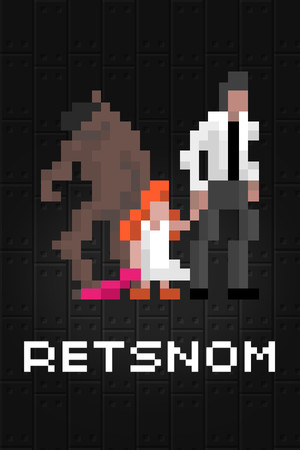

The Wake: Mourning Father, Mourning Mother
Cracking a dead man's cipher while his family buries him around you - Somi's farewell to his Guilt Trilogy is one of the quietest, most precise things on Steam right now.
GamerScout Verdict
For players who want narrative puzzles that treat decryption as an act of empathy, not just pattern-matching - this quiet game earns its weight.
Compare Prices(2 stores)
Every store in this table quotes us in euros, so the EUR figure is the price the seller actually set, not our arithmetic — which is why EUR is also the currency we rank in. We only list an offer here when the store gives us its price in euros, so nothing in this table is a number we invented.
Pick USD, PLN, GBP, CAD or AUD in the header and we convert from EUR at the European Central Bank reference rate — converted amounts are prefixed with ~. Your bank or the store may apply a different rate at checkout. We never hide offers based on where you are: everyone sees this whole table.
We may earn a commission when you buy games through links on this page — at no extra cost to you. It never affects our rankings or verdicts.
Price History
Screenshots & Media
About The Wake: Mourning Father, Mourning Mother
I've spent time with all three entries in Somi's so-called Guilt Trilogy, and The Wake lands differently from Replica and Legal Dungeon - slower, more interior, more willing to sit in a room with grief and not explain it away. The setup is deceptively minimal: a man lies in a coma during his father's three-day funeral, and the journal he left behind is locked behind a substitution cipher. You are the reader. You have to earn the text. The cipher mechanic is the spine of the whole experience. What starts as a clean letter-substitution puzzle mutates as you go deeper. Later chapters layer in keyword shifts, arithmetic progressions, and clues buried in the journal's own highlighted passages. A walkthrough guide on Steam has community members still working through Chapter 3's combined keyword-and-shift logic, which tells you these puzzles have real teeth. The important thing Somi gets right is that solving each cipher layer does not feel like busywork - it feels like picking a lock on someone's private shame. The act of decoding is thematically load-bearing in a way most puzzle-narrative games never manage. What you find inside the journal is a three-generation portrait of guilt, distance, and the specific emotional architecture of a Korean family navigating loss. The narrator watches his father, mother, and extended relatives move through funeral rituals while his own memories surface - marriage, a school photo, a family trip, a slow descent. Each recovered memory is titled, and the fragments piece together a man who could not reconcile what he wanted to be with how he actually lived. One critic noted the game explores "the masks we wear in grieving," and that framing is accurate. The writing does not reach for catharsis. It reaches for honesty, which is harder. The audio design by Seongyi Yi deserves a sentence of its own. It is spare in the way that genuinely sparse soundscapes are - not absent, but present in the margins, like ambient light in a corridor. The retro pixel aesthetic, minimalist and deliberately 1990s-inflected, reinforces the sense that you are recovering something old and fragile. A few players have flagged technical issues on older Windows versions at launch, worth knowing if you are on legacy hardware. The game is short - comfortably under five hours for most - and that length is right. Somi knows when to end, which is a real skill. The honest caveat is one a Metacritic critic also raised: the cipher puzzles occasionally obstruct the narrative pull rather than deepening it. When a chapter's logic is opaque enough to send you to a guide, you lose the thread of the story for a while, and that costs something. The game earns back that cost in the final chapters, but the friction is real. If pure text adventure or visual novel pacing is your entry point and you have no appetite for genuine puzzle resistance, go in prepared.

Indie & narrative
Tags
System Requirements
Minimum
- OS
- Windows XP/Vista/7/8 or above
- Memory
- 2 GB RAM
- Storage
- 250 MB available space
- Processor
- 1.6GHz
Keep exploring
Community Discussion
Be the first to comment on The Wake: Mourning Father, Mourning Mother.
Reviews & Ratings
No ratings available
Game Info
- Developer
- Somi
- Publisher
- Somi
- Release Date
- Jul 10, 2020