
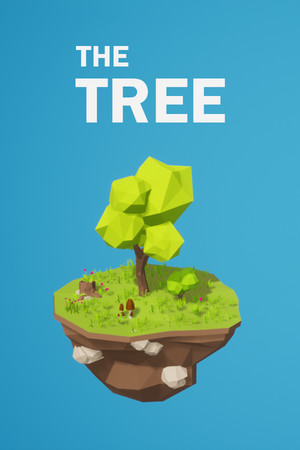
The Tree
Card-driven forest restoration on procedurally wrecked sky islands: low friction, low price, low runtime. Worth a look if your palate cleanser needs actual decisions.
GamerScout Verdict
A decent ten-minute wind-down for casual puzzle fans, but strategy veterans will exhaust its depth in a single sitting.
Compare Prices(0 stores)
Loading prices...
We may earn a commission when you buy games through links on this page — at no extra cost to you. It never affects our rankings or verdicts.
Price History
Screenshots & Media
About The Tree
My instinct with micro-strategy games this size is to assume they are puzzle-paint-by-numbers dressed up with strategy language. The Tree surprised me just enough to warrant writing about it. You sit above scorched and deforested floating islands and work through a card-draw loop: five randomly dealt cards at any given time, each representing a tree or an auxiliary object. Place one card on the island grid, a new card slides into the queue, and the puzzle tightens from there. Each tree you plant clears burnt and cut debris in an area around its placement point, and auxiliary objects can extend that clearing radius. The core question every turn is sequencing: which card to commit now, which placement maximises the clearance ripple, and whether the next draw will bail you out or strand you short of resources. It is not deep strategy by any objective measure, but there is a real decision lurking inside that card line. The procedural generation of both the damaged objects and the planting points means runs do not repeat cleanly, and the three biome settings, temperate, boreal, and tropical, vary the visual palette enough to stop the game feeling like a single-room loop. Island shapes and sizes also rotate, so the geometry of your clearance problem shifts between sessions. That said, the strategic ceiling is low. Once you understand that auxiliary objects are multipliers for your tree placement efficiency and that you need to read two or three cards ahead before committing, you have essentially seen the game's full decision tree. Experienced strategy players will reach that ceiling inside a first session. The Steam community has flagged the absence of in-game instructions as a friction point: one player noted the whole system felt random until the card-placement logic clicked, at which point it became legible but not especially demanding. Where The Tree earns its keep is atmosphere and accessibility. The minimalist 3D art holds up well at the micro price point, the lack of timers or fail states makes it genuinely low-stress, and the achievements give completionists a light checklist to chase. There is no modding support, no multiplayer, and no meaningful progression system beyond clearing each island. If you are coming from anything with a tech tree or a faction roster, you will feel the absence of those layers immediately. This is a coffee-break game, not a campaign. For the strategy-and-sim crowd I usually write for, The Tree is probably too shallow to anchor an evening, but it functions well as a ten-minute wind-down session. Treat it as a palette cleanser between heavier titles rather than a destination. The card-draw structure gives it just enough procedural variety to stay interesting across a handful of runs, and the floating-island setting is visually pleasant without demanding anything from your GPU. Newcomers to the casual-strategy space will find no tutorial to speak of, which is the game's single biggest accessibility failure, but the rules are simple enough that fifteen minutes of experimentation replaces whatever instructions should have been there.

Strategy & simulation
Tags
System Requirements
Minimum
- OS
- Windows 7+
- Memory
- 4 GB RAM
- DirectX
- Version 10
- Storage
- 500 MB available space
- Graphics
- Intel HD Graphics 4400
- Processor
- 1.8 GHz
Recommended
- OS
- Windows 7+
- Memory
- 4 GB RAM
- DirectX
- Version 10
- Storage
- 500 MB available space
- Graphics
- GeForce GTX 670 (2048 MB)
- Processor
- 2.4 GHz
Keep exploring
Community Discussion
Be the first to comment on The Tree.
Reviews & Ratings
No ratings available
Game Info
- Developer
- Game Parts
- Publisher
- Game Parts
- Release Date
- Mar 17, 2022