The Tale of Bistun
Rarely does a three-to-five-hour game carry the weight of a 12th-century Persian poem this gracefully, even if its combat never rises above button-mashing filler between genuinely moving story beats.
GamerScout Verdict
Built for players who want a short, mood-first narrative window into Persian legend and can forgive combat that is little more than an interval between story beats.
Compare Prices(8 stores)
Every store in this table quotes us in euros, so the EUR figure is the price the seller actually set, not our arithmetic — which is why EUR is also the currency we rank in. We only list an offer here when the store gives us its price in euros, so nothing in this table is a number we invented.
Pick USD, PLN, GBP, CAD or AUD in the header and we convert from EUR at the European Central Bank reference rate — converted amounts are prefixed with ~. Your bank or the store may apply a different rate at checkout. We never hide offers based on where you are: everyone sees this whole table.
We may earn a commission when you buy games through links on this page — at no extra cost to you. It never affects our rankings or verdicts.
Price History
Screenshots & Media
About The Tale of Bistun
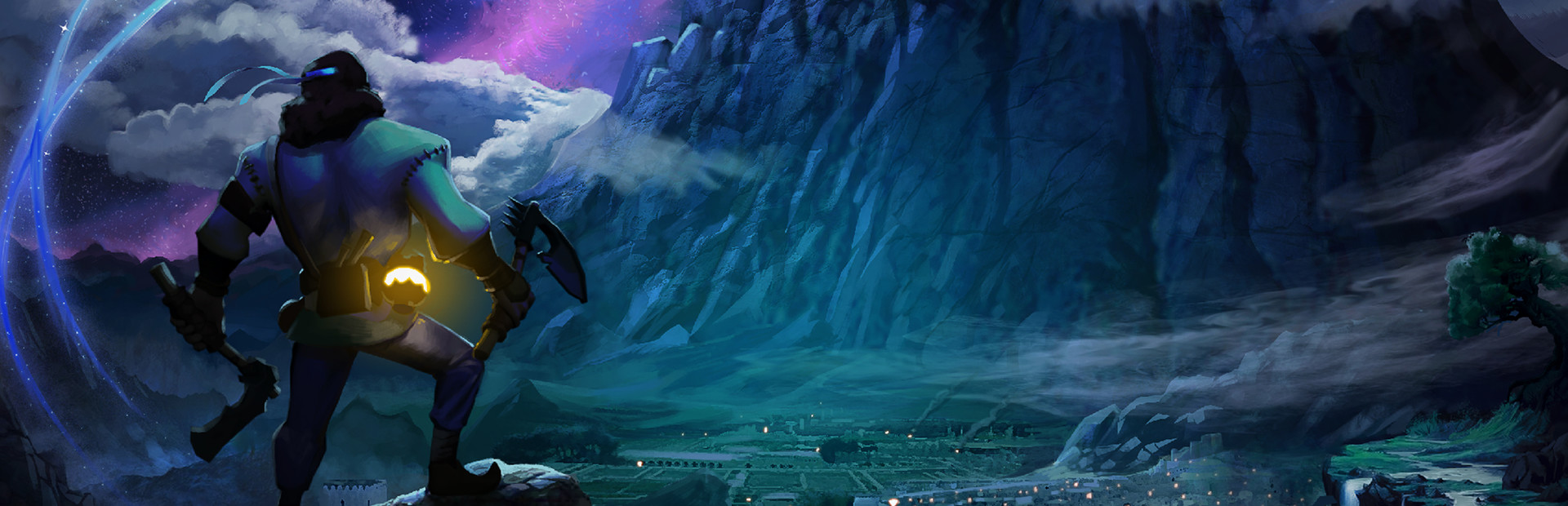
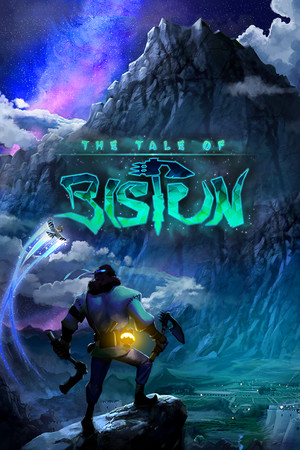
My first instinct when something this small and culturally specific lands on a storefront is to lean in close, and The Tale of Bistun rewards that instinct almost immediately. Black Cube Games, a debut studio, built an isometric action-adventure around the tragic Persian poem "Khosrow and Shirin," specifically the marginal subplot of Farhad, a stone-carver who wakes on the blighted slopes of Mount Bistun with no memory. That is a quietly audacious source for a video game, and the handling of it mostly clears the bar. The structure repeats itself by design: traverse a section of mountain, carve stone tablets and inscriptions to surface lore fragments, reach an arena locked until every enemy is defeated, then carry a magical pomegranate back to camp to recover another sliver of Farhad's past. Weapons swap only at anvil points before arenas, not on the fly, and you have two options: dual hatchets for quick strikes or a great axe for heavier damage, each with a rechargeable special ability that charges between standard attacks. Enemy types range from small ghouls and carrion birds to armored spear-wielding knights, ogres, and giant Deevs, but the honest truth is that combat is shallow. Attack, dodge-roll to wait out cooldowns, repeat. Almost nobody dies except at the final boss, and the fixed isometric camera occasionally fights you more than the monsters do. If you come here for mechanical depth, you will leave disappointed. What holds everything together is the atmosphere, and I want to be specific about what I mean. The soundtrack weaves traditional Persian instruments into every environment in a way that feels authorial rather than decorative. The narration, delivered by a single commanding voice, carries emotional weight that had more than one critic comparing it favorably to Bastion, a comparison I think is fair in spirit even if the execution here is thinner. The world itself shifts between two visual registers: the sunlit, corrupted mountain with its saturated color palette and the Revelations Realm, a surreal dream-plane of cosmic imagery and symbolic architecture. Persian symbolism is genuinely embedded in the design rather than bolted on, with pomegranates as memory and healing, the Hoopoe bird as guide, references to the goddess Anahita, and the corrupting villain Deev Bistun as the dark presence pulling everything toward ruin. That care shows. The story can lose its thread for players unfamiliar with the source material, and nobody pretends the plot is flawlessly told. A handful of memory fragments and stone engravings do solid work filling gaps, but some symbolic moments land obliquely. The game also ends with a branching choice, and checking the alternate ending is easy enough that it feels designed to be seen. At three to five hours depending on pace, The Tale of Bistun knows its own length, and that self-awareness is genuinely rare. There is no padding, no artificial stretch. It says what it came to say and stops. For a debut, that restraint is the most impressive craft decision in the whole package.

Indie & narrative
Tags
System Requirements
Minimum
- OS
- Windows 10 x64
- Memory
- 8 GB RAM
- DirectX
- Version 11
- Storage
- 6 GB available space
- Graphics
- Nvidia GTX 950 | AMD R7 370
- Processor
- Intel Core i5 4460 | AMD Athlon X4
Recommended
- OS
- Windows 10 x64
- Memory
- 8 GB RAM
- DirectX
- Version 11
- Storage
- 6 GB available space
- Graphics
- GeForce GTX 1050 ( 2048 MB); Radeon RX 580 (8192 MB)
- Processor
- Intel Core i5-4670K (4 * 3400) or equivalent; AMD FX-8350 (8 * 4700) or equivalent
Keep exploring
Community Discussion
Be the first to comment on The Tale of Bistun.
Reviews & Ratings
Game Info
- Developer
- Black Cube Games
- Publisher
- IMGN.PRO
- Release Date
- Jul 13, 2022