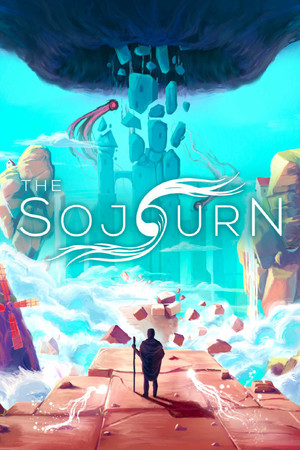
The Sojourn
Gorgeous light-and-dark puzzler that rewards patient, methodical thinkers, but overstays its welcome for anyone who needs a story to pull them forward.
GamerScout Verdict
Best for patient puzzle fans who let atmosphere carry them; expect a rewarding core buried under repetitive late-game padding.
Compare Prices(9 stores)
Every store in this table quotes us in euros, so the EUR figure is the price the seller actually set, not our arithmetic — which is why EUR is also the currency we rank in. We only list an offer here when the store gives us its price in euros, so nothing in this table is a number we invented.
Pick USD, PLN, GBP, CAD or AUD in the header and we convert from EUR at the European Central Bank reference rate — converted amounts are prefixed with ~. Your bank or the store may apply a different rate at checkout. We never hide offers based on where you are: everyone sees this whole table.
We may earn a commission when you buy games through links on this page — at no extra cost to you. It never affects our rankings or verdicts.
Price History
Screenshots & Media
About The Sojourn
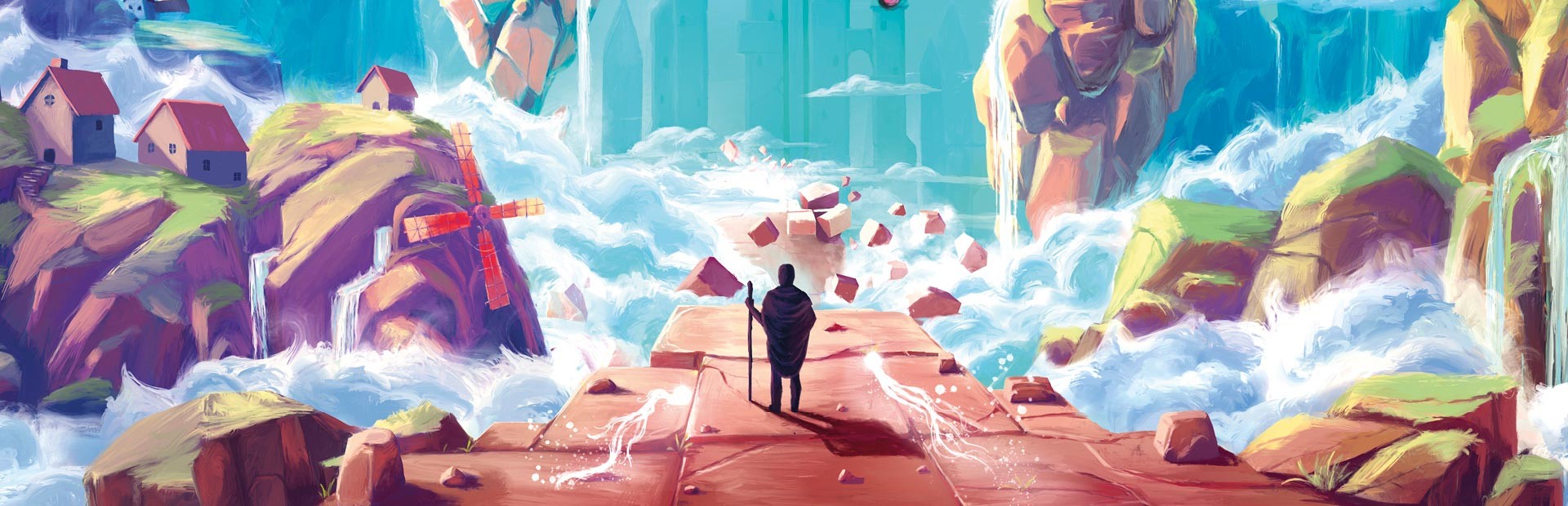
I kept coming back to The Sojourn the way you return to a quiet room you like but aren't entirely sure why. The atmosphere does real work here: stepping through a shimmering portal drains colour from the world and replaces it with a bruised, purple-tinged shadow realm where statues can be swapped, bridges conjured by harps, and mirrors used to redirect beams of light. The environment literally assembles itself around you as you enter each puzzle space, low-poly architecture clicking into place like a slow exhale. That arrival animation alone is worth lingering over. The core mechanic is a movement-rationed dark world you step into by standing on flame tiles or walking through tunnels of light. While in that shadow state, your meter drains only when you move, which makes this a game of deliberate positioning rather than reflex. You swap your location with statues, activate relics that let those statues function in the light realm, redirect energy through rotating mirrors, and trigger harps that mend broken bridges for only as long as they play. Four chapters introduce these tools one at a time, and in the early going the layering feels genuinely satisfying. Each new wrinkle forces a re-examination of puzzle logic you thought you understood. Optional scroll-hunting challenges sit alongside every main puzzle, and they redesign the same space into something considerably more demanding, which keeps dedicated puzzle fans busy past the main path. The game's real friction is structural, not mechanical. Community reception landed right around where that 78 Metacritic score suggests: reviewers and players consistently praised the visual craft and the moment-to-moment eureka feeling, but flagged that the middle and late sections rely too heavily on remixing familiar components without escalating the underlying logic. The final chapter in particular stretches thin, introducing very little new while clearly stalling for the story to resolve. The narrative itself is told through scattered statues depicting a blindfolded child's journey through what seems to be a coming-of-age fable about trust and obedience. It is atmospheric and occasionally affecting, but it operates at a distance. There is no dialogue, no readable item that grounds you, and no in-game chapter counter to tell you how far along you are. If environmental suggestion is your preferred storytelling register, that restraint feels poetic. If you want an actual through-line to pull you forward, the game may feel inert. What does hold up completely is the sound. Woodwind, plucked strings, and soft sustained tones layer into something genuinely meditative. The soundtrack knows when to stay out of the way and when to add a faint ceremonial weight. Combined with the colour shift between the warm light world and its cool, spectral counterpart, the sensory experience is cohesive in a way that few puzzle games bother to achieve. There is no sprint, the jump is more of a small skip, and that unhurried pace is a deliberate design choice that either reads as calm or drags depending on your tolerance. No hint system exists if you hit a wall, so restarting the full puzzle is your only recourse when a misplaced statue swap locks you out. A single undo button would have been trivial to implement and its absence is a quiet frustration. Total runtime lands somewhere between eight and twelve hours depending on how many optional scrolls you pursue. For a game with this aesthetic and this mechanical hook, that feels about two chapters too long. The people who love it will point to specific puzzle moments where half a dozen mechanics combine in a way that stops your breathing for a second. Those moments exist, and they are worth something. But so does the flat stretch between them.

Indie & narrative
Tags
System Requirements
Minimum
- OS
- Windows 7 SP1 64-bit
- Memory
- 4 GB RAM
- DirectX
- Version 11
- Storage
- 3 GB available space
- Graphics
- NVIDIA GeForce GTX 470 or AMD Radeon 6870 HD series card
- Processor
- Quad-core Intel or AMD processor, 2.5 GHz
Recommended
- OS
- Windows 10 64-bit
- Memory
- 8 GB RAM
- DirectX
- Version 11
- Storage
- 3 GB available space
- Graphics
- NVIDIA GeForce GTX 780 or AMD R9 290X series card or higher
- Processor
- Quad-core Intel or AMD processor, 2.5 GHz or faster
Keep exploring
Community Discussion
Be the first to comment on The Sojourn.
Reviews & Ratings
Game Info
- Developer
- Shifting Tides
- Publisher
- Iceberg Interactive
- Release Date
- Sep 29, 2020