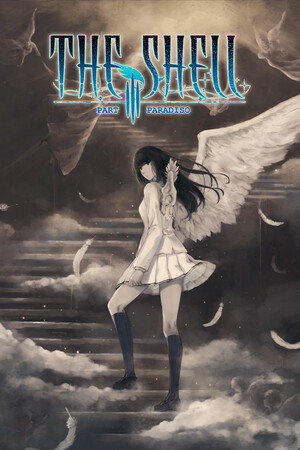
The Shell Part III: Paradiso
A 20-30 hour noir visual novel that closes one of PC gaming's most uncompromising mystery trilogies - essential context required, no shortcuts accepted.
GamerScout Verdict
Complete the trilogy for closure - but know Part III is the weakest link, and Part II casts a long shadow over it.
Compare Prices(7 stores)
Every store in this table quotes us in euros, so the EUR figure is the price the seller actually set, not our arithmetic — which is why EUR is also the currency we rank in. We only list an offer here when the store gives us its price in euros, so nothing in this table is a number we invented.
Pick USD, PLN, GBP, CAD or AUD in the header and we convert from EUR at the European Central Bank reference rate — converted amounts are prefixed with ~. Your bank or the store may apply a different rate at checkout. We never hide offers based on where you are: everyone sees this whole table.
We may earn a commission when you buy games through links on this page — at no extra cost to you. It never affects our rankings or verdicts.
Price History
Screenshots & Media
About The Shell Part III: Paradiso
My honest position going into Paradiso was cautious optimism: the first two entries in Innocent Grey's Kara no Shoujo series were among the sharpest murder-mystery visual novels I'd tracked, tight in structure and brutal in consequence. Part III lands as a remastered English release of the 2020 Japanese original, and the question that matters to anyone reading this page is whether it sticks the landing on years of accumulated story weight. The short answer is: mostly, but with real cracks. Set in a bleak, snow-covered 1958 Tokyo, the game picks up immediately where Part II left off. Reiji Tokisaka is grief-hollowed, searching for a missing child while a fresh string of art-inspired killings - bodies posed to mirror a newly discovered painting titled Exile of Paradise - pulls him back into investigative work he can barely stomach. The game is a branching, choice-driven visual novel, so your "gameplay" is largely selecting investigative responses and navigating dialogue. There are multiple endings and several bad ends that require save-scumming with around twelve save slots if you want the full picture; a community-translated guide from the original Japanese walkthrough is already available on Steam. The structure rewards a second pass, which unlocks a prequel scenario that contextualises events across the whole trilogy. Clues can arrive rapidly and the pacing occasionally rushes through deduction beats that Part II let breathe, but the investigative loop is still satisfying enough to carry a 20-30 hour commitment. Where Paradiso genuinely excels is in its production values and in the writing of its protagonist. Reiji as a character is as compelling as the series has ever managed: a worn-out man confronting the outer edges of his own obsession, whose grief is communicated as much through what goes unsaid as through explicit dialogue. The art style shifts noticeably from the prior entries, which has divided fans, but the soft-yet-haunting aesthetic suits the 1950s setting, and the soundtrack is, by most player accounts, the strongest in the trilogy. The CG work during horror and revelation sequences leaves an impression. Content warnings are real and significant here: graphic violence, mutilation, and sexual violence are present. The Steam version is censored; a free R18 patch is available via Johren for those who want the uncut release. The weaknesses are structural and hard to ignore. The ensemble cast grows large enough that several returning characters get compressed arcs, and some new figures feel more like plot mechanisms than people. A mid-game time skip to the 1960s introduces a second mystery arc - rural disappearances, more "angel" murders, a cat-and-mouse dynamic with an escaped serial killer - that is genuinely gripping on its own terms but contributes to a sense that the script is juggling more than it can fully develop. Players who rate Part II as the series high point will find Paradiso an uneven step down. Players who come in without that comparison, or who are simply hungry for closure, tend to rate it more warmly. Steam's aggregate of over 550 reviews sits at 97% positive, which reflects the trilogy's dedicated audience more than a neutral verdict on Part III in isolation. Entry point matters enormously here. Do not start with Part III. The trilogy is sold as a bundle, and the correct reading order runs from Part I through Cartagra (a prequel visual novel sold separately) before arriving at Paradiso. Anyone willing to invest that time will find the final endings of Part III deliver a bittersweet closure that earns the years of buildup. Anyone looking for a self-contained mystery should look elsewhere entirely.

Strategy & simulation
Tags
System Requirements
Minimum
- OS
- Windows 10
- Memory
- 2 GB RAM
- DirectX
- Version 9.0
- Graphics
- Intel HD Graphics
- Processor
- Intel Core i series
- Sound Card
- PCM (DirectSound support)
Recommended
- OS
- Windows 10
- Memory
- 4 GB RAM
- Graphics
- NVIDIA GeForce 8000 or AMD Radeon HD 2000 +
- Processor
- Intel Core i series (without CULV)
- Sound Card
- PCM (DirectSound support)
Keep exploring
Community Discussion
Be the first to comment on The Shell Part III: Paradiso.
Reviews & Ratings
No ratings available
Game Info
- Developer
- Innocent Grey
- Publisher
- Shiravune
- Release Date
- Jan 21, 2025