
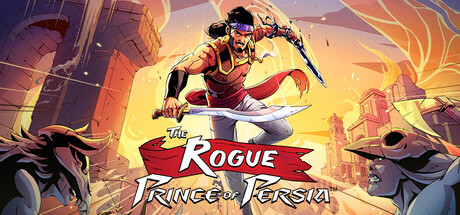
The Rogue Prince of Persia
Dead Cells' DNA meets Prince of Persia's acrobatic legacy in a roguelite where the parkour alone is worth the price of admission, even if everything around it plays it safe.
GamerScout Verdict
Built for Dead Cells fans and movement junkies; the parkour is exceptional, the rest is competent but unlikely to convert roguelite skeptics.
Compare Prices(6 stores)
Every store in this table quotes us in euros, so the EUR figure is the price the seller actually set, not our arithmetic — which is why EUR is also the currency we rank in. We only list an offer here when the store gives us its price in euros, so nothing in this table is a number we invented.
Pick USD, PLN, GBP, CAD or AUD in the header and we convert from EUR at the European Central Bank reference rate — converted amounts are prefixed with ~. Your bank or the store may apply a different rate at checkout. We never hide offers based on where you are: everyone sees this whole table.
We may earn a commission when you buy games through links on this page — at no extra cost to you. It never affects our rankings or verdicts.
Price History
Screenshots & Media
About The Rogue Prince of Persia
My first hour with The Rogue Prince of Persia was mostly spent wall-running into spike traps and grinning about it. That tells you something useful: the movement here is the whole argument. Evil Empire, the Bordeaux studio that spent years tuning Dead Cells into one of the sharpest-feeling roguelites ever made, has channelled all of that kinetic craft into a Prince of Persia framework, and the result is a 2D side-scrolling roguelite that gets one thing genuinely, world-class right. The parkour is the reason to be here. Wall-running, pole-jumping, background-wall sprints, vaults over enemies, ground pounds, and a momentum mechanic called Vayu's Breath that rewards chaining moves together by boosting your speed further still. All of those tools are available from the first run, which means skill expression is immediate rather than gated behind unlocks. The levels are built around all of it, with biomes like the village, the aqueduct, and the Grand Academy each offering distinct traversal layouts. Combat slots in as a fluid companion: a primary weapon and a secondary tool (bows, throwing knives, and more) fed by an energy meter, plus backstab opportunities when you vault over enemies. Medallions picked up mid-run layer on buffs and elemental effects, some pairing together for bigger payoffs. It is not the most inventive combat system in the genre, but it moves well, and that matters when movement is the whole point. Permanent progression runs through Soul Cinders harvested from enemies, which must be banked between biomes or lost on death. That creates genuine tension in every run. Cinders unlock new weapons and medallions for future attempts, while separate skill trees built on earned XP let you improve health, death defiance, and status-effect scaling. A Mind Map tracks story threads and serves as a loose quest log, nudging you toward characters like a blacksmith who converts blueprints into permanent weapon additions. The narrative itself is serviceable and no more: the Huns have invaded Persia, the Prince dies, a magic bola rewinds him to the Oasis hub, repeat. The story does not go anywhere particularly surprising, and character dialogue repeats faster than the genre's best examples. If you came for Hades-level storytelling, adjust expectations. The visual direction is one of the game's quieter triumphs. A Franco-Belgian comic art style with a natural, refined colour palette (revised from the divisive pastel tones of early access) makes each biome genuinely beautiful to look at. An unlockable wardrobe that runs from classic Prince of Persia looks to Ezio's Assassin's Creed outfit adds personality. The soundtrack by ASADI blends traditional Persian instruments with punchy electronics, and it is good enough that more than a few reviewers mentioned turning down other audio just to hear it better. On the design criticism side: repetition sets in around the mid-game, earlier biomes demand more replays than their variety justifies, and the Soul Cinders loss-on-death mechanic can make grinding for a specific weapon feel unnecessarily punishing. The Awakenings difficulty modifier system, which lets you stack challenge toggles for better rewards, helps extend the useful life of late runs but does not fully solve the content variety gap versus genre titans. For a full clear of the main storyline, expect roughly six to eight hours. Hitting the true ending, which requires defeating the boss multiple times and completing additional objectives, stretches that to around twenty to thirty hours. This is a focused package, not a sprawling one. If you bounced off roguelites because they feel grindy and slow to open up, this one moves at a pace that earns goodwill fast. If you need the depth of Dead Cells post-DLC or the narrative richness of Hades, the gap is noticeable. But if you want the best-feeling parkour in any 2D roguelite currently available, nothing else is close.

Catch-all
Tags
System Requirements
Minimum
- OS
- Windows 10
- Memory
- 8 GB RAM
- DirectX
- Version 11
- Storage
- 5 GB available space
- Graphics
- NVIDIA GeForce GTX 950 (2GB) / AMD RX 5500 XT (4GB)
- Processor
- Intel Core i5-4460 3.2 GHz / AMD Ryzen 3 1200 3.2 GHz
Recommended
Requires a 64-bit processor and operating system
Keep exploring
Community Discussion
Be the first to comment on The Rogue Prince of Persia.
Reviews & Ratings
No ratings available
Game Info
- Developer
- Evil Empire
- Publisher
- Ubisoft
- Release Date
- Aug 20, 2025