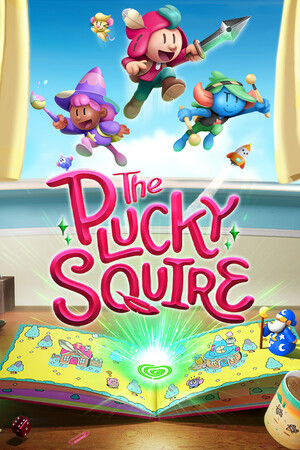
The Plucky Squire
Fewer than 8 hours of pure charm, a dimension-hopping storybook adventure that does one thing brilliantly and telegraphs every other thing so hard it forgets to let you actually play.
GamerScout Verdict
Worth it for casual adventure fans and younger players; challenge-seekers and puzzle purists will find the hand-holding wears thin fast.
Compare Prices(0 stores)
Loading prices...
We may earn a commission when you buy games through links on this page — at no extra cost to you. It never affects our rankings or verdicts.
Price History
Screenshots & Media
About The Plucky Squire
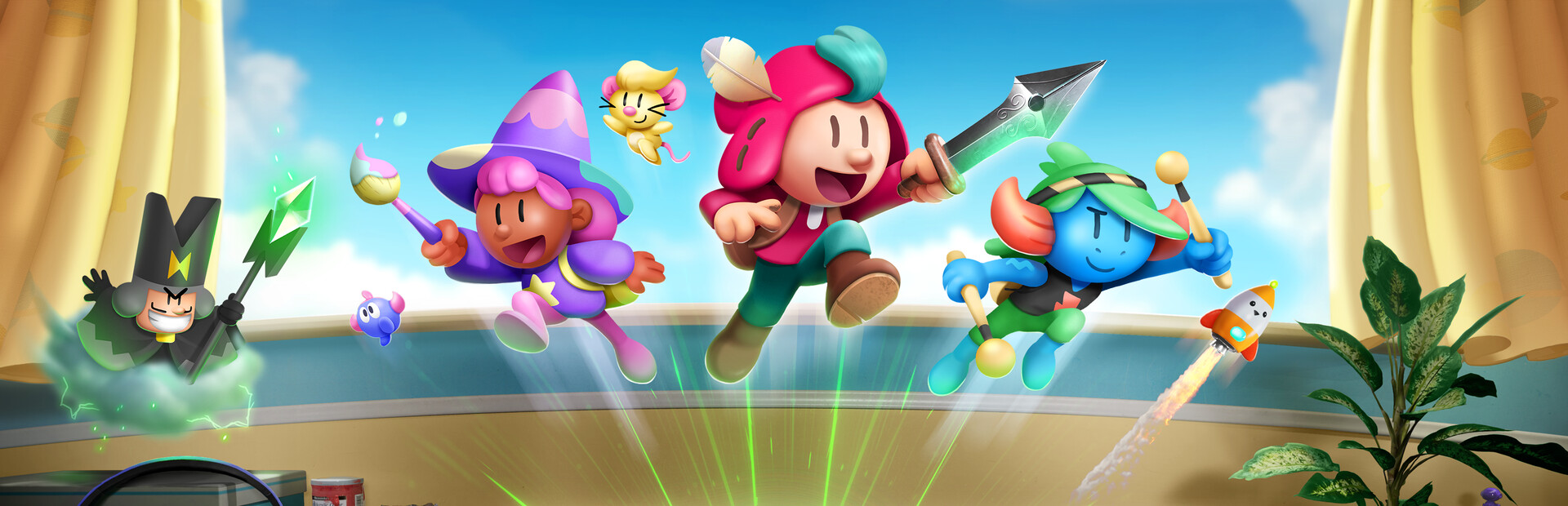
My first hour with The Plucky Squire had me grinning like an idiot, and I want to be honest about that before anything else. All Possible Futures - a British studio with Pokemon and Swords of Ditto DNA in its lineage - has built something that looks extraordinary and commits fully to its central conceit: Jot, a top-down Zelda-esque hero, exists inside a children's storybook and can physically leap off the page into the three-dimensional bedroom desk surrounding it. Watching a flat illustrated character pop into a chunky 3D figure and scramble around pencil cases and coffee mugs is genuinely delightful every single time it happens. That transition, the snap from inky 2D storybook to cluttered real-world 3D space and back again, is the game's best trick, and it pulls it off with real craft. The puzzle design that sits around that gimmick is where things get interesting and occasionally frustrating. The word-swapping mechanic - finding adjectives and nouns scattered across the book's pages and slotting them into narrative sentences to change the world (turning a "destroyed" bridge "complete", shrinking a giant frog by replacing "huge" with "tiny") - starts genuinely clever and scales reasonably well. You also unlock the ability to tilt and flip pages mid-puzzle, which lets gravity mess with objects inside the book. Good ideas, both of them. The problem is the game rarely trusts you to figure any of it out. It tutorialises relentlessly, pans the camera across 3D levels to map out your path before you've taken a step, and locks off tools it just gave you the moment it decides they aren't needed. Players who want to experiment will feel constantly managed. The puzzles also never reach a difficulty that requires genuine effort - if you're coming in hoping to flex, look elsewhere. Combat is the roughest part of the core loop. Jot starts with a sword swing and a roll, and an upgrade system lets you eventually add a ranged throw, a spin attack, and a jump strike. It's functional and Zelda-adjacent, but enemy hit points run on the generous side and the gamefeel never gets as tight as the top-down classics it's clearly referencing. What saves the moment-to-moment experience from going flat is the relentless parade of minigames woven through the adventure: a Punch-Out-style badger boxing match, a rhythm boss fight, a turn-based JRPG encounter, a bullet-hell section on the side of a coffee mug styled after Resogun. Some land better than others, and a few get repeated when they probably shouldn't, but the sheer variety keeps the roughly seven-to-eight-hour runtime from dragging too badly - mostly. Pacing does wobble in the mid-section, with story cutscenes and narrator interruptions stacking up when you'd rather be puzzling. Visually, the 2D storybook world is where the art direction sings. The illustrated environments are genuinely beautiful, full of warmth and texture. The 3D real-world sections are competent but noticeably less inspired by comparison - character models lose some of that hand-drawn personality, and a few performance hiccups can creep in. The narrator, voiced by English actor Philip Bretherton, does excellent work keeping the tone breezy and British throughout. There are collectibles in the form of concept art pages and hidden Glitchbirds, adding a light replay hook for completionists. Who is this for? Parents looking for something genuinely good to play alongside younger kids will find it near-ideal. Casual adventure fans who want a pretty, low-stakes romp with a clever central gimmick and a tidy runtime will get their money's worth. Anyone who needs mechanical depth, real challenge, or the freedom to break puzzle solutions in unexpected ways will leave a little cold. The charm is real. The ambition of the concept is real. The execution just plays it safer than the concept deserves.

Catch-all
Tags
System Requirements
Minimum
- OS
- Windows 10 x64 Bit
- Memory
- 8 GB RAM
- DirectX
- Version 12
- Storage
- 27 GB available space
- Graphics
- GeForce GTX 960 (4096Mb) / Radeon RX 460 (4096Mb)
- Processor
- Intel Core i3-4160 / AMD FX-4350
Recommended
- OS
- Windows 10 x64 Bit
- Memory
- 16 GB RAM
- DirectX
- Version 12
- Storage
- 27 GB available space
- Graphics
- GeForce GTX 1080 (8192MB) / Radeon RX Vega 64 (8192 MB) / Intel Arc A750
- Processor
- Intel Core i5-8600K / AMD Ryzen 5 1500X
Keep exploring
Community Discussion
Be the first to comment on The Plucky Squire.
Reviews & Ratings
Game Info
- Developer
- All Possible Futures
- Publisher
- Devolver Digital
- Release Date
- Sep 17, 2024
