The Plane Effect
A visually arresting isometric nightmare about a man who just wants to go home, built on atmosphere so thick you could cut it, and puzzles obtuse enough to make you want to quit before the credits.
GamerScout Verdict
Best for atmosphere-chasers who loved Inside and will tolerate obtuse puzzles in exchange for one of indie gaming's eeriest commutes.
Compare Prices(3 stores)
Every store in this table quotes us in euros, so the EUR figure is the price the seller actually set, not our arithmetic — which is why EUR is also the currency we rank in. We only list an offer here when the store gives us its price in euros, so nothing in this table is a number we invented.
Pick USD, PLN, GBP, CAD or AUD in the header and we convert from EUR at the European Central Bank reference rate — converted amounts are prefixed with ~. Your bank or the store may apply a different rate at checkout. We never hide offers based on where you are: everyone sees this whole table.
We may earn a commission when you buy games through links on this page — at no extra cost to you. It never affects our rankings or verdicts.
Price History
Screenshots & Media
About The Plane Effect
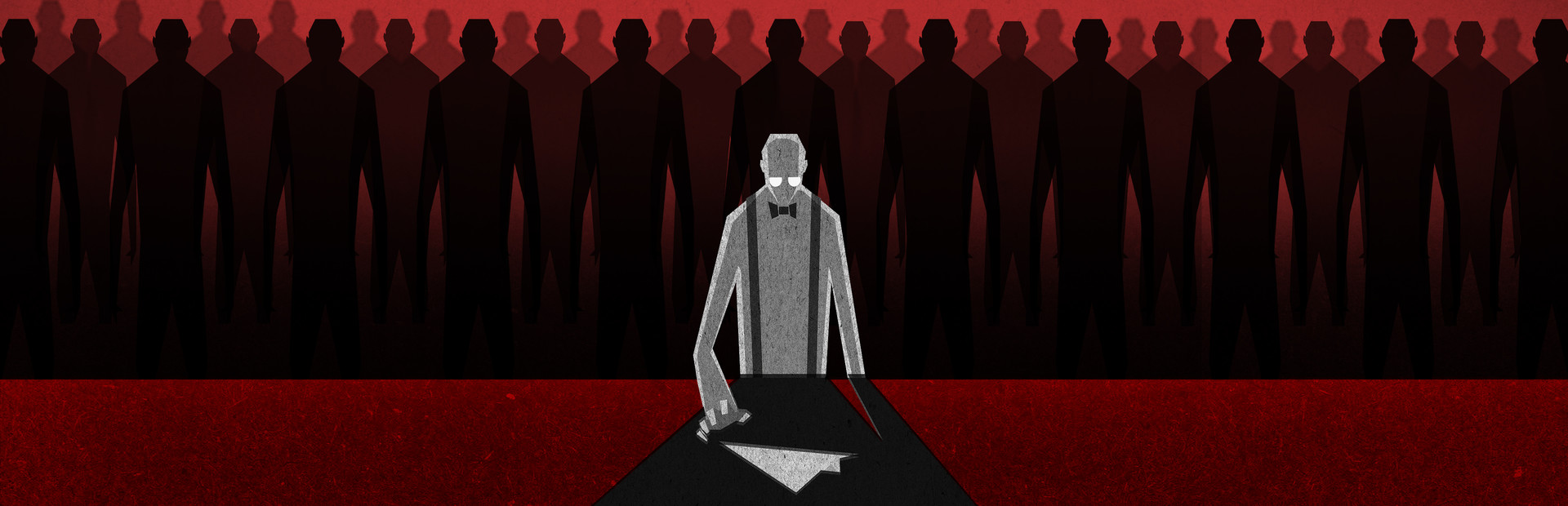
I went into The Plane Effect fully ready to be its advocate. The low-poly isometric world, the muted grays punctuated by single bursts of colour, the promise of a surreal commute through a dystopian cityscape while a cosmic red entity looms overhead, all of it had me leaning forward. The opening image of Solo, a salaryman clacking away alone in a darkened office on his last day, says more without words than most games manage in an hour of cutscenes. That atmosphere is genuine, handcrafted, and it carries the game for longer than the mechanics deserve. The world itself is the highlight, full stop. Each level operates like a stage set built specifically to unsettle you: muted charcoal cityscapes give way to surreal encounters with drones, sewer creatures, giant ants, and Escher-style staircases that warp under impossible physics. The developers clearly had VFX expertise and it shows in the lighting design and parallax motion across the isometric plane. If you have a soft spot for Inside or Mosaic, the visual language here will feel familiar and welcome. The recurring motif of Solo's daughter's paper plane, which pulls you back to reality across chapters, is quietly beautiful, exactly the kind of small intentional detail that makes handcrafted games worth championing. But here is where the honesty has to arrive. The puzzle design works against the atmosphere at nearly every turn. The core loop is a strict sequential point-and-click structure: you cannot pick up the oil can until you have visited the cogs, you cannot interact with the taxi until you have done something else the game never told you about. Three difficulty modes exist, ranging from no-hint to a full Guided mode that draws a literal line to your next objective, and most players will find themselves sliding toward Guided faster than they expected. The platforming sections compound the problem. The fixed isometric camera makes spatial judgment unreliable, and timed chase sequences with sluggish controls and inconsistent hitboxes produce the kind of frustration that breaks immersion completely. The run button is slow to respond. The jump carries no convincing momentum. For a 3 to 6 hour game, these friction points land hard. The community reception reflects that split. Steam user scores sit in mixed territory and critic reviews cluster around the same tension: the art direction is praised almost universally, while the puzzle logic and controls draw consistent criticism across platforms. A Metacritic score of 68 is exactly where you would expect a game that gets half the equation right to land. If you treat the hint system as a design feature rather than a concession, lean into Guided mode from the start, and come for the surreal atmosphere and moody ambient soundtrack rather than puzzle satisfaction, you will find something genuinely strange and worth seeing. If you want the puzzle layer to carry its own weight, this is not that game.

Indie & narrative
Tags
System Requirements
Minimum
- OS
- 64 bit Windows 10 / 8 / 7
- Memory
- 4 GB RAM
- Storage
- 4 GB available space
- Graphics
- GeForce GTX 550 Ti / Radeon HD 6790 2GB VRAM
- Processor
- Intel Core i5-2500K 3.3GHz / AMD FX-8150 3.6GHz or equivalent
Recommended
- OS
- 64 bit Windows 10
- Memory
- 8 GB RAM
- Storage
- 4 GB available space
- Graphics
- GPU - NVIDIA GTX 1080 or equivalent video card with a dedicated memory of 2GB or high VRAM.
- Processor
- Processor - Core i5 2.8GHz processor.
Keep exploring
Community Discussion
Be the first to comment on The Plane Effect.
Reviews & Ratings
Game Info
- Developer
- Innovina/StudioKiku
- Publisher
- PQube
- Release Date
- Sep 23, 2021