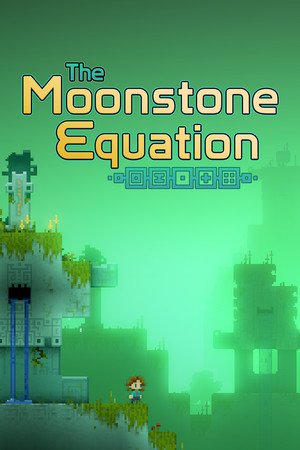
The Moonstone Equation
A nine-year solo passion project that syncs its world clock to yours and asks you to slow down, look carefully, and think, for anyone who misses the quiet wonder of early Fez.
GamerScout Verdict
Best for patient puzzle fans who loved Fez's quiet mystery and don't mind navigating without a map.
Compare Prices(4 stores)
Every store in this table quotes us in euros, so the EUR figure is the price the seller actually set, not our arithmetic — which is why EUR is also the currency we rank in. We only list an offer here when the store gives us its price in euros, so nothing in this table is a number we invented.
Pick USD, PLN, GBP, CAD or AUD in the header and we convert from EUR at the European Central Bank reference rate — converted amounts are prefixed with ~. Your bank or the store may apply a different rate at checkout. We never hide offers based on where you are: everyone sees this whole table.
We may earn a commission when you buy games through links on this page — at no extra cost to you. It never affects our rankings or verdicts.
Price History
Screenshots & Media
About The Moonstone Equation
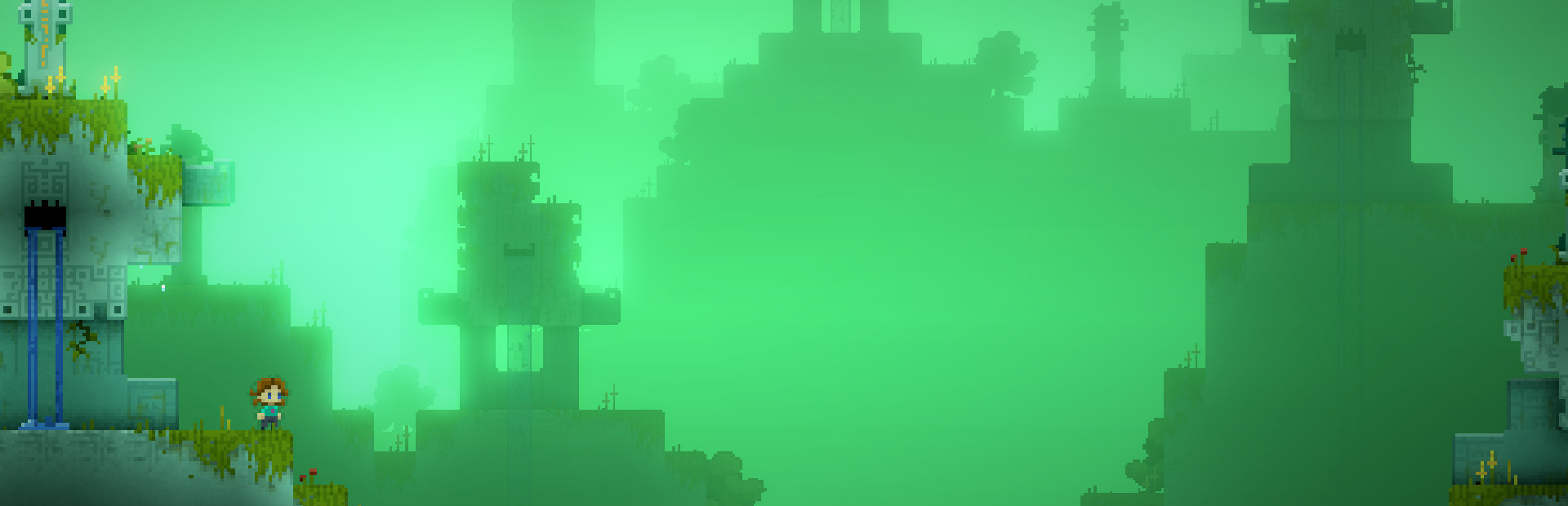
My first thought when I loaded this up was: someone spent nine years on this, alone, in the margins of a full-time job and a growing family. That context matters, because it explains both what makes The Moonstone Equation quietly remarkable and where its rougher edges come from. This is a puzzle-platformer set inside a remote hilltop research facility where protagonist Alice arrives to investigate strange inscriptions carved into moon rock. There are no enemies, no combat loops, no fail states to speak of, just a place to be curious inside, with other eccentric residents going about their own theorising around you. The most immediately distinctive thing is the living world system. The game reads your real-world clock and mirrors it at the facility: arrive at night and the pixel-art hilltop is cast in nocturnal light, complete with what appears to be a real-time lunar phase in the sky. The characters and environment respond not just to time of day but to how frequently you return. It is a small design decision that produces something genuinely atmospheric, the kind of detail that makes a handcrafted world feel inhabited rather than staged. The soundtrack leans into that mood, understated, a little unsettled in the right moments, and clearly composed with the same deliberate care as the rest of the project. The puzzles themselves range from observational environmental challenges to terminal-hacking sequences, and the game is honest that some are more obvious than others. Exploration is open and narrative-driven, with a journal that tracks clues and pushes you toward the next thread. Here is where the game's main friction point lives: there is no in-game map, and the guidance on where to go next is loose enough that players can find themselves genuinely directionless. Community guides exist precisely because getting stuck without a map feels less like satisfying mystery and more like friction that could have been smoothed out. If you are the kind of player who bounces off exploration games the moment waypoints disappear, the lack of navigational scaffolding will test your patience. The pixel art is clean and purposeful, running on a custom engine with real-time lighting that gives the world a crispness you don't always see in this tier of solo project. It draws clear spiritual comparisons to Fez and Braid in its tone and puzzle philosophy, and those comparisons are earned even if the production scale is smaller. At 12-plus hours, it knows it has room to breathe and it uses that space deliberately, though the pacing in the early sections may feel slow to players expecting a tighter loop. The partial controller support is worth noting if you planned to play from the couch. This is a game made by someone who loves puzzles the way some people love crosswords, as a private, patient practice, and that quality of attention transfers to the player who meets it halfway. It rewards the curious and gently repels the impatient. Go in expecting a contemplative, slightly eccentric adventure with a genuine sense of place, and manage your expectations around its lack of map and hand-holding, and you will find something that most people will never hear about and probably should.

Indie & narrative
Tags
System Requirements
Minimum
- OS
- Windows 7
- Memory
- 2 GB RAM
- DirectX
- Version 11
- Storage
- 300 MB available space
- Graphics
- GeForce 440 or equivalent
- Processor
- Intel Core 2 Duo 2.1 ghz or equivalent
Keep exploring
Community Discussion
Be the first to comment on The Moonstone Equation.
Reviews & Ratings
No ratings available
Game Info
- Developer
- Andy Buck
- Publisher
- Hippy Lizard
- Release Date
- Aug 20, 2018