
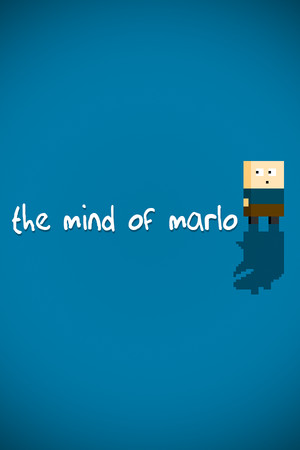
The Mind of Marlo
A one-hour mockumentary point-and-click that sneaks genuine heartbreak past you while you're still laughing at a man whose head keeps turning into a slug. Criminally overlooked, absurdly cheap, and knows exactly when to stop.
GamerScout Verdict
Best for players who want a handcrafted, emotionally honest hour with a premise weirder than its heart.
Compare Prices(3 stores)
Every store in this table quotes us in euros, so the EUR figure is the price the seller actually set, not our arithmetic — which is why EUR is also the currency we rank in. We only list an offer here when the store gives us its price in euros, so nothing in this table is a number we invented.
Pick USD, PLN, GBP, CAD or AUD in the header and we convert from EUR at the European Central Bank reference rate — converted amounts are prefixed with ~. Your bank or the store may apply a different rate at checkout. We never hide offers based on where you are: everyone sees this whole table.
We may earn a commission when you buy games through links on this page — at no extra cost to you. It never affects our rankings or verdicts.
Price History
Screenshots & Media
About The Mind of Marlo
I wasn't expecting to feel anything. The premise sounds like a joke somebody typed at 2am - a man whose head spontaneously transforms into various silly objects, filmed as a deadpan documentary crew follows him around his flat. But something quiet and real is buried inside the absurdity, and Point Bleep Studios earns it fully within the runtime they've given themselves. The structure is point-and-click, but light. You move through Marlo's small home - a handful of rooms, modestly connected - clicking objects to uncover the tiny autobiographies attached to them. Nearly everything in his flat has a story, and those stories almost always orbit two people: his father, who once gave him a trophy for "not dying", and an ex-girlfriend named Linda, whom he clearly hasn't recovered from. The puzzle layer asks you to introduce each of Marlo's silly heads to something it dislikes, which is the cure. Solutions range from obvious to surprisingly lateral, and the item-combination system is stripped down to a few mouse clicks. There is no fail state, no inventory juggling, no pixel-hunting. The game is not trying to challenge you mechanically. It is trying to get you to listen. The mockumentary framing is what makes this thing work. Video games have rarely tried the format, and the dry British voice delivery here is calibrated to perfection - Marlo narrates his own disasters with a resigned monotone, as if the absurdity of his condition is simply the least interesting of his problems. The chunky pixel art carries an optional film grain filter that suits the low-fi documentary aesthetic beautifully, and the piano score walks a careful line between mopey and wistful without collapsing into either. Each silly head is visually distinct and the animators use them to quietly comment on whatever Marlo is confessing at the time - small craft details that you only notice because the pace lets you notice them. The honest critique is short length and limited replayability. Under two hours, two narrative halves that together form a complete arc with a closing twist, and then it's done. There is no second route, no alternate dialogue tree, nothing to revisit. Whether that's a flaw or just the correct length for the story being told depends entirely on your tolerance for compact, intentional experiences. My read: the game ends at exactly the right moment, which is rare enough to be worth noting. If you habitually skip anything under ten hours, skip this too and be at peace with it. But if you have an afternoon and a soft spot for small, handmade things that mean what they say, Marlo is the kind of find you mention to people unprompted a year later.

Indie & narrative
Tags
System Requirements
Minimum
- OS
- Windows XP SP2+
- Memory
- 2 GB RAM
- DirectX
- Version 9.0c
- Storage
- 500 MB available space
- Graphics
- 512 MB VRAM
- Processor
- 1.6 GHz or better - SSE2 instruction set support.
Recommended
- OS
- Windows 7/8/10
- Memory
- 2 GB RAM
- DirectX
- Version 11
- Storage
- 1 GB available space
- Graphics
- 1GB VRAM
- Processor
- 2.0 GHz dual core or equivalent - SSE2 instruction set support.
Keep exploring
Community Discussion
Be the first to comment on The Mind of Marlo.
Reviews & Ratings
No ratings available
Game Info
- Developer
- Point Bleep Studios
- Publisher
- Baffled Crab
- Release Date
- Oct 19, 2017