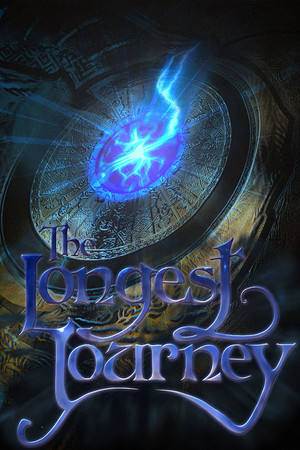
The Longest Journey
Forty-plus hours of dual-world point-and-click storytelling carried almost entirely by one of the best-written protagonists in PC adventure history. Worth it if you can forgive mid-2000s puzzle logic.
GamerScout Verdict
Essential for narrative-first adventure fans who can tolerate moon-logic puzzles; skip if you need stakes or mechanical depth.
Compare Prices(7 stores)
Every store in this table quotes us in euros, so the EUR figure is the price the seller actually set, not our arithmetic — which is why EUR is also the currency we rank in. We only list an offer here when the store gives us its price in euros, so nothing in this table is a number we invented.
Pick USD, PLN, GBP, CAD or AUD in the header and we convert from EUR at the European Central Bank reference rate — converted amounts are prefixed with ~. Your bank or the store may apply a different rate at checkout. We never hide offers based on where you are: everyone sees this whole table.
We may earn a commission when you buy games through links on this page — at no extra cost to you. It never affects our rankings or verdicts.
Price History
Screenshots & Media
About The Longest Journey
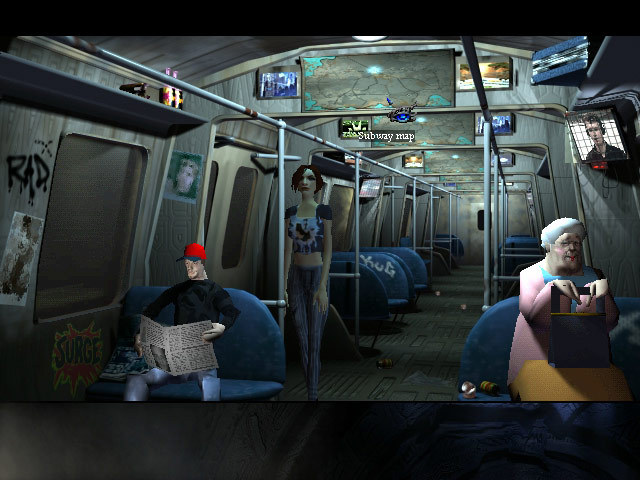
I came to The Longest Journey the same way most people do: someone on a forum insisted it was unmissable, and they were not wrong. Ragnar Tornquist's script plants you inside the life of April Ryan, an eighteen-year-old art student in the cyberpunk sprawl of Newport who discovers she can Shift between two parallel worlds: Stark, a technology-saturated future Earth, and Arcadia, a realm of magic, mythical creatures, and genuinely strange cosmology. The premise sounds like every other Chosen One story, and the game even winks at that, but the plot unravels in a way that earns its ambitions across all thirteen chapters. The mechanics are classic point-and-click: cursor-driven hotspot hunting, inventory combination, and dialogue trees. April's journal logs every significant event in her own voice, which is both a practical lore-tracker and a genuinely enjoyable read in its own right. There is a walk-and-run toggle, a dialogue log you can revisit, and a three-action interface covering observation, conversation, and interaction. What the game does not offer is any real fail state. April cannot die, and certain tense set-pieces - a monster in chapter twelve, a Vanguard agent hammering at her door - lose their teeth entirely because of it. The absence of pressure is a recurring design frustration in an otherwise confident game. The puzzle quality swings wildly. Some solutions are clever and contextually satisfying; others are notorious moon-logic traps, and the infamous rubber-duck-and-steel-clamp sequence has been breaking players' will since launch. Backtracking across the game's sprawling 150-plus locations also adds dead weight to a runtime that is already substantial. If padding irritates you, specific chapters will test your patience well before the narrative pays you back. But the narrative does pay you back. Tornquist treats each supporting character as a person rather than a plot device: Crow the sardonic talking bird, the mysterious Cortez, the White Dragon who connects to April's origins in ways the lore rewards thinking about. April herself is voiced by Sarah Hamilton in a performance that covers something like a dozen emotional registers without ever feeling inconsistent. The story's real subject, underneath all the world-saving, is identity: who April is, where she comes from, and what it costs to be the person a prophecy needs you to be. The bittersweet ending lands, and it sets up Dreamfall with enough dangling threads to pull you straight into the sequel. A word of honesty: some of the humor has aged in the way early-2000s sarcasm tends to age, and the blocky character models were behind the curve even at release. Play this for the writing and the worldbuilding, not for visual spectacle or mechanical depth. It is closer to an interactive novel than an action game, and that comparison is a compliment, not a warning.

RPGs
Tags
System Requirements
Minimum
Windows 2000/XP, Pentium 166 MMX , 32 MB RAM, Mouse and Keyboard, 640x480 SVGA high colour (16bit) video card with 2 MB RAM, Windows compatible sound device, 300 MB free hard drive space
Recommended
Penti…
Keep exploring
Community Discussion
Be the first to comment on The Longest Journey.
Reviews & Ratings
Game Info
- Developer
- Funcom
- Publisher
- Funcom
- Release Date
- May 1, 2007