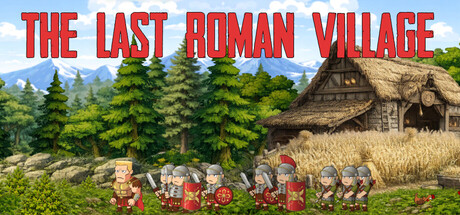
The Last Roman Village
A side-scrolling Roman tower defense with split-flank pressure and a building roster deep enough to make your first few runs feel genuinely experimental. Rough edges included.
GamerScout Verdict
Worth it for side-scrolling tower defense fans on a budget; everyone else should wait for the sequel or a deep discount.
Compare Prices(2 stores)
Every store in this table quotes us in euros, so the EUR figure is the price the seller actually set, not our arithmetic — which is why EUR is also the currency we rank in. We only list an offer here when the store gives us its price in euros, so nothing in this table is a number we invented.
Pick USD, PLN, GBP, CAD or AUD in the header and we convert from EUR at the European Central Bank reference rate — converted amounts are prefixed with ~. Your bank or the store may apply a different rate at checkout. We never hide offers based on where you are: everyone sees this whole table.
We may earn a commission when you buy games through links on this page — at no extra cost to you. It never affects our rankings or verdicts.
Price History
Screenshots & Media
About The Last Roman Village
I went in expecting a quick casual distraction and came out thinking about gold allocation more than I should admit. The Last Roman Village is a 2D side-scrolling tower defense and base builder where enemies push in from both the left and right simultaneously, which is the core tension that separates it from the top-down wave-defense crowd. Holding one flank while the other crumbles is a real, recurring crisis, and the gold economy is tight enough that you feel every misplaced coin. The building roster gives you more to think about than the indie price tag suggests. A Forum pumps extra gold each wave, Barracks produce Spearmen, Legionnaires, and Praetorians depending on upgrade level, an Archery Range handles ranged output, a Ballista Factory adds serious punch, and support buildings like the Mill and Blacksmith feed stat buffs to your troops. Villagers spawned by upgraded Houses act as auto-repairmen patching your walls between waves, and their AI pathfinding is one of the game's weaker spots: they will stubbornly crowd a lightly damaged wall while a second wall takes a beating on the other side. That kind of rough-around-the-edges behavior shows up in a few places. The Wheel of Soldiers mechanic, which triggers every nine waves and hands out randomised bonuses including arrow rain magic, a wrath-of-gods spell, attack and defense buffs, or a companion dog, occasionally locks up entirely and forces a restart. Steam community posts confirm this has been a persistent issue since launch with no confirmed fix for all users. The boss wave structure, with a named boss fight on every tenth wave, gives you a concrete rhythm to plan around. Do you rush Barracks upgrades to have Praetorians ready by wave ten, or front-load the Forum for compound gold growth and gamble that archers hold early? These are the decisions that keep the loop interesting. The magic spells, particularly summon soldier and arrow rain, function as emergency buttons that reward players who save them rather than panic-spend them early. That said, the decision space has a ceiling. Once you find a defensive layout that works, there is limited incentive to rebuild from a different angle, and the game offers no difficulty settings or sandbox mode to stress-test alternative builds. Steam reception sits at mixed, with 57 percent positive across a small review pool, which is an honest number for what this is: a modest solo-dev effort with a functional core loop, genuine dual-front tension, no microtransactions, and rough edges in the AI and technical stability. Players who cleared all 100 levels on mobile report that late-game warrior pathfinding occasionally stalls out with large unit counts, requiring a restart. On PC the GPU load without vsync lock has also caused complaints. Neither issue is a dealbreaker for a casual session, but anyone expecting a polished experience should lower expectations accordingly. There is a sequel, The Last Roman Village 2, in development, which suggests the developer is still active and learning, which is worth noting if you want to support the studio rather than just evaluate the product in isolation. For tower defense fans who specifically want that side-scrolling, dual-lane pressure format, this fills a niche that genuinely does not have many PC competitors. Go in knowing it is a budget indie with a real idea at its center, not a production-value showcase.

Strategy & simulation
Tags
System Requirements
Minimum
- OS
- Windows XP SP3, Windows Vista SP2, Windows 7, Windows 8, Windows 10 (32/64bit versions)
- Memory
- 2 GB RAM
- Storage
- 2 GB available space
- Graphics
- nVidia GeForce 6800GT or AMD Radeon X1950 Pro (256MB VRAM with Shader Model 3.0 or higher)
- Processor
- Intel Pentium IV @ 3.0 GHz or AMD Athlon64 3000 + @ 1.8 GHz
- Sound Card
- DirectX Compatible Sound Card
Recommended
- OS
- Windows XP SP3, Windows Vista SP2, Windows 7, Windows 8, Windows 10 (32/64bit versions)
- Memory
- 2 GB RAM
- Storage
- 2 GB available space
- Graphics
- nVidia GeForce 9600GT or higher, AMD Radeon HD3850 or higher (512MB VRAM with Shader Model 4.0)
- Processor
- Intel Core 2 Duo E4400 @ 2.0 GHz or AMD Athlon64 X2 3800+@ 2 GHz
- Sound Card
- DirectX Compatible Sound Card
Keep exploring
Community Discussion
Be the first to comment on The Last Roman Village.
Reviews & Ratings
No ratings available
Game Info
- Developer
- Twin Stone Studio
- Publisher
- Twin Stone Studio
- Release Date
- Jul 26, 2019