
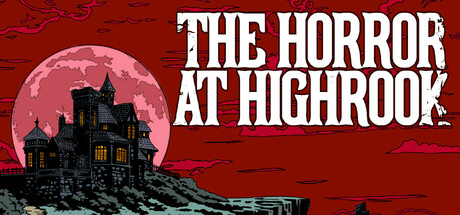
The Horror at Highrook
Card-based investigator management with genuine resource tension and a Lovecraftian mystery that rewards patience. One playthrough, roughly 10 hours, but the atmosphere lingers.
GamerScout Verdict
Best for Cultist Simulator fans or tabletop horror lovers who want a tight 10-hour mystery over a replayable sandbox.
Compare Prices(3 stores)
Every store in this table quotes us in euros, so the EUR figure is the price the seller actually set, not our arithmetic — which is why EUR is also the currency we rank in. We only list an offer here when the store gives us its price in euros, so nothing in this table is a number we invented.
Pick USD, PLN, GBP, CAD or AUD in the header and we convert from EUR at the European Central Bank reference rate — converted amounts are prefixed with ~. Your bank or the store may apply a different rate at checkout. We never hide offers based on where you are: everyone sees this whole table.
We may earn a commission when you buy games through links on this page — at no extra cost to you. It never affects our rankings or verdicts.
Price History
Screenshots & Media
About The Horror at Highrook
My first instinct when I saw the words "card crafting narrative RPG" was to brace for a shallow deck-builder wearing a story as a costume. What I got instead was something closer to a digital co-op board game played solo, and the comparison actually flatters it. The whole thing plays out on a single board representing the rooms of Highrook Estate, and the core loop is satisfying in the way a well-designed tabletop game is: drag a task card into a room, assign the investigator whose stats match the requirement, layer in booster cards to clear harder checks, and watch the mystery inch forward. It is not mechanically complex in the Crusader Kings sense, but the decision density is higher than the visual style suggests. Your four investigators each slot into distinct roles. Atticus Hawk covers physical tasks in the courtyard and cliffs, Mechanist Astor belongs in the machine room with containers and packages, Scholar Vitali is your library and archives specialist, and Doctor Caligar comes into her own in the lab mixing potions and concocting occult preparations. The overlap matters too: Astor and Caligar can both pull duty in the laboratory, which gives you some juggling room when the hunger, fatigue, madness, and wound meters start stacking up simultaneously. Companions Mr. Tubbs the cat and Stokes the raven add a light resource wrinkle. The cat wanders freely and cuts madness on contact, while the raven can be repositioned but only boosts the Chapel and Courtyard. Using them at the right moment is a small but genuine tactical layer. The difficulty sliders for survival pressure are there and they matter. On harder settings, keeping four investigators fed, rested, sane, and uninjured while also hunting ritual components is legitimately stressful time management. On lower settings the same systems fade to soft background noise, which is fair for players who just want the story. The tutorial gates rooms progressively across the eight chapters, which is the smartest structural decision in the game. Rather than opening the full mansion and drowning newcomers in overlapping systems, each chapter unlocks new rooms and mechanics at a pace that feels controlled. Rooms do not become obsolete either; the kitchen stays relevant from chapter one to chapter eight. That said, a few mechanical gaps go unexplained. Reviewers and players alike have noted that some booster card chains are never properly telegraphed, and around chapter three it is easy to hit a wall where you know something needs to happen but cannot find the right card to trigger it. Taking notes is not optional; it is essentially required if you step away from the game for a day or two. The writing is the reason people finish this game and then think about it afterward. Story arrives through journal entries, locked-room notes, and character dialogue unlocked by specific task completions. The narrative is linear, full stop, and there is no second playthrough value baked in since the same beats hit in the same order every run. That is the main structural criticism worth taking seriously. There is no mod ecosystem, no procedural generation, no branching outcome system. You are here for the single-authored experience. A few reviewers flagged spelling and grammar errors scattered through the text, which is a minor but recurring irritant in a game where writing is the primary currency. No voice acting either, though the developer was upfront about budget constraints, and the hand-drawn art and ambient audio carry enough atmosphere that the absence mostly stings rather than breaks anything. For strategy-and-sim players specifically: the mechanical ceiling here is lower than Cultist Simulator (a clear spiritual ancestor) and the challenge curve is gentler. If you bounced off Cultist Simulator's opacity, Highrook is the more accessible entry point into this specific style of card-slotting occult management. If you already love that game, Highrook will feel more legible but slightly shallower. Either way, at roughly 8-10 hours it is a contained, atmospherically coherent, and mechanically honest title from a first-time solo-ish developer that earns its positive reception.

Strategy & simulation
Tags
System Requirements
Minimum
- OS
- Windows 10 or later, 64-bit
- Memory
- 8 GB RAM
- DirectX
- Version 11
- Storage
- 5 GB available space
- Graphics
- 4GB VRAM, 1080p minimum resolution
- Processor
- 2GHz or better
- Sound Card
- Dx11 copatible
Recommended
Requires a 64-bit processor and operating system
Keep exploring
Community Discussion
Be the first to comment on The Horror at Highrook.
Reviews & Ratings
No ratings available
Game Info
- Developer
- Nullpointer Games
- Publisher
- Nullpointer Games
- Release Date
- May 1, 2025