The Golem
A sokoban built around one radical idea: you cannot brute-force your way through it. Put down the controller, stare at the grid, and think, or stay stuck forever.
GamerScout Verdict
Built for serious puzzle solvers who think before they move - casual block-pushers will bounce off the first wall.
Compare Prices(2 stores)
Every store in this table quotes us in euros, so the EUR figure is the price the seller actually set, not our arithmetic — which is why EUR is also the currency we rank in. We only list an offer here when the store gives us its price in euros, so nothing in this table is a number we invented.
Pick USD, PLN, GBP, CAD or AUD in the header and we convert from EUR at the European Central Bank reference rate — converted amounts are prefixed with ~. Your bank or the store may apply a different rate at checkout. We never hide offers based on where you are: everyone sees this whole table.
We may earn a commission when you buy games through links on this page — at no extra cost to you. It never affects our rankings or verdicts.
Price History
Screenshots & Media
About The Golem
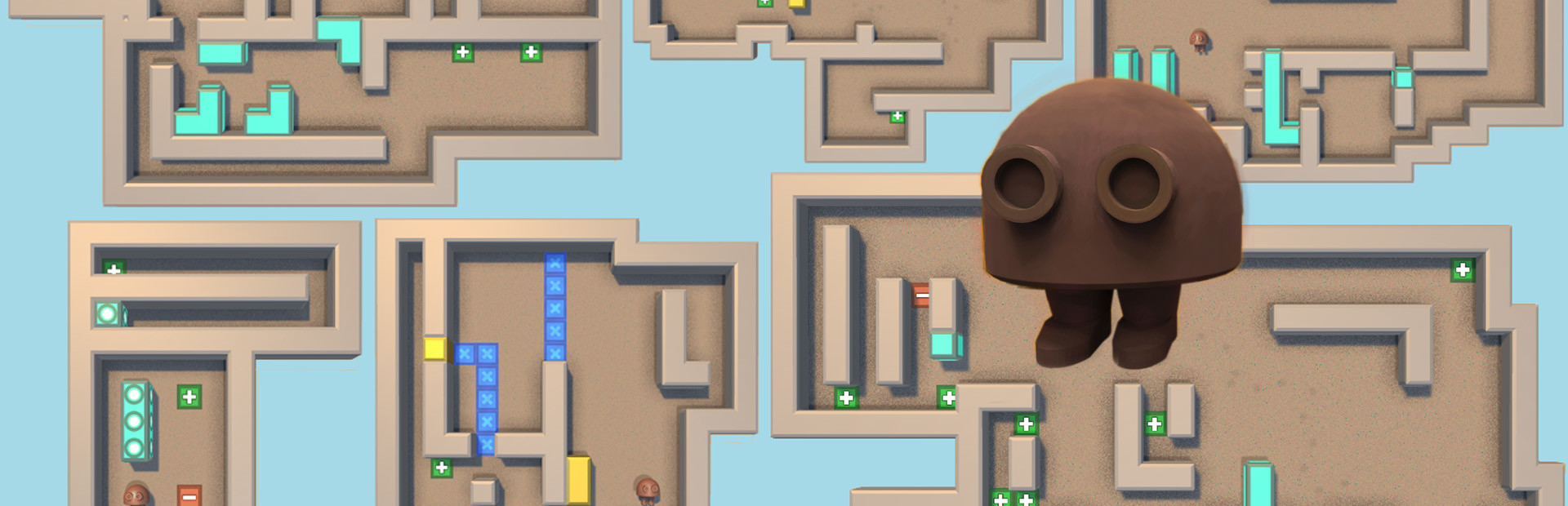
I have a soft spot for solo passion projects that have a specific argument to make about their own genre, and The Golem is exactly that. Dom Camus, a one-person outfit under the FastRam Design label, built this grid-based block-pusher not to add another sokoban to the pile but to prove a point: that most players solve puzzles by shuffling pieces until something clicks, and that a well-designed puzzle should make that strategy fail. The Golem is the result of chasing that idea to its logical end. Every level begins as a single concept written in a text file, and the physical puzzle is only built once that concept is airtight. That process shows. Almost every room here has its own distinct logic, and you feel it the moment the grid loads. The core mechanic is block-pushing with merging and destruction: blocks can combine or annihilate each other depending on how you arrange them, and the goal in each level is to clear or configure the grid in a specific way. There is no timer, no reflex component, no hidden secrets. What there is instead is a very quiet, very patient demand that you look at the arrangement in front of you and deduce the intended path before touching anything. The game leans heavily on what its developer calls macro-puzzle thinking, meaning the challenge is about identifying the core strategic idea of each room rather than finding a precise sequence of moves through trial and error. Some players in the community have compared the experience to sitting with Baba is You or Stephen's Sausage Roll, which is accurate company to keep. Difficulty is the honest caveat here. This is a hard game, and it is hard in a way that is not always comfortable. Because the design philosophy explicitly resists letting you stumble into solutions, a genuinely stuck player has nowhere to hide. You either find the idea or you do not. The rewind mechanic, which lets you undo moves, has a reported quirk where a fast tap can fail to walk back a single step, which adds minor friction to an already demanding experience. The background music loop is thin and was flagged by reviewers as the weakest production element, though it is mutable. On older or non-widescreen displays, some levels have reported clipping at the edges of the grid, which is worth knowing before you commit. What rescues all of that from being a deterrent is how clean the actual puzzle logic is. The difficulty is never unfair in the sense of hiding information or relying on obscure interactions. Every solution is reachable through reasoning alone, and the satisfaction of watching a level's logic collapse into clarity is the kind of feeling that keeps a certain sort of puzzle player at a desk for longer than they planned. Steam reviewers sit at 91 percent positive across the available sample, a figure that probably understates the quality because this game simply does not attract casual browsers. The people who find it tend to really mean it. If you are the kind of person who reads the description of a level rather than just starting to push blocks, The Golem was built specifically for you. If you prefer puzzle games that ease you in gently or reward patient experimentation over cold deduction, look elsewhere first. Thirteen Steam achievements are available, and cloud saves mean your progress travels with you, which matters for a game you will almost certainly return to over multiple sittings. Dom Camus finished this as a side project done with real care, and that care is present in every level that refuses to waste your time.

Indie & narrative
Tags
System Requirements
Minimum
- OS
- Windows 7
- Memory
- 500 MB RAM
- DirectX
- Version 9.0
- Storage
- 512 MB available space
- Graphics
- Graphic card supporting SM2+.
- Processor
- 2.4GHz
- Sound Card
- Any
Keep exploring
Community Discussion
Be the first to comment on The Golem.
Reviews & Ratings
No ratings available
Game Info
- Developer
- Dom Camus
- Publisher
- FastRam Design
- Release Date
- Sep 10, 2020