
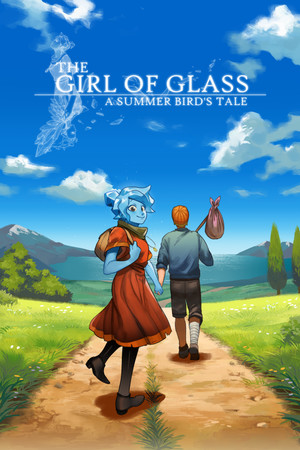
The Girl of Glass: A Summer Bird's Tale
Hand-painted, quietly philosophical, and stubbornly genre-fluid: Kristal's circus escape is the kind of small game that asks you to trust it, and mostly delivers on that ask.
GamerScout Verdict
Best for patient players who want hand-painted beauty and a philosophically honest story and can stomach a punishing combat second half.
Compare Prices(3 stores)
Every store in this table quotes us in euros, so the EUR figure is the price the seller actually set, not our arithmetic — which is why EUR is also the currency we rank in. We only list an offer here when the store gives us its price in euros, so nothing in this table is a number we invented.
Pick USD, PLN, GBP, CAD or AUD in the header and we convert from EUR at the European Central Bank reference rate — converted amounts are prefixed with ~. Your bank or the store may apply a different rate at checkout. We never hide offers based on where you are: everyone sees this whole table.
We may earn a commission when you buy games through links on this page — at no extra cost to you. It never affects our rankings or verdicts.
Price History
Screenshots & Media
About The Girl of Glass: A Summer Bird's Tale
My first impression was that somebody had pressed a Studio Ghibli watercolor against a screen until it stuck. The hand-painted environments in The Girl of Glass carry a warmth that most indie teams spend years chasing and never quite reach. Developer Markus Oljemark built this almost alone, and you can feel that singular vision in every scene transition, in the way the circus grounds are lit, in the voiced narration that floats over Kristal's mundane and quietly aching life among misfits who refuse to keep moving. What you are actually playing is a hybrid that will require some patience and flexibility. The point-and-click half is welcoming: puzzles stay logical, hint characters are stationed in each area so you never spiral into inventory-soup frustration, and the conversations carry real philosophical weight, touching on autonomy, capitalism, and what it costs to stay small to survive. The fictional mid-20th-century European setting ruled by a tyrant eagle gives the story a fable-allegory quality that earns its darker turns even when the tonal shifts arrive faster than expected. The narrative branches at key dialogue moments, so choices about how Kristal treats the people around her do accumulate, which is a rarer thing in the point-and-click world than it should be. Then the combat arrives, and this is where the game splits its audience. Battles are turn-based, fought on a linear grid where positioning matters because friendly fire is real. Each fighter can attack, guard, or focus for a double action next turn, and a shared party health pool replaces individual character HP. As the game progresses the party grows to up to four dream-world versions of Kristal's circus companions, abilities unlock automatically, and elemental weaknesses come into play. At launch the difficulty curve was punishing even on easier settings, but post-release patches significantly adjusted the lower difficulties, making the game more accessible than it was at release. The combat is closer to a puzzle you learn by pattern recognition than a numbers-management RPG, which fits the tone. The snag is that the later chapters lean heavily into back-to-back battles, and some reviewers found those stretches exhausting in a way the opening hours do not prepare you for. For all its rough seams, this is a game made with genuine craft and a clear reason to exist. The narration and art direction carry you past the structural inconsistencies. The soundtrack wraps around the fairy-tale atmosphere the way good indie scores do when the composer has been listening to the story, not just scoring scenes. It clocks in at around six to eight hours, and it knows roughly when to end. Tonal whiplash from fairy-tale warmth to swearing and darkness will unsettle players who read the art style as a promise of something gentle throughout. But if you can let the story do what it wants, the payoff is a coming-of-age narrative with genuine honesty in it, the kind of honesty about teenagers being accidentally cruel and quietly brilliant that most games skip entirely.

Indie & narrative
Tags
System Requirements
Minimum
- OS
- Windows 7
- Memory
- 6000 MB RAM
- Storage
- 6000 MB available space
- Graphics
- Intel(R) UHD Graphics 620
- Processor
- Intel(R) Core(TM) i3-8130U
Recommended
- OS
- Windows 10
- Memory
- 8000 MB RAM
- Storage
- 6000 MB available space
- Graphics
- Nvidia Geforce GTX 660 2GB
- Processor
- Intel(R) Core(TM) i5-8400
Keep exploring
Community Discussion
Be the first to comment on The Girl of Glass: A Summer Bird's Tale.
Reviews & Ratings
No ratings available
Game Info
- Developer
- Markus with friends
- Publisher
- En Widunderlig Produktion
- Release Date
- Sep 22, 2020