
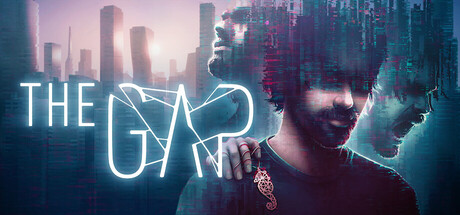
The Gap
Three to five hours, a two-person team, one of the quieter gut-punches in recent indie memory games. If grief-adjacent sci-fi done without melodrama sounds like your evening, clear your schedule.
GamerScout Verdict
Best for players who want a compact, intelligent narrative about memory and family, and can forgive light puzzles and occasional unclear signposting.
Compare Prices(5 stores)
Every store in this table quotes us in euros, so the EUR figure is the price the seller actually set, not our arithmetic — which is why EUR is also the currency we rank in. We only list an offer here when the store gives us its price in euros, so nothing in this table is a number we invented.
Pick USD, PLN, GBP, CAD or AUD in the header and we convert from EUR at the European Central Bank reference rate — converted amounts are prefixed with ~. Your bank or the store may apply a different rate at checkout. We never hide offers based on where you are: everyone sees this whole table.
We may earn a commission when you buy games through links on this page — at no extra cost to you. It never affects our rankings or verdicts.
Price History
Screenshots & Media
About The Gap
I keep a short list of games that prove a small headcount can outwrite a studio of fifty, and The Gap sits near the top of it now. Label This, a Slovenian duo, built something here that handles neurodegeneration and family loss without once resorting to the melodramatic musical swells or the weepy slow-motion that usually signal to the player how to feel. The restraint is the craft. You play as Joshua Hayes, a neuroscientist whose family carries a rare genetic neurological disorder. The starting image is his apartment in the year 2045: smashed picture frames, empty pill bottles, spray-painted walls, a voicemail from someone who hasn't heard from him in too long. The wreckage comes first; the tenderness has to be earned. From that wreckage you work outward, picking up phones, reading letters, cracking laptop passwords, and solving light environmental puzzles, each one seeding a déjà vu event that drops you into a parallel timeline. The core mechanic is genuinely clever: déjà vu is treated as the brief intersection of two timelines where the same event plays out across both, and Joshua's nano-machine research lets him hold that gateway open long enough to step through. It sounds heady on paper, but the game wears it lightly, never pausing to shout about how futuristic everything is. The near-future domestic details feel mundane in the best way. The structure is non-linear in a way that rewards patience rather than punishing it. A code scribbled in one timeline unlocks a computer in another. A photo on a wall in an early reality will have Joshua's face scratched out in a later one. The clue board in Joshua's apartment, somewhere between a detective's pinboard and a research whiteboard, fills in as you gather memories, and jumping back to timelines you've already visited to apply new knowledge is exactly as satisfying as the designers intended it to be. Where the design stumbles is in explaining its own rules: the game tells you early that triggering a memory requires two objects, then ignores that rule with many items, and the resulting ambiguity can make the first half-hour feel unmoored. The final chapter also has at least one puzzle where the interactable element is poorly signposted, a minor but real friction. Voice acting quality is genuinely disputed in reviews, ranging from praised as AAA-standard to criticised as wooden, and the supporting cast relationships can feel under-developed in their quieter moments. Two endings exist, and the game smartly lets you reload a checkpoint near the final decision to see both without replaying the whole run. What lands, and lands hard, is the environmental storytelling. The changing photographs, the evolving state of a daughter's bedroom across timelines, the way a happy memory of pushing a child on a swing sits right next to the knowledge of what comes later: these details accumulate slowly and then hit all at once. The game is also alert to its subject matter in a responsible way, touching on self-harm, substance use, and terminal illness without using any of it as pure shock value. For a three-to-five hour experience built by two people, the emotional architecture is genuinely impressive. Comparisons to Tacoma and Call of the Sea are fair in scope; SOMA comes up in player discussion when talking about the sci-fi intelligence, and that is not a small thing to be compared to.

Indie & narrative
Tags
System Requirements
Minimum
- OS
- Windows 10
- Memory
- 4 GB RAM
- DirectX
- Version 12
- Storage
- 2 GB available space
- Graphics
- NVIDIA GeForce GTX 760 or AMD Radeon HD 7950
- Processor
- Intel Core i5-2500 or AMD Ryzen 3 1200
Recommended
Requires a 64-bit processor and operating system
Keep exploring
Community Discussion
Be the first to comment on The Gap.
Reviews & Ratings
Game Info
- Developer
- Label This
- Publisher
- Crunching Koalas
- Release Date
- Oct 19, 2023