The Final Earth 2
97% positive Steam reviews on a city builder that started as a browser game says something real: this one earns its playtime one carefully placed Woodcutting Center at a time.
GamerScout Verdict
Best for city builder fans who want a low-pressure but genuinely layered colony sim without a steep learning cliff.
Compare Prices(4 stores)
Every store in this table quotes us in euros, so the EUR figure is the price the seller actually set, not our arithmetic — which is why EUR is also the currency we rank in. We only list an offer here when the store gives us its price in euros, so nothing in this table is a number we invented.
Pick USD, PLN, GBP, CAD or AUD in the header and we convert from EUR at the European Central Bank reference rate — converted amounts are prefixed with ~. Your bank or the store may apply a different rate at checkout. We never hide offers based on where you are: everyone sees this whole table.
We may earn a commission when you buy games through links on this page — at no extra cost to you. It never affects our rankings or verdicts.
Price History
Screenshots & Media
About The Final Earth 2
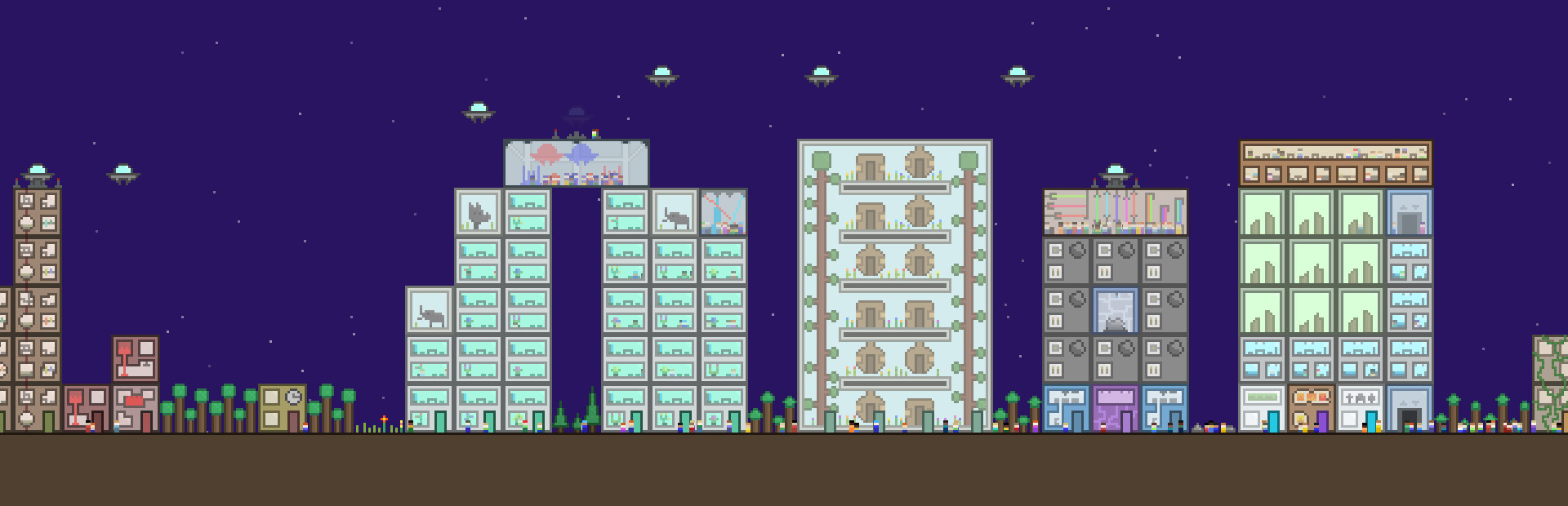
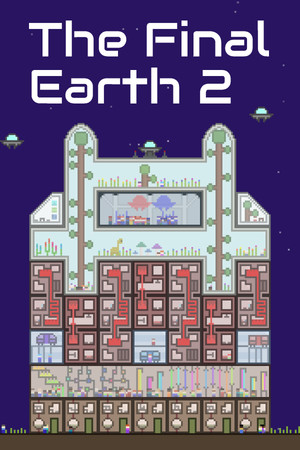
I kept an eye on The Final Earth 2 well before its Steam release because the browser version had already clocked absurd player hours and won a Kongregate contest. The Steam port is the definitive version, and the core premise is as clean as it gets for a city builder: a tiny floating rock, three citizens, one landed Exploration Ship, and a resource chain you need to get right before your population decides to be miserable. Wood, stone, food, knowledge, machine parts, computer chips - each rung of that production ladder feeds into the next, and getting the sequencing wrong early means you'll be scrambling to house a wave of immigrants while your Indoor Farms can't keep up. That tension is genuinely satisfying to resolve. The vertical axis is the central design decision that separates this from the usual isometric or top-down genre competition. You build upward on small floating platforms, stacking structures indefinitely, which means layout decisions carry real consequences. Many production buildings require specific neighbors to function at full efficiency, so figuring out that synergy matrix - Exploration Centers generating knowledge before Labs unlock, Pubs placed to hit happiness thresholds, Machine Part Factories positioned to not create citizen pathing nightmares - is the actual game. It does not hold your hand past the early scenarios, which is fine. The onboarding in Scenario 1 (A New Beginning) introduces mechanics gradually enough that a newcomer will not immediately drown. The mid-game is where it opens up, and that is when most players either tab out of their spreadsheet or go fully feral trying to optimize chip output per world. The mode variety is a legitimate selling point. There are three story scenarios - A New Beginning, An Interworld City, and Hacking Alien Tech - plus six free play environments covering everything from a massive single Mega World to a Random Archipelago of small connected islands. Creative mode removes resource pressure entirely if you just want to watch a few thousand simulated citizens shuffle around. Seasonal events (Halloween, Christmas) add limited-time buildings and upgrades, which means the developer is still actively touching the game post-launch. Steam Workshop support is present for mods, though the community content library is modest compared to big-budget city builders. Do not go in expecting Paradox-tier mod output. The honest critique is that the mid-to-late loop reveals its browser DNA. The core cycle - gather, build, research, repeat - does not mutate much once you understand the synergy rules. Players who want punishing fail states or complex AI opponents will find none of that here. There is no way to lose in the traditional sense, which is a deliberate design call that makes it accessible but also drains urgency out of the late game. Performance also becomes a real variable at very large city sizes; the developer flags this openly, and players who push populations past 10,000 on lower-spec machines should expect frame rate to become a factor. The 2D pixel art style is functional rather than spectacular, which is a fair trade for the accessibility it enables on modest hardware. For a solo-developed title at a budget price point, the depth-to-cost ratio here is hard to argue with. Strategy fans who want a low-friction entry point into colony management, something they can pick up for a 90-minute session without a 40-page tutorial, will find this hits that gap well. The building synergy system has enough complexity to keep planners occupied for multiple playthroughs across different scenario types, and the Workshop means new scenarios can extend that.

Strategy & simulation
Tags
System Requirements
Minimum
- OS
- Windows 7 or newer
- Memory
- 2 GB RAM
- Storage
- 500 MB available space
- Graphics
- Hardware Accelerated Graphics (Integrated Graphics are OK)
- Processor
- Yes please
Recommended
- Graphics
- Dedicated Graphics
- Processor
- 2 GHz Dual Core or better
Keep exploring
Community Discussion
Be the first to comment on The Final Earth 2.
Reviews & Ratings
No ratings available
Game Info
- Developer
- Florian van Strien
- Publisher
- Florian van Strien
- Release Date
- Jul 15, 2022