The Edge of Allegoria
A solo-dev Game Boy fever dream where the handheld nostalgia you grew up with gets thoroughly corrupted by adult chaos, sharp weapon-mastery combat, and a protagonist having the worst midlife crisis in RPG history.
GamerScout Verdict
Recommended for retro RPG fans who want real mechanical depth under the crude jokes and can tolerate uneven waypointing.
Compare Prices(5 stores)
Every store in this table quotes us in euros, so the EUR figure is the price the seller actually set, not our arithmetic — which is why EUR is also the currency we rank in. We only list an offer here when the store gives us its price in euros, so nothing in this table is a number we invented.
Pick USD, PLN, GBP, CAD or AUD in the header and we convert from EUR at the European Central Bank reference rate — converted amounts are prefixed with ~. Your bank or the store may apply a different rate at checkout. We never hide offers based on where you are: everyone sees this whole table.
We may earn a commission when you buy games through links on this page — at no extra cost to you. It never affects our rankings or verdicts.
Price History
Screenshots & Media
About The Edge of Allegoria
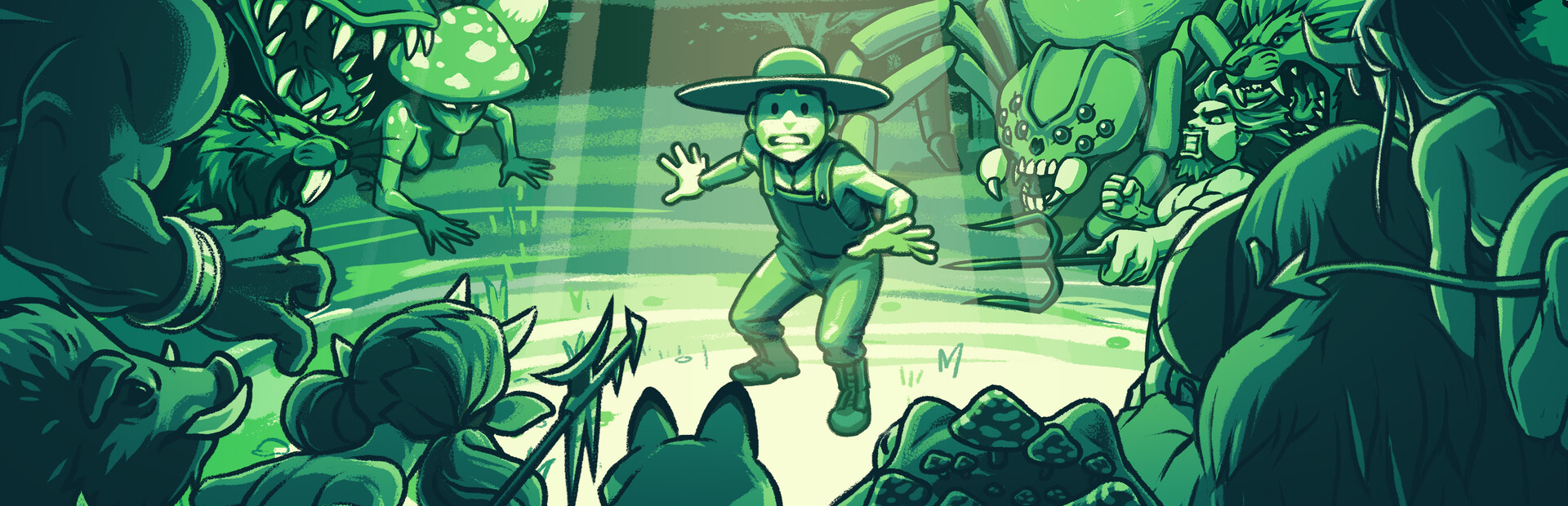
My first impression of The Edge of Allegoria was the same quiet double-take you get when something looks completely innocent on the outside and then immediately isn't. The pixel art channels Game Boy Color so faithfully that your muscle memory starts reaching for a d-pad, and then the first town NPC opens his mouth. Solo developer Joe Picknell of Button Factory Games spent years building this thing from scratch, and that personal investment shows in every hand-placed tile and every deliberately absurd line of dialogue. The world looks like a childhood memory. It behaves like a very different kind of dream. The mechanical heart of Allegoria is the Weapon Mastery system, and it is genuinely the reason to stay. You equip one of 96 weapons, ranging from fishing rods to broadswords to daggers, and use it in battle until you hit full mastery. At that point the weapon's skill is absorbed permanently into your moveset, freeing you to equip something new and start the loop again. You can carry up to five moves into any fight, and the real texture of combat comes from chaining status effects across them. One weapon opens a bleed vulnerability, a second applies the bleed, a third punishes bleeding targets with amplified damage. Add a status like Stiffness, which suppresses defence, or Mad, which spikes all your stats while wrecking your accuracy, and the turn-based fights stop feeling like menu navigation and start feeling like tinkering. Reviewers noted the system can drift toward button-mashing if you stop experimenting, which is fair, but players who keep rotating gear and reading the interactions will find a lot more underneath. The enemy roster clocks in at over 140 types, including 41 boss encounters spread across 31 dungeons, so the loop has room to breathe. The tone is the other variable. The writing pulls from a South Park register of shock comedy: heavy swearing, sexual references baked into every side quest, NPCs who exist purely to be awful in specific ways. Some of it lands cleanly, especially the moments of self-aware meta-commentary where the game acknowledges its own edginess and winks. Some of it repeats the same register of joke until the shock value flattens. Critics split fairly cleanly on this: players who found it funny in the first hour generally kept finding it funny. Players who found it exhausting by the second hour were not wrong. The key thing to understand is that the crude surface is not hiding a serious narrative underneath. The main plot, centered on a falling-out between gods and a reluctant champion, is functional scaffolding for quest variety rather than a story the game wants you to feel deeply. That is an honest creative choice, not an oversight. What Picknell clearly does care about is craft at the detail level. The chiptune soundtrack, which he composed himself, moves between eerie dungeon textures and warmer overworld melodies in a way that feels calibrated rather than incidental. The pixel art carries genuine attention to shadow, outline weight, and UI legibility. The world navigation is linear in the Pokemon mold, with terrain obstacles gating progress as you unlock new abilities. Where it stumbles is in dungeon design, particularly one late-game section involving teleporters and no accompanying map, and in waypointing, where it is easy to lose the thread of what to do next and wander until something clicks. These are real friction points, not minor quibbles. Steam reception sits at Very Positive territory based on early user reviews. The runtime lands somewhere between 18 and 25 hours depending on how much you grind side quests, which is a solid commitment for what the game is asking. If the Game Boy aesthetic speaks to you, if you want turn-based combat with actual mechanical depth rather than pure nostalgia bait, and if crude humour does not actively put you off, this is a quiet underdog worth your attention. Go in knowing what it is, and it delivers far more than its small footprint suggests.

Indie & narrative
Tags
System Requirements
Minimum
- OS
- Windows 10 or higher
- Memory
- 1 GB RAM
- DirectX
- Version 10
- Storage
- 1 GB available space
- Graphics
- OpenGL compatible
- Processor
- AMD Ryzen 3 / Intel Core i3
Keep exploring
Community Discussion
Be the first to comment on The Edge of Allegoria.
Reviews & Ratings
No ratings available
Game Info
- Developer
- Button Factory Games
- Publisher
- CobraTekku Games
- Release Date
- Dec 4, 2024