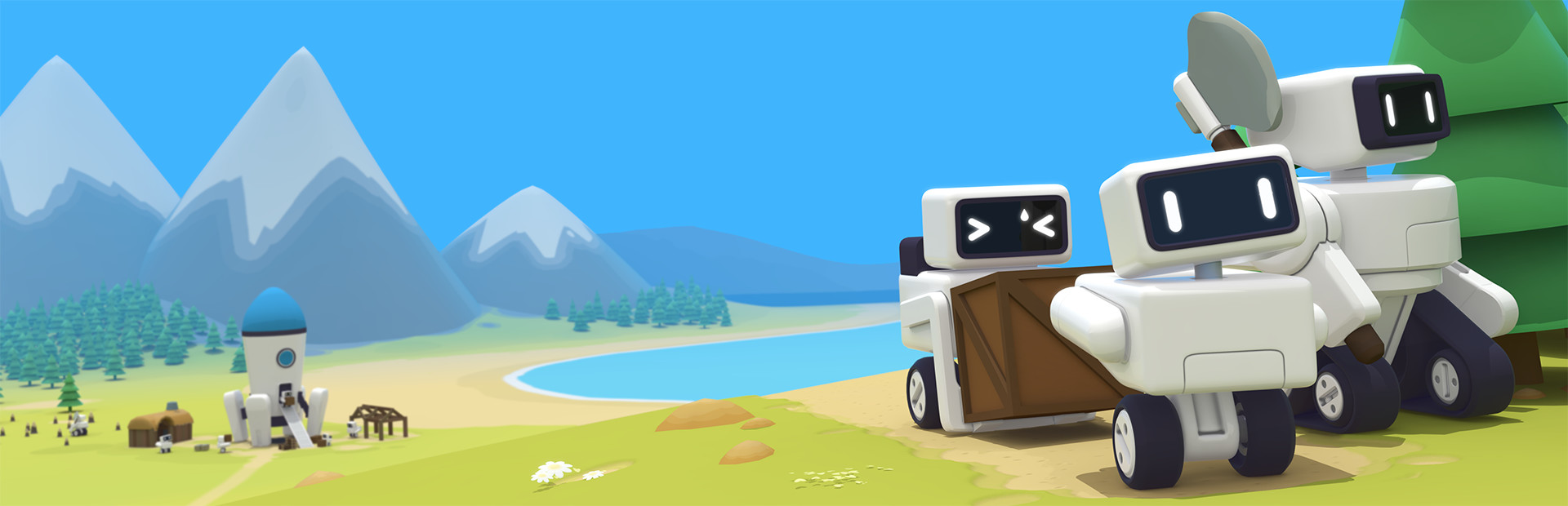

The Colonists
If your idea of unwinding is optimizing a road grid until midnight, this Solo-dev city builder from Codebyfire scratches that Anno-and-Settlers itch with a cleaner, lower-stakes loop than either of its inspirations.
GamerScout Verdict
Solid pick for genre newcomers and low-pressure session players; veterans may find the research tree and AI too thin for a long run.
Compare Prices(5 stores)
Every store in this table quotes us in euros, so the EUR figure is the price the seller actually set, not our arithmetic — which is why EUR is also the currency we rank in. We only list an offer here when the store gives us its price in euros, so nothing in this table is a number we invented.
Pick USD, PLN, GBP, CAD or AUD in the header and we convert from EUR at the European Central Bank reference rate — converted amounts are prefixed with ~. Your bank or the store may apply a different rate at checkout. We never hide offers based on where you are: everyone sees this whole table.
We may earn a commission when you buy games through links on this page — at no extra cost to you. It never affects our rankings or verdicts.
Price History
Screenshots & Media
About The Colonists
I'll be upfront: city builders are not my natural habitat. I live in aim trainers and MMR dashboards. But The Colonists got its hooks into me the same way a well-paced puzzle does, and I spent longer than I planned watching tiny robots shuffle wood planks down dirt paths at 2am. That says something, even if it also says something that I was playing on a machine I normally use for 360Hz competitive shooters. At its core this is a supply-chain and settlement game built in the spirit of The Settlers and the Anno series, made by a single developer named Richard Wallis operating under the Codebyfire label. The loop is all about road placement, resource chains, and research progression across three Ages. Your bots harvest wood, stone, coal, iron, and fish, refine raw materials into planks, bricks, and bread, and pipe everything through a road network where individual carribot units physically carry goods between buildings. Getting that network tight and efficient is genuinely satisfying, and the later scenarios push you into building harbors and shipping lanes between islands when land resources run dry. There is also a train system that opens up as you advance through the Ages, which meaningfully changes how you route goods at scale. The campaign splits into two tracks: a peaceful settlement branch and a military one. The combat side uses watchtowers as offensive and defensive units, upgraded to knock out enemy towers and capture territory. It is not deep by any strategy standard. Arrow research gives you a decisive edge over the AI, and once you have it the military missions feel more like a logistics test than a tactical one. The non-combat missions are the stronger experience, letting you focus on building density and supply routing without a clock pressure that punishes methodical play. Sandbox mode is here too, though reviewers across the board have noted it lacks objectives to anchor a long session. The main honest criticisms are about depth and retraceability. The research tree is lean enough that mid-game can feel like a holding pattern between unlocks. The AI in combat scenarios is readable once you have played a few missions. The resource management UI in the lower left is functional but not elegant, and road placement rules mean you will occasionally back yourself into a corner with a cramped settlement that requires rebuilding a chunk of your layout. None of this is game-breaking but all of it is worth knowing before you buy. On PC you also get procedurally generated maps, a Frontiers monthly competition mode, a map editor, and Steam Workshop support, which adds a meaningful amount of replayability the console version lacks. Who is this for? Builders and organizers who want a low-pressure session game, people new to the city-builder genre looking for a gentle on-ramp, or veterans who want something to play without spreadsheet depth. It is not going to satisfy anyone craving Anno 1800-level complexity. Steam user reception sits at 85% positive across over a thousand reviews, which is a fair read on the experience: consistently good, not exceptional.

Shooters
Tags
System Requirements
Minimum
- OS
- 64 bit Windows
- Memory
- 4 GB RAM
- DirectX
- Version 9.0c
- Storage
- 1 GB available space
- Graphics
- 1GB DX9 (shader model 3.0)
- Processor
- Multicore with SSE2 instruction set support
Recommended
8 GB RAM
DLC & Add-ons for The Colonists1
Expansions, DLC packs and add-on content for this game. Click any item to see store offers.
Keep exploring
Community Discussion
Be the first to comment on The Colonists.
Reviews & Ratings
No ratings available
Game Info
- Developer
- Codebyfire
- Publisher
- Mode 7
- Release Date
- Oct 24, 2018