The Church in the Darkness ™
Fascinating on paper, frustrating in practice: a Jonestown-inspired stealth roguelite with nearly 20 endings and just enough moral unease to haunt you for a run or two.
GamerScout Verdict
Worth one or two runs for the atmosphere and voice acting, but the shallow stealth loop runs dry well before the ending count justifies it.
Compare Prices(2 stores)
Every store in this table quotes us in euros, so the EUR figure is the price the seller actually set, not our arithmetic — which is why EUR is also the currency we rank in. We only list an offer here when the store gives us its price in euros, so nothing in this table is a number we invented.
Pick USD, PLN, GBP, CAD or AUD in the header and we convert from EUR at the European Central Bank reference rate — converted amounts are prefixed with ~. Your bank or the store may apply a different rate at checkout. We never hide offers based on where you are: everyone sees this whole table.
We may earn a commission when you buy games through links on this page — at no extra cost to you. It never affects our rankings or verdicts.
Price History
Screenshots & Media
About The Church in the Darkness ™
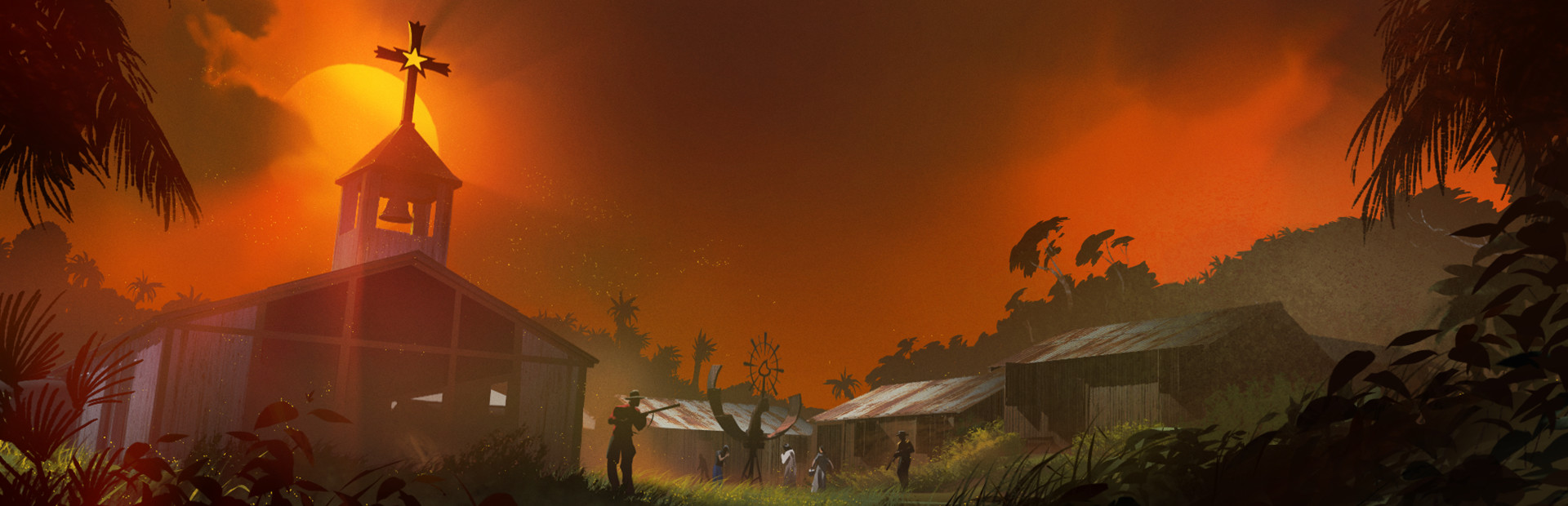
My first thought walking into Freedom Town was that nobody had ever made a game quite like this before, and that felt exciting. A top-down stealth infiltration set inside a 1970s South American cult, directly inspired by Jonestown, with procedurally shifting cult-leader personalities and close to twenty possible endings? That is a genuinely strange and brave idea, and I want to give it credit for existing. You play as Vic, a former law enforcement officer who slips into the commune called Freedom Town to check on a nephew named Alex. The compound layout stays fixed between runs, but the personalities of married cult leaders Isaac and Rebecca Walker shift each time: sometimes both are dangerous ideologues, sometimes one is sincere and the other a manipulator, sometimes the whole thing feels almost reasonable. Their propaganda sermons loop over the camp's loudspeakers as you move, and the voice cast is quietly remarkable. Ellen McLain (GLaDOS in Portal) and John Patrick Lowrie (the Sniper from Team Fortress 2) voice the Walkers, and their performances carry genuine menace. Documents, pamphlets, and defaced devotional cards scattered across the cabins hint at fractures inside the congregation. The lore is the best thing here, full stop. The stealth, though, is where it all buckles. Your tools are vision cones (visible on the easier difficulty settings), thrown rocks to pull guards out of position, body containers to dump takedowns into, a single disguise that only shrinks enemy sight lines by a small margin, and firearms whose targeting feels rough enough that most players will abandon them quickly. Sound detection is almost nonexistent: sprinting past guards registers nothing as long as you stay outside the FOV cone. The AI does not talk to each other about the bodies. The moment the mechanical seams show, usually within the first couple of runs, the procedural shimmer wears off and you are left counting vision-cone gaps. Each run lasts somewhere between fifteen minutes and an hour, which is the right length for this kind of roguelite, but the replayability the game asks for requires a stealth sandbox deep enough to reward experimentation. This one is not deep enough. There is a version of this concept that works: something closer to a narrative walking-sim with light stealth rather than a stealth game carrying a heavy narrative. The Church in the Darkness keeps the balance inverted. If you are the kind of player who finds theology, cult psychology, and 1970s political friction genuinely interesting, the first two or three runs have real atmosphere. The Walker sermons stick with you. The moral ambiguity of whether Alex even wants to leave is quietly affecting. But the recycled pamphlets, the unchanged NPC dialogue across runs, and the shallow stealth loop chip away at that atmosphere faster than the premise deserves. A Metacritic score of 65 and mixed Steam user reviews reflect a game that landed on an idea bigger than its execution.

Indie & narrative
Tags
System Requirements
Minimum
- OS
- Windows 7 or later (32 or 64 bit)
- Memory
- 4 GB RAM
- Storage
- 2 GB available space
- Processor
- Dual Core CPU - 2GHz
Keep exploring
Community Discussion
Be the first to comment on The Church in the Darkness ™.
Reviews & Ratings
Game Info
- Developer
- Paranoid Productions
- Publisher
- Fellow Traveller
- Release Date
- Aug 2, 2019