The Bridge
Rotating gravity and impossible Escher geometry in a hand-drawn puzzle box that earns your respect slowly then sucker-punches you in chapter four. Short, sharp, and genuinely strange.
GamerScout Verdict
Best for patient puzzle fans who can tolerate slow controls in exchange for genuinely clever spatial logic and a striking hand-drawn visual style.
Compare Prices(0 stores)
Loading prices...
We may earn a commission when you buy games through links on this page — at no extra cost to you. It never affects our rankings or verdicts.
Price History
Screenshots & Media
About The Bridge
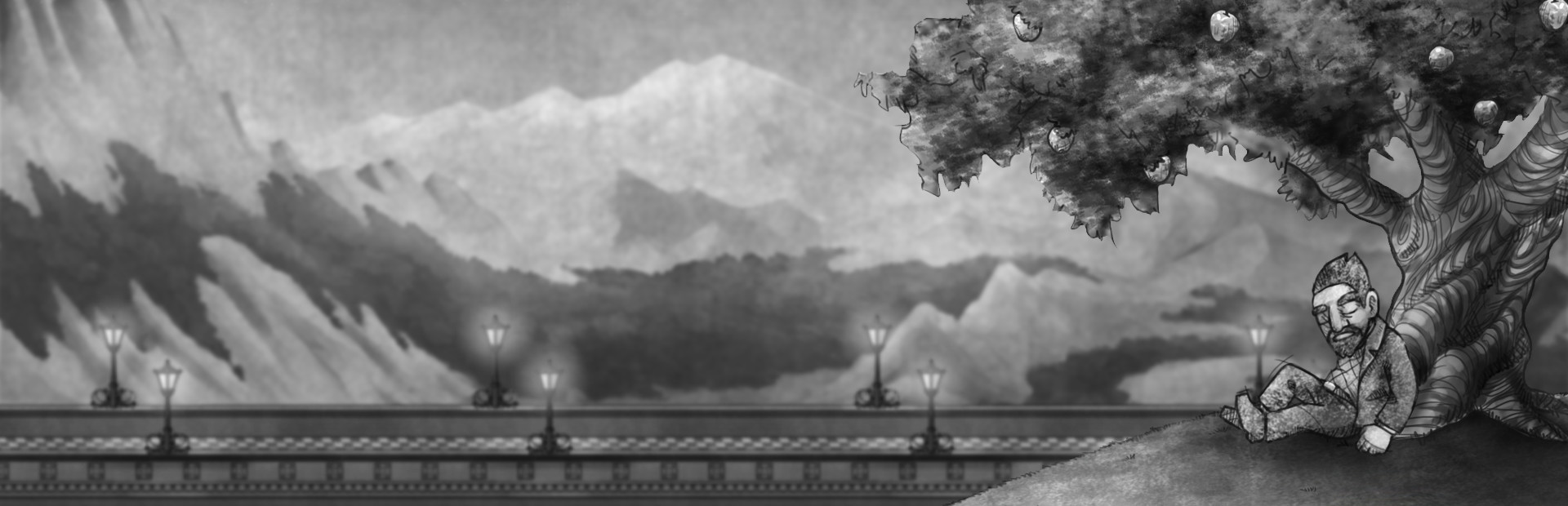
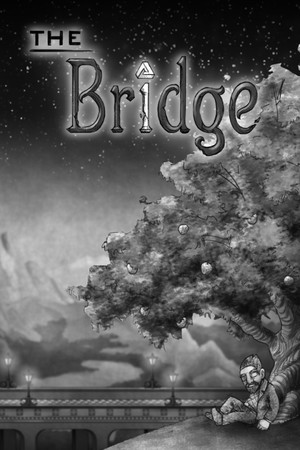
My first honest reaction to The Bridge was that it felt almost too calm to be a puzzle game. You nudge a bearded professor left and right, rotate the world with the arrow keys, and the pencil-sketched architecture shifts around him like a living lithograph. The hook is deceptively gentle: the opening level teaches you world rotation in about ten seconds by shaking an apple loose from a tree. Then the game quietly starts layering in systems until your brain is running a full physics simulation on a non-Euclidean structure drawn by someone who clearly stared at M.C. Escher prints until their eyes crossed. The structure is four chapters of six levels each, 24 puzzles in the main run, and a mirrored set of eight additional chapters that unlock once you finish. The first chapter deals entirely in gravity rotation and Menaces, those ominous rolling spheres that crush you on contact and also happen to be the solution half the time. Chapter two introduces vortexes, inescapable gravity wells that suck in objects and players alike, but can also trap dangerous elements if you route them correctly. Chapter three brings the inversion mechanic, which flips both gravity and polarity simultaneously, turning the world white on black, and this is where the difficulty stops being polite. The veil mechanic, which lets you apply a separate gravitational force to specific objects while the rest of the level obeys different rules, arrives as a late complication that demands you hold two independent physics states in your head at once. Each mechanic is introduced contextually, with no text tutorial, which means you figure it out by doing, the way good spatial puzzles should work. The controls are the most divisive part of the design. Your character slips and slides on anything that is not a flat horizontal surface, and at slow rotation speeds the gap between knowing the solution and executing it can stretch into minutes of patient maneuvering. A Braid-style time-rewind is always available, which removes the frustration of catastrophic errors, but the sluggish pace is a genuine cost. The difficulty curve is also genuinely uneven. The first three chapters are accessible enough that experienced puzzle players may feel underchallenged, then the fourth chapter sharpens its elbows considerably. The mirrored levels are a different class of hard entirely, remixing every stage with added obstacles and tighter constraints, and they are where the game's total runtime meaningfully extends past the initial two-to-three hour main run. The art does real work here. Every level loads with your protagonist being hand-drawn into existence, pencil strokes sketching him in from nothing. When you die, a smudge mark remains at the spot, as if the mistake were erased from a sketchpad. The grayscale commitment is total and it earns the atmosphere it creates. The ambient soundtrack, built mostly from woodwind and piano, is the kind of music you can let run in the background while you stare at a puzzle for five minutes, and it does not wear out. The story, delivered in a few sparse sentences between chapters, sketches a narrative about two researchers pursuing forbidden mathematical truths, and it punches above its brevity if you pay attention. For puzzle players who want something that respects their time and does not need a hundred hours to deliver its best ideas, The Bridge is a focused, strange artifact that aged better visually than mechanically. The controls are the entry tax. If that trade is acceptable, what you get in return is a game with a consistent internal logic that makes genuinely satisfying use of impossible geometry. Newcomers to spatial puzzlers can start here without shame. The early chapters are measured enough to teach you what you need, and the mirrored content gives seasoned players a reason to stay.

Strategy & simulation
Tags
System Requirements
Minimum
- Memory
- 512 MB RAM
- DirectX®
- 9.0
- Processor
- 1.0 GHz
- Hard Drive
- 400 MB HD space
Keep exploring
Community Discussion
Be the first to comment on The Bridge.
Reviews & Ratings
Game Info
- Developer
- Ty Taylor
- Publisher
- The Quantum Astrophysicists Guild
- Release Date
- Feb 22, 2013