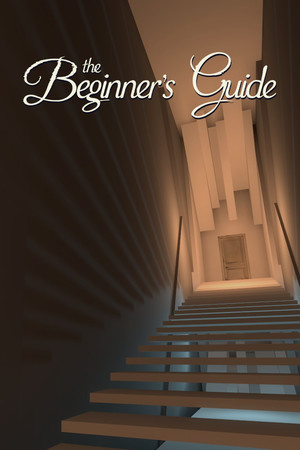
The Beginner's Guide
Ninety minutes inside someone else's creative obsession, where the real game is deciding how much of the narrator you actually trust.
GamerScout Verdict
Essential for anyone who thinks about creativity and validation; a slow, airless corridor for players who need a loop to hold onto.
Compare Prices(5 stores)
Every store in this table quotes us in euros, so the EUR figure is the price the seller actually set, not our arithmetic — which is why EUR is also the currency we rank in. We only list an offer here when the store gives us its price in euros, so nothing in this table is a number we invented.
Pick USD, PLN, GBP, CAD or AUD in the header and we convert from EUR at the European Central Bank reference rate — converted amounts are prefixed with ~. Your bank or the store may apply a different rate at checkout. We never hide offers based on where you are: everyone sees this whole table.
We may earn a commission when you buy games through links on this page — at no extra cost to you. It never affects our rankings or verdicts.
Price History
Screenshots & Media
About The Beginner's Guide
I finished The Beginner's Guide in a single sitting and then sat in silence for a while, which is not something I can say about most ninety-minute experiences. Davey Wreden, the mind behind The Stanley Parable, structures this as a guided tour through a collection of unfinished Source engine games supposedly made by a reclusive friend named Coda between 2008 and 2011. Wreden narrates everything in his own voice, walking you through a modified Counter-Strike map, a shooter with no enemies, a staircase that slows to a crawl halfway up, a living room sealed behind prison bars, a level you can only traverse by walking backwards. He reads meaning into all of it. Prisons as isolation. A recurring two-door puzzle as the act of closing off the past. Lampposts as creative goals. Whether he is right is, quietly, the entire point. The moment-to-moment interaction is minimal. First-person movement, occasional conversation trees that branch only slightly, simple object interactions, and a narrator who sometimes overrides the game itself to skip you past a maze or restore your walking speed. There is no failure state, no inventory, no score. What the game asks of you is attention, not reflexes. If you need a loop to engage with, something to optimise or master, this will feel like a lecture with pretty slides. That criticism is fair, and the community has always been split on it. Critics and players have repeatedly flagged that Wreden's narration grows overbearing in the back half, spelling out themes that the environments were already communicating on their own. The pacing does loosen around the middle chapters, and there are moments where the voice acting feels raw in ways that tip from intimate to unsteady. But here is what the detractors undervalue: the architecture of Coda's fake games is doing real work. A theater stage where iron bars close in when the player fails to perform. A house-cleaning sequence so quiet and domestic it feels like grief. A final game built with puzzles that are literally impossible to solve without cheating the engine, and what waits at the end of that bypass. The game knows what it is constructing. Wreden confirmed years after release, on a podcast, that Coda never existed, that the whole thing is fiction inspired by real friendships damaged by real mistakes. Knowing that does not deflate the experience. It recalibrates it. You are not watching a documentary. You are watching someone dramatise the gap between how we see the people we care about and who they actually are. The Steam user score sits at 88 percent across over fifteen thousand reviews, which is remarkable for something this polarising in concept. The people who bounce off it do so hard. The people it reaches tend to describe it as one of the few games that genuinely changed how they think about creative work and the cost of needing validation from it. Both reactions are honest. This is a game that earns its runtime precisely because it knows when to stop. At ninety minutes, the ideas land with weight. Ten minutes more and they would have curdled. That discipline, quiet and invisible, is the craft I keep coming back to.

Indie & narrative
Tags
System Requirements
Minimum
- OS
- Windows Vista/7/8/8.1/10
- Memory
- 2 GB RAM
- Storage
- 4 GB available space
- Graphics
- Video card must be 128 MB or more and should be a DirectX 9-compatible with support for Pixel Shader 2.0b (ATI Radeon X800 or higher / NVIDIA GeForce 7600 or higher / Intel HD Graphics 2000 or higher - *NOT* an Intel Ex…
- Processor
- 3.0 GHz P4, Dual Core 2.0 (or higher) or AMD64X2 (or higher)
- Sound Card
- DirectX 9.0c compatible
Keep exploring
Community Discussion
Be the first to comment on The Beginner's Guide.
Reviews & Ratings
No ratings available
Game Info
- Developer
- Everything Unlimited Ltd.
- Publisher
- Everything Unlimited Ltd.
- Release Date
- Oct 1, 2015