
Terra Memoria
Somewhere between a Grandia replay and a cozy Sunday afternoon sits this French indie RPG, and if that sounds like your kind of detour, clear your evening.
GamerScout Verdict
Best for players who want a handcrafted cozy JRPG around 15-20 hours, not a combat gauntlet.
Compare Prices(9 stores)
Every store in this table quotes us in euros, so the EUR figure is the price the seller actually set, not our arithmetic — which is why EUR is also the currency we rank in. We only list an offer here when the store gives us its price in euros, so nothing in this table is a number we invented.
Pick USD, PLN, GBP, CAD or AUD in the header and we convert from EUR at the European Central Bank reference rate — converted amounts are prefixed with ~. Your bank or the store may apply a different rate at checkout. We never hide offers based on where you are: everyone sees this whole table.
We may earn a commission when you buy games through links on this page — at no extra cost to you. It never affects our rankings or verdicts.
Price History
Screenshots & Media
About Terra Memoria
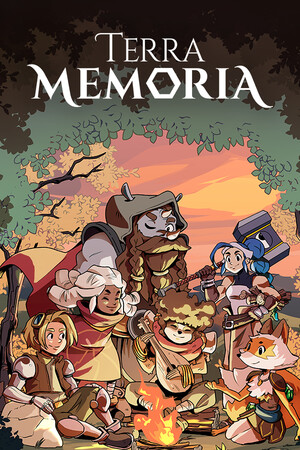
I have a soft spot for small studios that swing for something genuinely handcrafted, and La Moutarde earns that affection here. Terra Memoria is a turn-based JRPG from a French indie team that clearly spent a lot of time thinking about pacing, art, and sound before anything else. The result sits somewhere in the lineage of Breath of Fire and Grandia, wearing those influences openly while still feeling like its own thing, a cozy 15-to-20-hour RPG that knows exactly what size it wants to be. The visual presentation is the first thing that grabs you. Pixel art character sprites move through fully 3D, almost hand-painted environments, and the contrast works beautifully. Six party members join the investigation across the world of Terra, each rendered as a distinct anthropomorphic species: the fox-like Karsaks, the bulky Mercki rhinos, and more. Three of them, Moshang, Syl, and Opal, are your active combat characters, while Alto, Edson, and Meta serve as Assist characters who pair randomly with your front line at the start of each fight, tweaking how abilities work. Alto, for example, can flip damage spells into healing, which changes your whole approach to a skirmish. A timeline bar sits at the bottom of the screen showing turn order, enemies carry elemental shields you chip away by targeting weaknesses, and spells have no MP cost, only cooldown positioning on that timeline. It clicks in a satisfying way, even if the overall difficulty rarely challenges an experienced RPG player. The campfire rest system handles leveling and crafting together: you bring home accumulated experience, cook recipes that permanently raise maximum HP, and forge stat-boosting pins for your characters to equip. That permanent HP gain from cooking is one of the smartest design touches in the whole game, making foraging feel genuinely worth your time. There is also a town-building mechanic centered on a desolate settlement called Beegihn. This is where Terra Memoria shows its limitations. The construction tools feel awkward, placing NPCs does not create any simulation activity, and the buildings provide no stat benefits. It functions as a decoration sandbox at best, and the controls for it are not well-suited to the format. The side quests carry a similar roughness: tracking down NPCs across maps can tip from gentle exploration into genuine frustration, and the quest direction occasionally leaves you pixel-hunting through foliage hoping you have not accidentally locked yourself out of a completion. The story is grounded and personal rather than epic. The crystal shortage and awakening machines are the frame, but the actual narrative is about ordinary people, lost families, identities, small-town struggles. That intimacy gives the world a warmth that carries you through the pedestrian moments. The worldbuilding itself stands out above the overarching plot, with two distinct faiths, multiple animal cultures, and a magitek society that feels thought-through in the details. The soundtrack by composer Yponeko spans over 80 tracks drawing from jazz, country, orchestral scoring, and instruments from around the world. It holds a coherent identity across all of that breadth, and it is the kind of score you leave on rather than mute. For anyone who wants a JRPG that respects your time, commits hard to its aesthetic, and trusts you to find joy in a campfire scene over a boss rush, Terra Memoria is an easy recommendation. Seasoned JRPG veterans may find the combat a little light and the third act a touch short, but the studio has given us something with genuine craft behind it. This is La Moutarde announcing themselves.

Indie & narrative
Tags
System Requirements
Minimum
- OS
- Windows® 10 / 11 64-bit
- Memory
- 8 GB RAM
- DirectX
- Version 11
- Storage
- 2 GB available space
- Graphics
- AMD Radeon™ RX 460 / NVIDIA® GeForce® GTX 750
- Processor
- AMD Ryzen™ 3 1200 / Intel® Core™ i3-6100
Keep exploring
Community Discussion
Be the first to comment on Terra Memoria.
Reviews & Ratings
No ratings available
Game Info
- Developer
- La Moutarde
- Publisher
- Dear Villagers
- Release Date
- Mar 27, 2024