
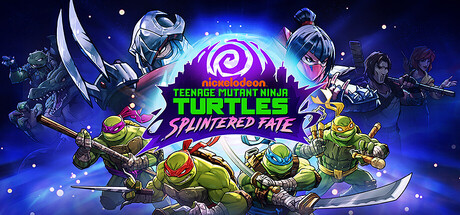
Teenage Mutant Ninja Turtles: Splintered Fate
Hades gets a TMNT skin and it mostly works: four turtles, elemental build paths, and up to four-player co-op that papers over the thinner content roster. Roguelite veterans will clock the ceiling fast, but co-op sessions carry it further than solo play ever will.
GamerScout Verdict
Best for TMNT fans and co-op roguelite groups who can field three more players; solo build-chasers will hit the content ceiling sooner than they want.
Compare Prices(7 stores)
Every store in this table quotes us in euros, so the EUR figure is the price the seller actually set, not our arithmetic — which is why EUR is also the currency we rank in. We only list an offer here when the store gives us its price in euros, so nothing in this table is a number we invented.
Pick USD, PLN, GBP, CAD or AUD in the header and we convert from EUR at the European Central Bank reference rate — converted amounts are prefixed with ~. Your bank or the store may apply a different rate at checkout. We never hide offers based on where you are: everyone sees this whole table.
We may earn a commission when you buy games through links on this page — at no extra cost to you. It never affects our rankings or verdicts.
Price History
Screenshots & Media
About Teenage Mutant Ninja Turtles: Splintered Fate
My first instinct when I heard 'TMNT roguelite from a mobile-first studio' was skepticism, the kind you earn after too many licensed games that coast on IP goodwill and deliver exactly nothing. Splintered Fate earns a partial reprieve. It launched on PC on November 6, 2024 as a port of a game that originally lived on Apple Arcade, and the PC version arrives with balance passes, higher resolution, mouse-and-keyboard support, and Steam Deck verification baked in. That groundwork matters, because the core loop is genuinely more interesting than the package's origins suggest. The structure is straight from the Hades playbook. You pick one of the four turtles, push through room-based stages across the Sewers, the Docks, and NYC rooftops, collect power-ups mid-run, bank Dragon Coins and Dreamer Coins for permanent upgrades back at the Home Lair between attempts, and die repeatedly until your permanent stats and mid-run decision-making align. Each turtle has a basic attack chain, a dash with a small cooldown, a Tool slot (think smoke bomb or force field generator as starting options), and a Special that defines their personality. Donatello regenerates health on room entry. Raphael skews toward critical hit builds. Michelangelo rewards aggression. Leonardo is the balanced entry point, and his Shuriken Tool has a well-documented community reputation for going borderline broken once the right passive stack lands. Build paths are organized around elemental categories including Ninja, Utrom, Ooze, Water, Fire, and Robotics, and chasing legendary synergies between them is where the actual strategic thinking lives. It is shallower than Hades in raw option count, but it is not shallow enough to be dismissible. Where the game earns its 78 Metacritic and 85 percent positive Steam rating is co-op. Up to four players, local or online, all four turtles simultaneously, with cross-platform support. Enemy counts and health pools scale up accordingly, and having four separate elemental builds firing at once turns boss rooms into controlled chaos. The room-clear revival mechanic, where any dead player is resurrected as long as one turtle survives, creates genuine tension without being punishing. Matchmaking is present on PC without needing to share a room code, which was a genuine omission from earlier platform versions. Solo play is competent but the difficulty spikes feel steeper and the repetition of the limited stage count is more exposed when you are not bouncing commentary off three friends. The criticisms are real and worth naming before you commit. The stage count is small. Reviewers consistently flag that content variety becomes thin by the eighth or ninth run, room layouts start to feel familiar, and the enemy roster does not expand enough to disguise that. The dialogue leans hard into turtle banter and tortured puns, which lands for franchise fans and grates for everyone else. There is no in-run stat summary screen, which means build math involves more estimation than it should. The PC version also inherits a slightly confusing multi-currency economy (Dragon Coins, Dreamer Coins, in-run Scrap) that the UI does not explain particularly well at first. None of it breaks runs, but it signals a product that came from mobile and was not fully redesigned for the platform. DLC exists in the form of Casey Jones and the Junkyard Jam, which adds a new playable ally, a junkyard stage chapter, and narrative content, giving the post-credits content more texture if you exhaust the base game. For a strategy-minded player, Splintered Fate tops out faster than a Hades, Curse of the Dead Gods, or Dead Cells session. The build variety is real but finite, and the absence of weapon variety within a single run means you are always optimizing the same character template rather than pivoting between fundamentally different combat approaches. If your bar is depth-per-hour over 100-plus hours, look elsewhere. If your bar is a tight, well-paced co-op roguelite with IP you actually enjoy, that runs clean on PC and Steam Deck and gets genuinely fun with a full squad of four, this clears it comfortably.

Strategy & simulation
Tags
System Requirements
Minimum
- OS
- Windows 10 64-bit
- Memory
- 4 GB RAM
- DirectX
- Version 12
- Storage
- 5 GB available space
- Graphics
- GeForce GTX 950, Radeon R7 360, or Intel HD Graphics 630
- Processor
- Dual Core 2.4 GHz
Recommended
- OS
- Windows 10 64-bit
- Memory
- 8 GB RAM
- DirectX
- Version 12
- Storage
- 5 GB available space
- Graphics
- GeForce RTX 2060, Radeon RX 5600 XT, or Intel Arc A580
- Processor
- Quad Core 2.4 GHz
DLC & Add-ons for Teenage Mutant Ninja Turtles: Splintered Fate1
Expansions, DLC packs and add-on content for this game. Click any item to see store offers.
Keep exploring
Community Discussion
Be the first to comment on Teenage Mutant Ninja Turtles: Splintered Fate.
Reviews & Ratings
Game Info
- Developer
- Super Evil Megacorp
- Publisher
- Super Evil Megacorp
- Release Date
- Nov 6, 2024
![Now what? | !socials [Esp/Eng]](https://static-cdn.jtvnw.net/previews-ttv/live_user_gamesrelatedish-440x248.jpg)
