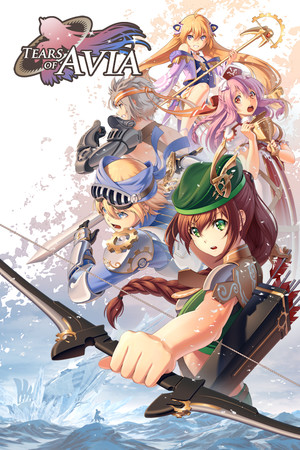
Tears of Avia
A Metacritic 56 tells you most of what you need to know, but if your tactics backlog is empty and you can tolerate rough edges, there is a functional SRPG hiding inside this ambitious indie misfire.
GamerScout Verdict
Only for tactics-starved players who have cleared their SRPG wishlist and can forgive sluggish combat and busted mid-game balance.
Compare Prices(0 stores)
Loading prices...
We may earn a commission when you buy games through links on this page — at no extra cost to you. It never affects our rankings or verdicts.
Price History
Screenshots & Media
About Tears of Avia
My spreadsheet instincts told me to stop the moment I saw the balance numbers, and they were right. Tears of Avia arrives with genuine ambition from a tiny UK studio that spent five years getting the game out the door after a failed Kickstarter, and that persistence deserves a nod. What it does not deserve is a free pass on the mechanical problems that critics across the board flagged at launch and that no amount of post-release patching has fully resolved. The skeleton here is recognizable to any tactics fan. You field up to five characters on a grid, moving and attacking in any order within a turn, which is actually a small design win that opens up more positioning plays than typical action-then-move systems. The five classes are Warrior, Mage, Ranger, Brawler, and Priest, and each carries three separate skill trees with eleven skills apiece, plus weapon-specific abilities that cost SP and run on cooldown timers. On paper, build variety looks legitimate. A Ranger can lean into beast-taming or trap specialization; a Warrior can brute-force with triple-hit axe combos or go a different route entirely. There is also a prayer system that lets you buff one stat set at the expense of others, functioning as a lightweight risk-reward slider before each engagement. Before each fight you pick your loadout of abilities from whatever you have unlocked, which keeps the pre-battle phase feeling active. These are the parts of Tears of Avia that work, and I want to be clear that they do work. The problem is that the balance collapses almost immediately after the first major objective. Characters level up at a pace that makes encounters trivial well before the midgame, items with inflated stats drop early, and the AI's answer to difficulty is to flood the map with extra enemies rather than make individual fights smarter or more tactical. That is not a difficulty curve, it is padding. Compounding this, the friendly-fire visibility on AOE skills is poor enough that you will accidentally clip your own party members, there is no in-battle minimap to orient yourself on larger stages, and the combat animations run slowly even when you push the speed-up button. The town hub segments do not offer much relief: wide spaces populated by copy-pasted NPCs you cannot actually talk to, with navigation that relies on faded screen-edge icons instead of a proper map. The world of Estera feels constructed but vacant. The story sits somewhere between serviceable and forgettable. There is a war between two city-states, Tirig and Helmgar, a demon lord, and a set of collectible MacGuffins driving the main quest. Dialogue choices exist and do shape the epilogue, but the scenes arrive infrequently and the writing leans hard on JRPG genre conventions without subverting any of them. Japanese voice acting is present, which will matter to some players. The anime-styled character portraits are well-drawn, even if the in-engine 3D models and battle environments look noticeably sparse. Permadeath is optional, and you can revisit past levels to grind up any character who has fallen behind, which at least keeps the roster management stakes low for newcomers to the genre. Who is this for at this point? Honestly, a very specific profile: someone who has already exhausted Fire Emblem, XCOM, Disgaea, Banner Saga, Shadowrun, and Wasteland, and still wants more grid-based tactical content at a low price point. For that person, Tears of Avia is not a disaster. The core turn mechanics are functional, the class skill trees give you something to tinker with, and the prayer system adds a light layer of pre-battle decision-making. Everyone else will bump against the rough edges within a few hours and wonder why they are not replaying Three Houses instead.

Strategy & simulation
Tags
System Requirements
Minimum
- OS
- Windows 7 or newer
- Memory
- 4 GB RAM
- DirectX
- Version 11
- Storage
- 4 GB available space
- Graphics
- nVidia GeForce 8600/9600GT, ATI/AMD Radeon HD2600/3600
- Processor
- Dual core from Intel or AMD at 2.8 GHz
- Sound Card
- DirectX Compatible
Keep exploring
Community Discussion
Be the first to comment on Tears of Avia.
Reviews & Ratings
Game Info
- Developer
- CooCooSqueaky Games
- Publisher
- PQube
- Release Date
- Oct 15, 2020