
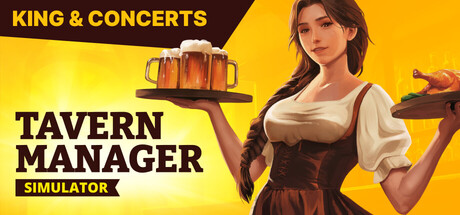
Tavern Manager Simulator 🍻
Running a medieval tavern sounds cozy until the beer queue hits, the outhouse needs scrubbing, and your fairy staff has decided to clip through the furniture. Worth it anyway.
GamerScout Verdict
Solid cozy sim for 15-25 hours, held back by quest-gated upgrades and fairy pathfinding bugs that blunt the late-game payoff.
Compare Prices(5 stores)
Every store in this table quotes us in euros, so the EUR figure is the price the seller actually set, not our arithmetic — which is why EUR is also the currency we rank in. We only list an offer here when the store gives us its price in euros, so nothing in this table is a number we invented.
Pick USD, PLN, GBP, CAD or AUD in the header and we convert from EUR at the European Central Bank reference rate — converted amounts are prefixed with ~. Your bank or the store may apply a different rate at checkout. We never hide offers based on where you are: everyone sees this whole table.
We may earn a commission when you buy games through links on this page — at no extra cost to you. It never affects our rankings or verdicts.
Price History
Screenshots & Media
About Tavern Manager Simulator 🍻
My spreadsheet brain initially flagged Tavern Manager Simulator as too casual to hold my attention for long. I was wrong, in the specific way that a deceptively simple supply chain tends to surprise you in the mid-game. The loop works like this: you start with a derelict building, a single barrel of ale, and a mop. Each in-game day you open the doors, serve customers, earn gold and reputation points, and spend the night restocking inventory and cleaning up the carnage. That cycle sounds thin on paper, but the game steadily layers in meat-chopping, soup-stirring, drink-pouring, and outhouse-scrubbing, all executed through distinct mini-games. Most of them are well-tuned for the frequency you perform them. The wood-chopping one runs a beat too long, and the beer-pouring mini-game has a cursor bug that occasionally tanks a pour for no good reason, but the rest land solidly as short, satisfying interruptions to the service rush. Progression is tied to a reputation system. Every successful order, cleaned table, and brief chat with a patron earns reputation points, which unlock the next tavern tier and the upgrades gated behind it. There are reportedly around 60 upgrades to work through, covering everything from bigger tables seating up to six guests, to workbench expansions for stew, sausage, and meat dishes. The quest-gated upgrade structure is the game's most divisive design call: you can be sitting on a pile of gold and still be locked out of the next improvement until you complete a specific task chain. Mid-to-late game, this translates into grinding quota orders like "serve 30x of item A and 30x of item B" while customers insist on ordering everything except those items. It is the kind of artificial pacing that a good strategy game would solve with better randomisation, and Tavern Manager Simulator never quite solves it. At a certain reputation threshold you unlock fairies as hired helpers, assignable to cooking, cleaning, serving, and dishwashing stations. This is where the game becomes genuinely interesting from a resource allocation standpoint: you are balancing fairy dust (their upkeep cost), task assignment priority, and your own manual labour to plug the gaps they leave. The catch is that fairy pathfinding is inconsistent. They get snagged on furniture regularly, which means your staffing plan can silently collapse mid-service if you are not watching. The developer has been active on Discord and pushed post-launch fixes, but this particular bug persists across multiple patches. Also worth flagging: the game shipped with a noticeable amount of AI-generated art in its promotional materials and some in-game visuals. A community-noted update committed to removing it, so the situation has improved, but it was a talking point at launch. For the target audience, which is players who want something closer in tone to Gas Station Simulator than to the punishing co-op chaos of Plate Up, this sits comfortably in the right lane. It is first-person, singleplayer only, and the difficulty stays gentle enough that closing the tavern doors mid-service to regroup is always a valid option. The medieval aesthetic holds up, the soundtrack blends period-appropriate tunes with a modern rhythm that avoids getting grating over a long session, and the overall presentation is warm and cohesive when the AI art controversy is set aside. Replay value is the honest weak spot. Once you hit the final tavern level, optimise your fairy crew, and max out the menu, there is little mechanical reason to restart. This is a 15-to-25 hour game that earns most of those hours, but it does not earn the hours after that.

Strategy & simulation
Tags
System Requirements
Minimum
- OS
- Windows 10 64-bit
- Memory
- 8 GB RAM
- DirectX
- Version 11
- Storage
- 10 GB available space
- Graphics
- Nvidia GeForce GTX 960 4GB VRAM
- Processor
- Intel Core i3 3.0 GHz or Ryzen 3xxx
Recommended
Requires a 64-bit processor and operating system
Keep exploring
Community Discussion
Be the first to comment on Tavern Manager Simulator 🍻.
Reviews & Ratings
No ratings available
Game Info
- Developer
- One More Time
- Publisher
- One More Time
- Release Date
- Aug 13, 2024