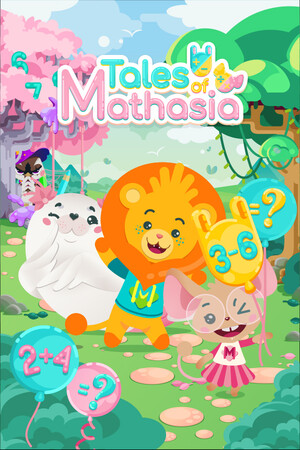
Tales of Mathasia
A one-hour edutainment stop aimed squarely at early learners aged 6-13 - charming animal cast, colorful world, and a ticking timer that may frustrate the very kids it's designed to help.
GamerScout Verdict
Worth it only as a gentle first-exposure math tool for ages 6-8 alongside a parent - not a standalone practice game for any age.
Compare Prices(8 stores)
Every store in this table quotes us in euros, so the EUR figure is the price the seller actually set, not our arithmetic — which is why EUR is also the currency we rank in. We only list an offer here when the store gives us its price in euros, so nothing in this table is a number we invented.
Pick USD, PLN, GBP, CAD or AUD in the header and we convert from EUR at the European Central Bank reference rate — converted amounts are prefixed with ~. Your bank or the store may apply a different rate at checkout. We never hide offers based on where you are: everyone sees this whole table.
We may earn a commission when you buy games through links on this page — at no extra cost to you. It never affects our rankings or verdicts.
Price History
Screenshots & Media
About Tales of Mathasia
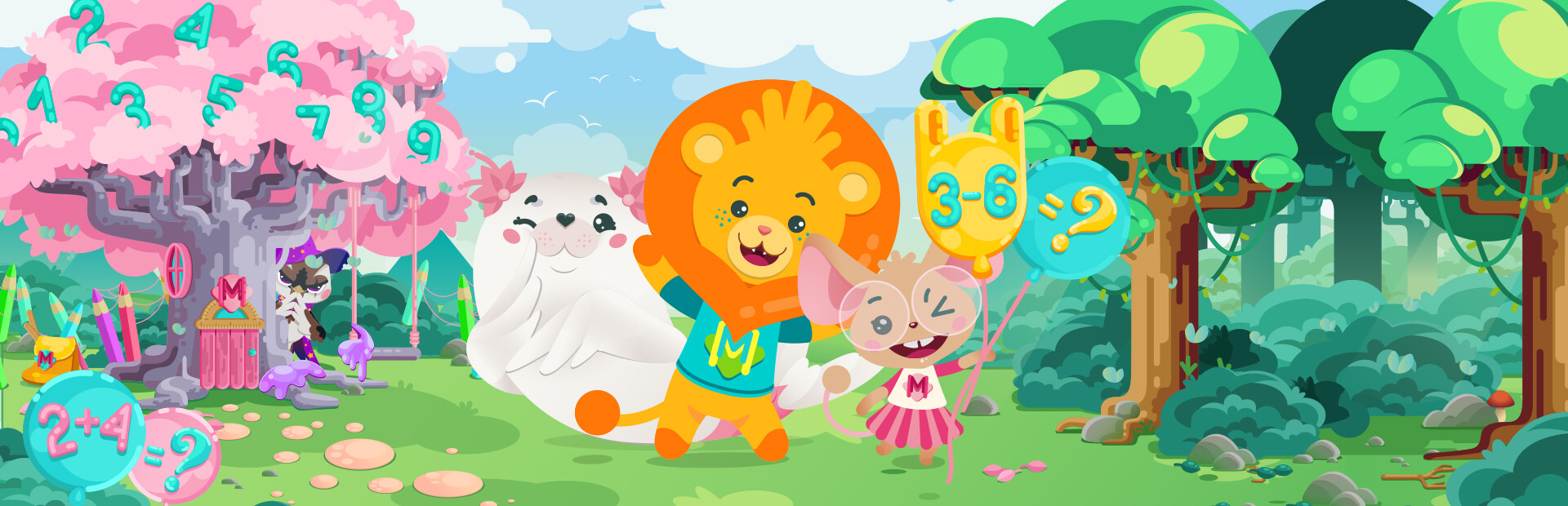
My honest first reaction to Tales of Mathasia was warmth - the kind you get when a small team clearly cares about making math feel less like a chore and more like a fairy tale. Pancake Games, a Polish indie studio, built a world split across four named regions (the Uncountable Mountains, the Great Number Plains, the Dividing Forest, and Multiplication Islands) and populated it with anthropomorphic animals who genuinely want to teach your child something. A mouse named Mathilda walks you through counting flowers. A seal introduces addition with fish boxes. A lion demonstrates subtraction using stacks of apples. The conceit is gentle, the art is vivid cartoon work that holds young attention, and the voice acting - including a villain named Sparrow who sports a hilariously committed French accent - gives the whole thing a scrappy theatrical energy. The core loop is built around 16 sequential levels, each structured as a tutorial followed by three escalating puzzle stages. You never type answers yourself. Instead, you select numbered tablets from a hand of options and match them to equations displayed on screen. Early levels ask you to identify a single number for a simple sum. Later levels stack up to five simultaneous equations with multi-step chains, and this is where the game's intentions and its execution start to drift apart. A stone pillar at the edge of the screen counts down continuously, and getting a correct answer is the only way to reset it. Miss the window, take a hit to your life total. The pressure might sound mild, but for a 6-to-13 audience still building number confidence, the combination of juggling multiple equations, discarding unhelpful tablets from your bank, and watching that pillar descend can tip quickly from challenging into genuinely stressful. Reviewers who covered this on release noted the same friction - the tablet-discard mechanic is a little unwieldy under time pressure, and the difficulty spike in the final levels felt misaligned with the target age group. The art and sound hold up better than the design. The cartoon style is bright and inviting, the music keeps a soothing register through most of the runtime, and the dyslexia-friendly font option and fully subtitled dialogue show a degree of accessibility consideration that many bigger studios skip. There is no controller support, though it runs on Steam Deck via analog-stick mouse control with no extra configuration. What stings more than the timer quirks is a proofreading problem that critics flagged consistently: wrong tenses, grammatical errors, and outright incorrect word choices appear throughout a game specifically designed to be an educational tool. For a title asking parents to trust it with early literacy and numeracy reinforcement, that is a hard thing to overlook. Replay value is essentially zero once the single playthrough - clocking in around one hour - is done. You can revisit levels freely, but there is no endless drill mode, no difficulty toggle, no way to isolate a specific math type (counting, addition, or subtraction) for focused practice. Those missing features hurt more here than they would in any other genre, because repetition and spaced practice are the actual mechanisms of early math learning. The narrative promise of Multiplication Islands is also never fulfilled; the region exists on the map but the game never actually teaches multiplication. Who is this for, then? Genuinely: a parent sitting alongside a 6-to-8-year-old who needs a low-stakes, visually friendly introduction to counting and single-digit sums. The companion-style animal characters are encouraging rather than punishing in tone, and the story wrapping - a corrupted kingdom saved by math - gives younger kids a reason to care beyond the equations themselves. Go in with that specific context, keep expectations set to "first exposure" rather than "practice tool," and there is something quiet and sweet here worth the modest asking price. Push past that audience, though, and the seams show pretty fast.

Indie & narrative
Tags
System Requirements
Minimum
- OS
- Windows 10
- Memory
- 4 GB RAM
- DirectX
- Version 11
- Storage
- 500 MB available space
- Graphics
- AMD Radeon HD 7750 | NVIDIA Geforce GTX 260
- Processor
- Intel Core 2 Duo E8400 | AMD Phenom II X4 965
- Sound Card
- DirectX compatible
Recommended
Requires a 64-bit processor and operating system
Keep exploring
Community Discussion
Be the first to comment on Tales of Mathasia.
Reviews & Ratings
No ratings available
Game Info
- Developer
- Pancake Games
- Publisher
- 3T Labs
- Release Date
- Oct 19, 2023