
Taiji
One solo developer, 445 puzzles, zero tutorials: Taiji is what happens when someone strips a landmark puzzle game down to its bones and rebuilds it with pixel art and genuine warmth.
GamerScout Verdict
Essential for puzzle fans who want the Witness formula made warmer, quieter, and free of pretension.
Compare Prices(5 stores)
Every store in this table quotes us in euros, so the EUR figure is the price the seller actually set, not our arithmetic — which is why EUR is also the currency we rank in. We only list an offer here when the store gives us its price in euros, so nothing in this table is a number we invented.
Pick USD, PLN, GBP, CAD or AUD in the header and we convert from EUR at the European Central Bank reference rate — converted amounts are prefixed with ~. Your bank or the store may apply a different rate at checkout. We never hide offers based on where you are: everyone sees this whole table.
We may earn a commission when you buy games through links on this page — at no extra cost to you. It never affects our rankings or verdicts.
Price History
Screenshots & Media
About Taiji
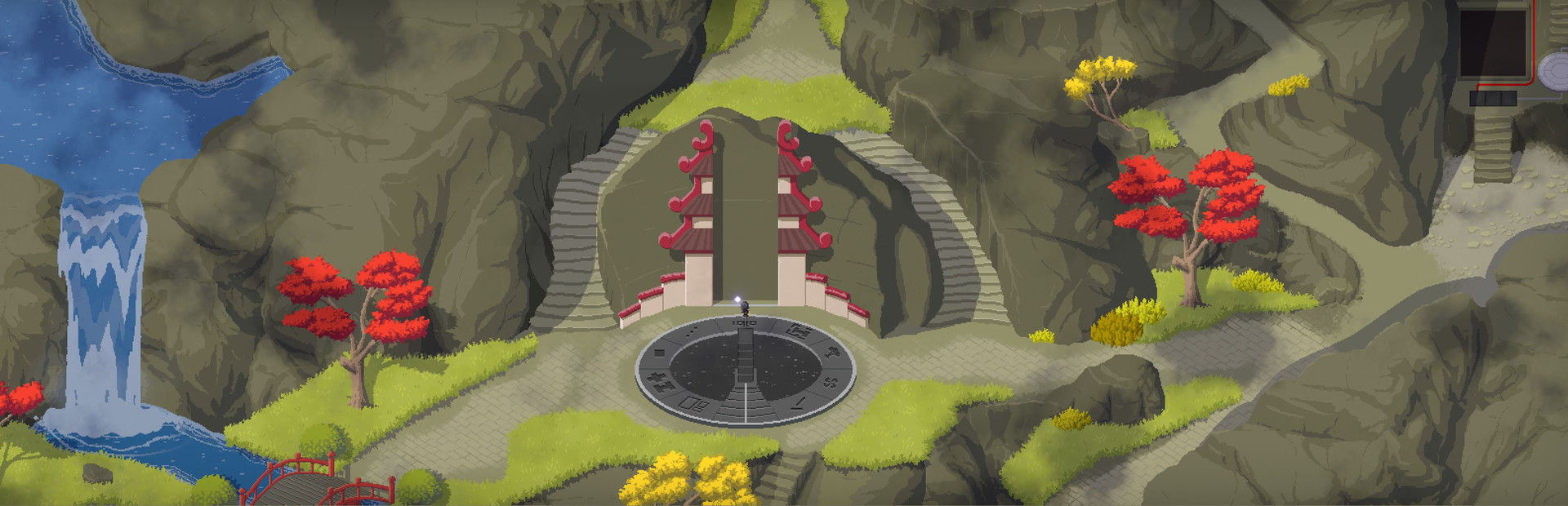
I have a soft spot for games made entirely by one person that somehow feel larger than their budget or their team size should allow, and Taiji is one of those games. Matthew VanDevander spent years building an open-world puzzle game on a floating island viewed from a top-down 2D perspective, with a soundtrack composed by Grzegorz Bednorz, and the result carries the quiet confidence of something that knows exactly what it wants to be. The core mechanic is deceptively contained: every puzzle in the game uses the same interface, a grid of tiles you toggle between two colors. That single constraint is both the game's greatest strength and its clearest design philosophy. Because the interface never changes, your brain is free to focus entirely on meaning rather than mechanics. What changes, constantly and often brilliantly, are the symbols placed on those tiles. Die dots, diamonds, flower petals, pillars, diagonal lines, each one governs a different rule about how regions of tiles must relate to one another, and the game teaches you every single rule without a single pop-up or NPC explanation. You form a hypothesis, you test it on simple panels, you get it wrong in interesting ways, and eventually you feel the click of understanding. That click is the whole game, and it is deeply satisfying. There are also observational puzzles where the answer lives in the environment itself: shapes in the rocks, patterns in the flower beds, the geometry of structures surrounding the panel. At its best, this layer makes the entire island feel like one large organism with a hidden logic. The world is divided into distinct areas, each anchored to a different symbol type, radiating outward from a central hub. The structure is genuinely nonlinear, which is mostly a gift and occasionally a curse. It is easy to wander into an area that demands knowledge you have not yet gathered, and the game offers no gentle nudge to redirect you. Some players will find this liberating. Others will spend twenty minutes staring at a panel that requires a mechanic introduced on the opposite side of the map. World navigation itself drew a minority complaint from community players, with the island terrain occasionally feeling more like a maze than a garden, especially once the main gate puzzles are solved. It is a real friction point, though not a fatal one. What never feels frustrating is the pixel art itself. The island has the hush of a place that exists slightly outside of time, and Bednorz's score matches that register precisely. It is the kind of soundtrack you notice when it fades, which is the best thing you can say about ambient game music. There are multiple endings, a white path and a black path, and the game hides enough secrets in plain sight that completionists will have reasons to scrutinize every corner long after the main puzzles are finished. Steam Deck verified, controller supported, cloud saves intact: the practical side is handled cleanly. If you bounced off The Witness because it felt cold or self-important, Taiji is worth your attention. If you loved The Witness, it is also worth your attention, just from a different angle. What VanDevander built here is warmer, more approachable in tone, and honest about what it is: a handcrafted solo project that respects your intelligence and your time in equal measure.

Indie & narrative
Tags
System Requirements
Minimum
- OS
- Windows 7 SP1 64-Bit
- Memory
- 2 GB RAM
- DirectX
- Version 11
- Storage
- 350 MB available space
- Graphics
- Nvidia GTX 400 / AMD Radeon HD 5000
- Processor
- Intel Core 2 Duo / AMD Athlon 64
Recommended
- OS
- Windows 10 (64-bit only)
- Memory
- 4 GB RAM
- DirectX
- Version 11
- Storage
- 350 MB available space
- Graphics
- GTX 900 series or RX 400 series
- Processor
- Intel Core i5 4430 / AMD Ryzen 3 1200 or newer
Keep exploring
Community Discussion
Be the first to comment on Taiji.
Reviews & Ratings
No ratings available
Game Info
- Developer
- Matthew VanDevander
- Publisher
- Matthew VanDevander
- Release Date
- Sep 9, 2022