Tabletop Playground
A digital tabletop sandbox where you build, mod, and play board games online, ambitious but rough around the edges.
GamerScout Verdict
Best for regular tabletop groups willing to invest time in setup and scripting, not a casual drop-in experience.
Compare Prices(5 stores)
Every store in this table quotes us in euros, so the EUR figure is the price the seller actually set, not our arithmetic — which is why EUR is also the currency we rank in. We only list an offer here when the store gives us its price in euros, so nothing in this table is a number we invented.
Pick USD, PLN, GBP, CAD or AUD in the header and we convert from EUR at the European Central Bank reference rate — converted amounts are prefixed with ~. Your bank or the store may apply a different rate at checkout. We never hide offers based on where you are: everyone sees this whole table.
We may earn a commission when you buy games through links on this page — at no extra cost to you. It never affects our rankings or verdicts.
Price History
Screenshots & Media
About Tabletop Playground
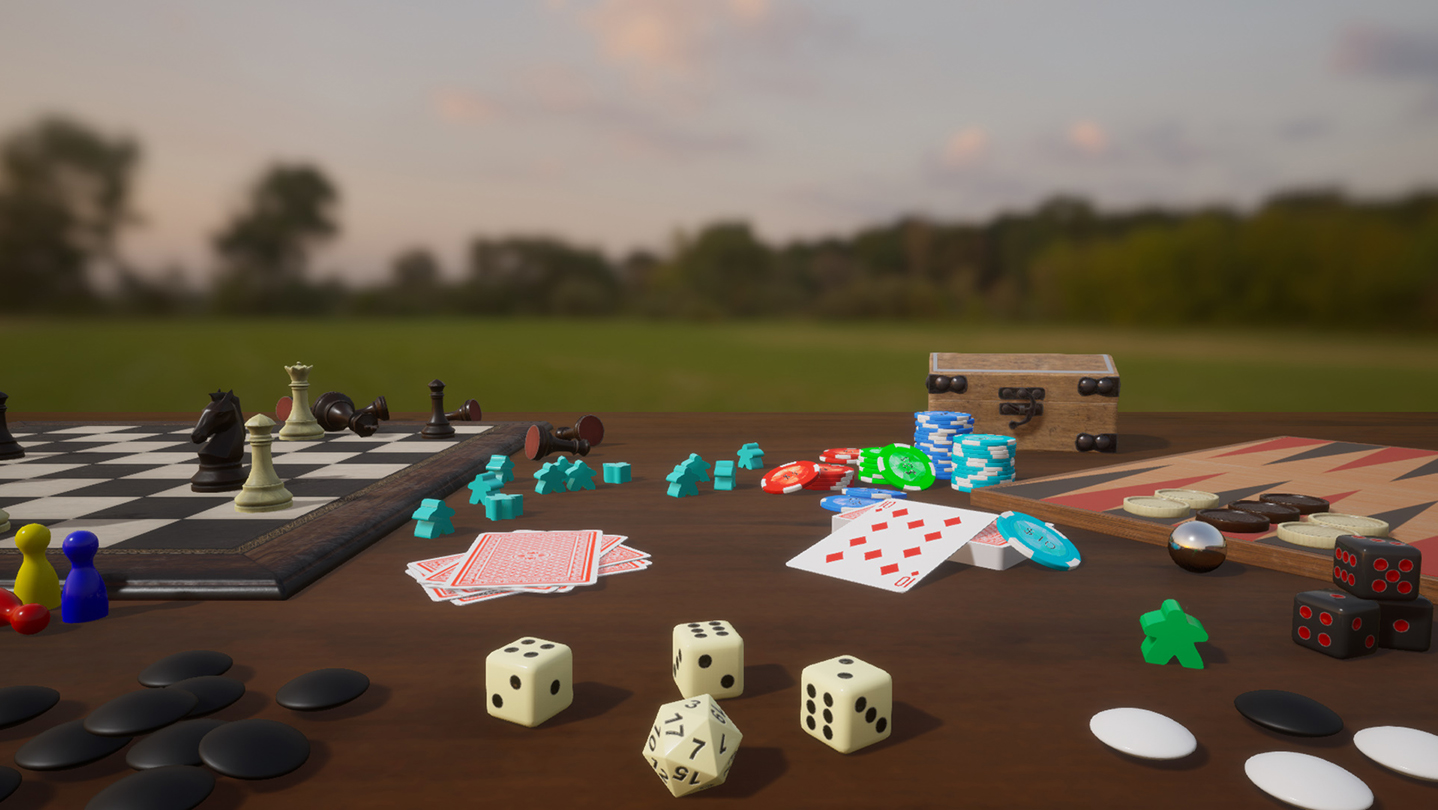
Tabletop Playground is a PC sandbox that simulates a physical tabletop environment, letting you place cards, dice, tokens, and boards on a virtual table and play almost anything you can imagine. Think of it as a blank canvas for board gaming: you bring the rules, the components, and ideally the friends. It sits in the same category as Tabletop Simulator, targeting players who want a flexible, moddable platform rather than a pre-packaged digital board game experience. The core loop is straightforward, load a game from the workshop, set up the table, and start playing with friends in real time. Scripting support means rule enforcement can be baked into custom packages, which is a meaningful feature for complex games. For a strategy-and-sim-minded player, the appeal is obvious: the depth here is not in the engine itself but in what the community builds on top of it. The modding and scripting tools are reasonably capable, supporting JavaScript-based automation that lets creators encode turn order, card draws, and victory conditions. If you have a group that plays heavy euros or wargames and wants a reliable digital table, this is worth evaluating seriously. The package system for importing custom content is cleaner than you might expect from an indie early-access product, and performance holds up well even with large component counts. The problems, though, are hard to ignore given the mixed review score. The user interface feels underdeveloped in several places, and the tutorial does not do enough to orient new players to the full scope of the tools. Object manipulation can be fiddly, picking up and placing small tokens precisely requires more patience than it should. The community size is also notably smaller than competing platforms, which directly affects the workshop library. If the specific game you want to play is not already packaged by someone, you are either building it yourself or waiting. The AI in single-player scenarios is entirely community-dependent; the engine provides no built-in opponent logic. Where Tabletop Playground earns its place is in the long tail: groups who meet regularly, play a fixed set of heavy games, and want the scripting headroom to automate bookkeeping. If your group spends twenty minutes per session just counting resources or resetting the board, a well-scripted package here can claw that time back. The JavaScript API is documented well enough that anyone comfortable with basic programming can get a working prototype running in a weekend. That is a genuine differentiator. The platform is also actively developed, so rough edges from its early-access origins have been steadily addressed, though the 2020 launch date means some roughness has had time to calcify too. Bottom line: this is a tool for dedicated tabletop communities and creators more than a casual drop-in gaming platform. If your use case is "I want to play Catan online tonight with strangers," look elsewhere. If your use case is "I want to build a scriptable version of my favourite out-of-print wargame and run it with my regular group every other Saturday," Tabletop Playground has the bones to support that ambition. Approach it as infrastructure, not as entertainment out of the box, and your expectations will land in the right place.

Strategy & simulation
Tags
System Requirements
Minimum
- Processor
- Dual-Core
- Memory
- 4 GB RAM
- Graphics
- GeForce GTX 760 or higher
- DirectX
- Version 11
- Network
- Broadband Internet connection
- Storage
- 4 GB available space
Recommended
- OS
- Windows 10 or higher
- Processor
- Quad-Core
- Memory
- 8 GB RAM
- Graphics
- GeForce GTX 980 or higher
- DirectX
- Version 11
- Network
- Broadband Internet conn…
Keep exploring
Community Discussion
Be the first to comment on Tabletop Playground.
Reviews & Ratings
Game Info
- Developer
- Plasticity Studios
- Publisher
- Modularity
- Release Date
- May 15, 2020