Sweet Transit
Rail logistics meets city growth in a game that rewards obsessive supply chain planners but will quietly crush anyone who skips the tutorial.
GamerScout Verdict
Best for logistics-focused players who will read the tutorial, embrace the mod ecosystem, and think in train schedules rather than aesthetics.
Compare Prices(9 stores)
Every store in this table quotes us in euros, so the EUR figure is the price the seller actually set, not our arithmetic — which is why EUR is also the currency we rank in. We only list an offer here when the store gives us its price in euros, so nothing in this table is a number we invented.
Pick USD, PLN, GBP, CAD or AUD in the header and we convert from EUR at the European Central Bank reference rate — converted amounts are prefixed with ~. Your bank or the store may apply a different rate at checkout. We never hide offers based on where you are: everyone sees this whole table.
We may earn a commission when you buy games through links on this page — at no extra cost to you. It never affects our rankings or verdicts.
Price History
Screenshots & Media
About Sweet Transit
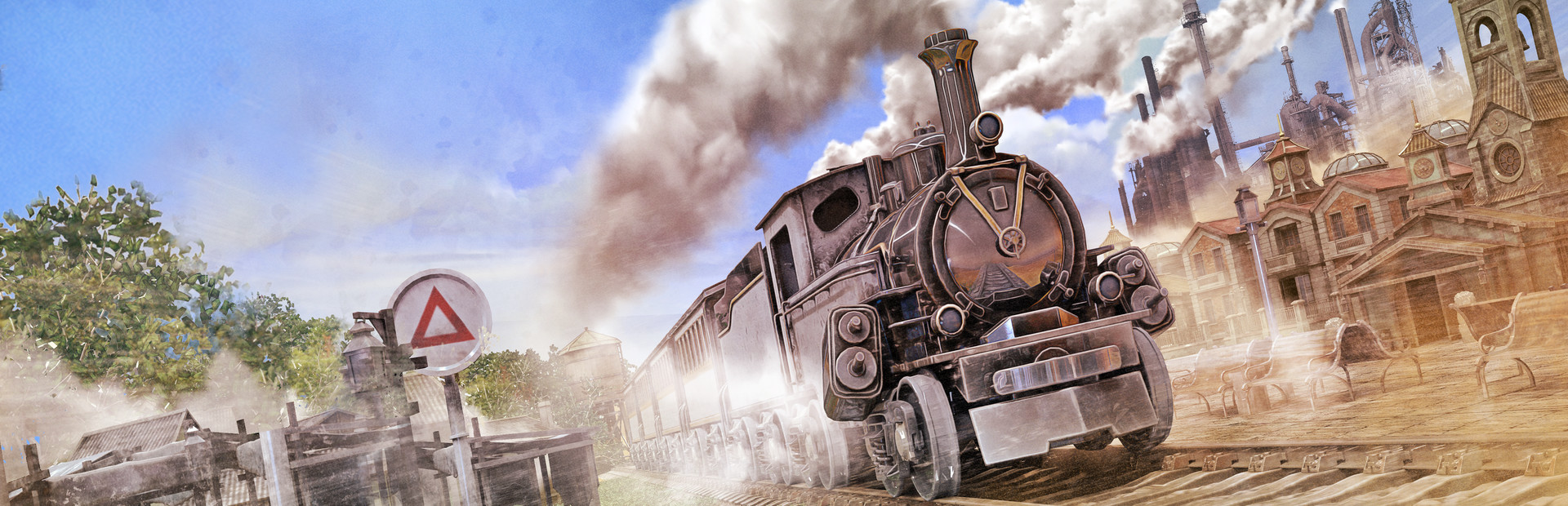
I've spent enough hours in logistics-heavy builders to recognize the specific kind of satisfaction Sweet Transit is chasing: the moment a perfectly timed train loop clicks into place, goods flow without interruption, and your village ticks up to the next population tier. Solo developer Ernestas Norvaišas, who came up as a 3D artist on Factorio, brings that same factory-brain philosophy here, and the DNA is unmistakable. The core hook is that trains are not a transport option, they are the only transport option. Industrial buildings cannot be placed near town centers by design, forcing you to build rail links for everything from lumber to fish to passenger commuters. It sounds artificial on paper, but in practice it creates exactly the kind of satisfying constraint that makes good logistics games tick. The game shipped out of Early Access into its 1.0 release in April 2024, and it arrived with two primary modes. New World is your open-ended sandbox: start from a single warehouse, scout the procedurally generated map for resource deposits, and grow outward through steam-era trains into diesel and beyond. Scenarios function more like puzzles, presenting fixed maps where you optimize routes and earn star rankings for efficiency. The scenarios are worth running before you commit to a long sandbox session because they isolate specific mechanics, things like signal placement, route scheduling, and cargo prioritization, that the main mode will eventually demand at scale. There is also a 14-lesson tutorial that sits outside the main game entirely, and I will say this plainly: do not skip it. The in-game wiki covers industry types, rail flow, and worker categories if you prefer cross-referencing on the fly, but the tutorial earns its runtime. The UI has a reputation for being dense, and that reputation is earned. The systems underneath reward the kind of player who naturally pauses a sim to scout resources before placing anything. You will need to balance worker happiness via markets, water towers, and fishing docks; manage nested AND/OR scheduling conditions on train routes to handle mixed passenger-and-freight stops; and optimize track layouts to minimize fuel consumption. That last point matters more than it first appears. Route efficiency compounds over time, and a sloppy early network will bottleneck your mid-game hard. The post-launch Electrifying Update added a full electricity system with coal plants, wind turbines, and offshore generation, plus new electric trains and wagons that require balancing a power grid alongside your rail grid. That is a meaningful second layer of infrastructure management, and it arrives as a free update, which says something decent about the post-launch support. Where Sweet Transit struggles is in player direction and late-game momentum. Steam reviews sit at a mixed 68 percent across roughly 1,100 votes, and the criticism tends to cluster around two things: an opaque UI that buries important options, and a late game that loses structure because the sandbox gives you tools without clear goals once your initial city is humming. Community players who turned to mods reported the experience transformed substantially, and with full Steam Workshop support baked in from day one, the mod ecosystem is a genuine part of the value proposition here. Comparisons to Anno 1800 crossed with Transport Tycoon show up repeatedly in player reviews, which is a reasonable shorthand. If you bounced off one of those because of complexity, expect a similar ceiling here. If you finished both and wanted more rail focus, this is directly in your wheelhouse. For newcomers to the genre, Sweet Transit is approachable in structure but not in execution. The progression from steam locomotives to diesel and eventually electric trains gives you a clear technological arc, and the New World mode drip-feeds new mechanics as your settlement grows rather than dumping everything on you at once. Budget PC players will also appreciate that the game is not demanding on hardware. The honest recommendation shape here is a confident one for players who think in throughput and enjoy designing infrastructure before expanding population, with a clear caveat that the UI needs patience and the late game benefits significantly from community mods. Think of it as a mid-tier logistics puzzle with genuine depth, not a casual city painter.

Strategy & simulation
Tags
System Requirements
Minimum
- OS
- Windows 10 64 Bit
- Memory
- 6 GB RAM
- DirectX
- Version 11
- Storage
- 3 GB available space
- Graphics
- NVIDIA GeForce 8800 GT, 512 MB or AMD Radeon HD 6670, 1 GB
- Processor
- Intel Core i3-540, 3.07 GHz or AMD FX-4350, 4.2 GHz
Recommended
- OS
- Windows 10 64 Bit
- Memory
- 8 GB RAM
- DirectX
- Version 11
- Storage
- 3 GB available space
- Graphics
- NVIDIA GeForce GTX 660, 2 GB or AMD Radeon HD 7850, 2 GB
- Processor
- Intel Core i5-3470, 3.2 GHz or AMD Ryzen 3 1200, 3.1 GHz
Keep exploring
Community Discussion
Be the first to comment on Sweet Transit.
Reviews & Ratings
No ratings available
Game Info
- Developer
- Ernestas Norvaišas
- Publisher
- Team17
- Release Date
- Apr 22, 2024