Survival: Fountain of Youth
A slow-burn Caribbean survival sim with a genuine historical mystery at its core - rewarding if you respect the time-as-resource systems, punishing if you treat it like a weekend action game.
GamerScout Verdict
Best for patient survival-sim fans who want a real historical mystery attached to their resource spreadsheets - skip if you need fast action loops or co-op.
Compare Prices(10 stores)
Every store in this table quotes us in euros, so the EUR figure is the price the seller actually set, not our arithmetic — which is why EUR is also the currency we rank in. We only list an offer here when the store gives us its price in euros, so nothing in this table is a number we invented.
Pick USD, PLN, GBP, CAD or AUD in the header and we convert from EUR at the European Central Bank reference rate — converted amounts are prefixed with ~. Your bank or the store may apply a different rate at checkout. We never hide offers based on where you are: everyone sees this whole table.
We may earn a commission when you buy games through links on this page — at no extra cost to you. It never affects our rankings or verdicts.
Price History
Screenshots & Media
About Survival: Fountain of Youth
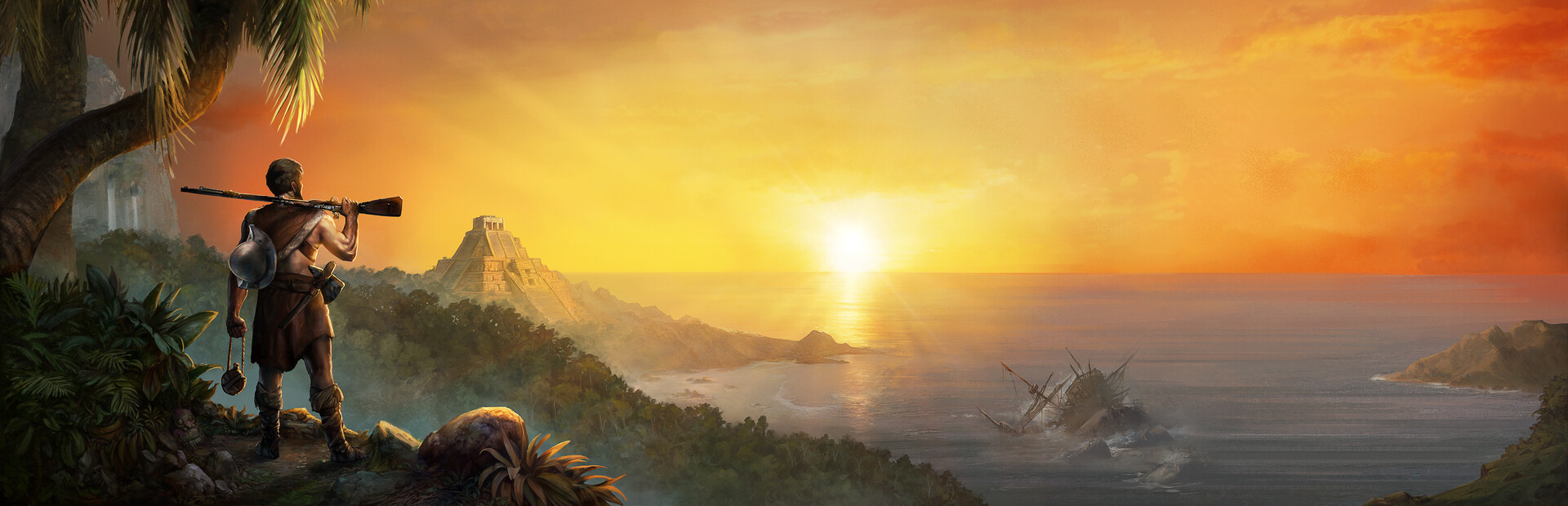
I went in expecting a tropical Green Hell clone and came out fifty hours later having genuinely lost sleep over Ponce de Leon's fate. Survival: Fountain of Youth sits in an interesting middle space: it plays like a measured, simulation-leaning survival game but is driven by a quest structure and lore drip that pulls closer to a story RPG. That combination is both its greatest strength and the thing most likely to frustrate you if you pick it up expecting the usual genre loop of punch-tree, build-fort, dominate. The systems are layered in a way that any sim fan will appreciate once they click. Time is the primary currency - every crafting action, every foraging run, every workbench process costs in-game hours, and you see the cost before you commit. Managing hunger, thirst, energy, disease risk, and injury chance all simultaneously sounds overwhelming, but the radial quick-menu keeps the interface honest: resources and recipes surface where you expect them, and you rarely lose situational awareness to menu-diving. Blueprints unlock organically by studying materials you pick up - grab a Small Branch and several recipes open. The skill tree and perk system reward completing survival tasks with perk points, so progression feels earned rather than arbitrary. There are three melee weapon types (knives for fast throws, axes that double as harvesting tools, spears for the best range and throwable accuracy) and a ranged track, though crafting ranged ammo is deliberately resource-intensive enough to keep melee relevant throughout. Diseases, sunburn buildup, and night-time injury risk from the darkness add a simulation friction layer that Green Hell veterans will recognize and newcomers need to respect. The story is where the game genuinely separates itself. Quests trace Juan Ponce de Leon's expedition through the archipelago's four regions, revealing what happened to your crewmates and unpacking the history of the Bimini tribes through hidden Chronicles. The narrative momentum is strong enough that one reviewer logged over fifty hours primarily to find out the identity of their own character. The flip side: because the experience is so quest-driven, replayability takes a hit once the mystery resolves. Base-building, while functional, is not a deep creative sandbox - decor options are limited to hunting trophies and nautical items, and the crafting stations (smoker, campfire, tanner, kiln, farms) cover the genre basics without introducing anything especially novel. For dedicated base-builders, the multi-story construction on a clifftop overlooking the ocean scratches an itch, but it will not replace purpose-built building games. A hardcore permadeath mode exists for masochists, and difficulty settings affect how many items you can salvage from the ship at the start, which is a smart design touch. A few friction points are worth naming. Controller support is listed but reported as unreliable in practice - keyboard and mouse is the safer choice. The early game resource economy is genuinely steep and has pushed some players off before the systems start singing; if your hunger and thirst stats are outpacing your food supply in the first hour, that is not a bug, it is the intended curve asking you to slow down and plan. Moving between islands also means re-establishing supply chains, and players who skip community guides tend to hit a wall harder than those who spend ten minutes with the excellent player-written guides on the Steam hub. The good news is that performance is solid on mid-tier hardware and the full release, which graduated from Early Access in May 2024 after over a year of community-shaped development, is notably stable. For strategy and sim players who want narrative payoff alongside their resource planning, this delivers more than the genre average. Approach it like a slow puzzle with a ticking clock rather than an action sandbox, and the Caribbean archipelago becomes one of the more memorable settings in recent survival games.

Strategy & simulation
Tags
System Requirements
Minimum
- OS
- Windows 7
- Memory
- 8 GB RAM
- DirectX
- Version 11
- Storage
- 32 GB available space
- Graphics
- NVidia GeForce GTX 970 4 GB Full HD resolution
- Processor
- Intel Core i5-6400 CPU @ 2.70 GHz
Recommended
- OS
- Windows 7/10/11
- Memory
- 16 GB RAM
- DirectX
- Version 11
- Storage
- 32 GB available space
- Graphics
- NVidia GeForce RTX 2060 6 GB Full HD resolution
- Processor
- Intel Core i5-10400F CPU @ 2.90GHz
DLC & Add-ons for Survival: Fountain of Youth3
Expansions, DLC packs and add-on content for this game. Click any item to see store offers.

Keep exploring
Community Discussion
Be the first to comment on Survival: Fountain of Youth.
Reviews & Ratings
No ratings available
Game Info
- Developer
- Odinsoft Inc.
- Publisher
- Twin Sails Interactive
- Release Date
- May 21, 2024