Compare Submarine Titans prices across 50+ stores and find the best deal. Developed by Ellipse Studios. Published by Strategy First. Released on 3/18/2020. Available on PC. Genres: Simulation, Strategy. Metacritic score: 69/100.

A cult-status underwater RTS from 2000 with three genuinely distinct factions and a five-level depth mechanic that no other game has bothered to replicate - niche, rough around the edges, and still worth your time if you dig classic base-builders.

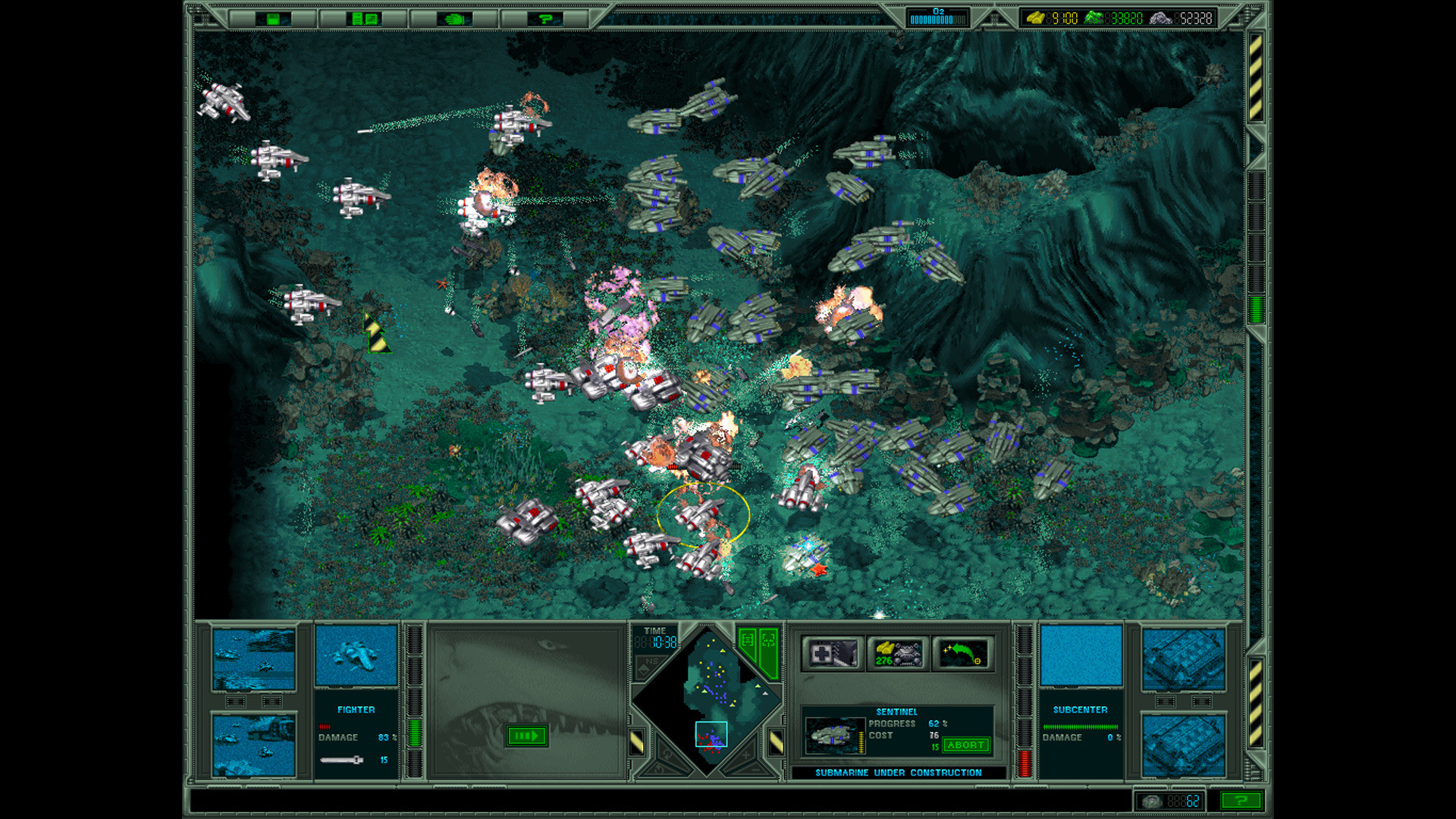
My spreadsheet instincts lit up the moment I saw three asymmetric factions in a year-2000 RTS: that kind of design ambition usually gets watered down fast, but Submarine Titans mostly delivers on the promise. The White Sharks are your blunt-force torpedo merchants, the Black Octopi lean on laser-based weapons and a more scientific research tree, and then there are the Silicons - a silicon-based alien faction that ditches metal entirely, harvests silicon from the ocean floor, uses capsule submarines that transform into structures, and fields self-regenerating units with teleportation tech. Playing them feels like a completely different game, which is exactly what you want from a third faction. Resource management splits across Corium (shared by all three sides), metal and oxygen for the human factions, and silicon for the Silicons, so the build-order logic is genuinely different each time you switch. The headline mechanical hook is the five vertical depth levels. Units can rise or dive to dodge incoming fire, chokepoints open up when your subs disperse across multiple depths instead of traffic-jamming in 2D, and caves or rock outcroppings let you hide raiding parties in ambush. In practice, the depth system is meaningful but imperfect - it is hard to read unit depth at a glance since vessels do not change apparent size as they move up or down, and you end up checking the off-map depth indicator more than you would like. Still, the concept is sound enough that the combat feels distinctly different from anything on land, and the five-depth chokepoint tactic alone creates genuine decision-making moments that flat RTS maps simply cannot produce. The campaign difficulty is not gentle. A Metacritic score of 69 reflects the critical consensus from launch: reviewers praised the setting and the AI (which, remarkably for the era, can handle your economy and even your military if you delegate to it) but dinged the steep learning curve and an interface that buries construction and research behind several menu layers. The AI managing sub-tasks for you sounds helpful, but I would turn it off - it robs you of the decisions that make the game interesting. Mission variety in the single-player campaigns is limited; most objectives boil down to transport-and-destroy, and the FMV cutscenes and voice acting have aged poorly. The soundtrack is the audio high point; the combat loop theme is the audio low point because it repeats every time a fight breaks out. For anyone asking whether this holds up as a purchase today rather than as a nostalgia replay: it does, but with caveats. The Steam release sits at 86% positive from over 300 reviews, and the player sentiment is dominated by people rediscovering a childhood game alongside a smaller group encountering it fresh and finding it genuinely fun. The scenario editor and random mission generator add replayability that the campaign alone cannot sustain. There is no active mod ecosystem worth noting, and the multiplayer population is essentially zero, so treat this as a solo experience. Newcomers should expect to spend an hour or more per session just on the base-building and research phases before late-game fleet engagements kick in - that slower pace is thematic, not broken, but it will filter out players who want fast action from the first five minutes. Diego, Scout Team

Submarine Titans
SimulationStrategy

Submarine Titans

Mar 18, 2020Ellipse StudiosStrategy First
GamerScout Says

A cult-status underwater RTS from 2000 with three genuinely distinct factions and a five-level depth mechanic that no other game has bothered to replicate - niche, rough around the edges, and still worth your time if you dig classic base-builders.

PC
Best Price Available
0.00
at N/A
Historical low: $0.77

Compare Prices(0 stores)

Loading prices...

We may earn a commission when you buy games through links on this page — at no extra cost to you. It never affects our rankings or verdicts.

Screenshots & Media

Screenshot

About Submarine Titans

My spreadsheet instincts lit up the moment I saw three asymmetric factions in a year-2000 RTS: that kind of design ambition usually gets watered down fast, but Submarine Titans mostly delivers on the promise. The White Sharks are your blunt-force torpedo merchants, the Black Octopi lean on laser-based weapons and a more scientific research tree, and then there are the Silicons - a silicon-based alien faction that ditches metal entirely, harvests silicon from the ocean floor, uses capsule submarines that transform into structures, and fields self-regenerating units with teleportation tech. Playing them feels like a completely different game, which is exactly what you want from a third faction. Resource management splits across Corium (shared by all three sides), metal and oxygen for the human factions, and silicon for the Silicons, so the build-order logic is genuinely different each time you switch. The headline mechanical hook is the five vertical depth levels. Units can rise or dive to dodge incoming fire, chokepoints open up when your subs disperse across multiple depths instead of traffic-jamming in 2D, and caves or rock outcroppings let you hide raiding parties in ambush. In practice, the depth system is meaningful but imperfect - it is hard to read unit depth at a glance since vessels do not change apparent size as they move up or down, and you end up checking the off-map depth indicator more than you would like. Still, the concept is sound enough that the combat feels distinctly different from anything on land, and the five-depth chokepoint tactic alone creates genuine decision-making moments that flat RTS maps simply cannot produce. The campaign difficulty is not gentle. A Metacritic score of 69 reflects the critical consensus from launch: reviewers praised the setting and the AI (which, remarkably for the era, can handle your economy and even your military if you delegate to it) but dinged the steep learning curve and an interface that buries construction and research behind several menu layers. The AI managing sub-tasks for you sounds helpful, but I would turn it off - it robs you of the decisions that make the game interesting. Mission variety in the single-player campaigns is limited; most objectives boil down to transport-and-destroy, and the FMV cutscenes and voice acting have aged poorly. The soundtrack is the audio high point; the combat loop theme is the audio low point because it repeats every time a fight breaks out. For anyone asking whether this holds up as a purchase today rather than as a nostalgia replay: it does, but with caveats. The Steam release sits at 86% positive from over 300 reviews, and the player sentiment is dominated by people rediscovering a childhood game alongside a smaller group encountering it fresh and finding it genuinely fun. The scenario editor and random mission generator add replayability that the campaign alone cannot sustain. There is no active mod ecosystem worth noting, and the multiplayer population is essentially zero, so treat this as a solo experience. Newcomers should expect to spend an hour or more per session just on the base-building and research phases before late-game fleet engagements kick in - that slower pace is thematic, not broken, but it will filter out players who want fast action from the first five minutes. Diego, Scout Team

Tags

singleplayertier:sub-5Asymmetric FactionsBase-BuilderFive Depth LevelsTech TreeAI-Delegate SystemScenario EditorClassic RTSPost-Apocalyptic Sci-Fi

Steam Deck & Linux

ProtonDB Bronze

Runs on Linux but with crashes or issues. Based on 10 ProtonDB community reports.

System Requirements

Minimum

OS
Windows 7 / 8.1 / 10
Memory
2024 MB RAM
DirectX
Version 9.0
Storage
557 MB available space
Graphics
DirectX 9 graphics device with WDDM 1.0 or higher driver
Processor
1 gigahertz (GHz) or faster

Community Discussion

Be the first to comment on Submarine Titans.

Reviews & Ratings

Metacritic
69

Game Info

Developer
Ellipse Studios
Publisher
Strategy First
Release Date
Mar 18, 2020

Price Alert

Get notified when the price drops below your target!

Create Alert

Price History

2026-06-100.77(lowest)

Buy smarter: helpful guides

Looking for more? See games like Submarine Titans

Frequently asked questions about Submarine Titans

How much does Submarine Titans cost?

Submarine Titans pricing changes often and varies by store, edition and region. The live price table on this page compares the cheapest in-stock key and store offers across 50+ verified shops, so you always see the current lowest price before you buy.

Where can I buy Submarine Titans cheapest?

Compare Submarine Titans prices across every verified store in the price table on this page. We list the cheapest in-stock key and store offers, updated regularly, so you always see the best current deal before you buy.

What platforms is Submarine Titans available on?

Submarine Titans is available on PC.

When was Submarine Titans released?

Submarine Titans was released on 18 March 2020.

Who developed Submarine Titans?

Submarine Titans was developed by Ellipse Studios and published by Strategy First.

Is Submarine Titans worth buying?

Submarine Titans holds a Metacritic score of 69/100, making it one of the standout Simulation titles. See the full reviews, ratings and how-long-to-beat times on this page to decide.