
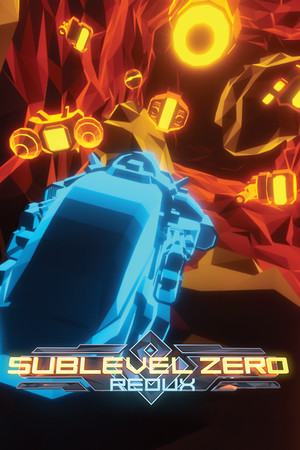
Sublevel Zero Redux
Descent nostalgia with a roguelite spine: a six-degrees-of-freedom cockpit shooter that rewards spatial courage and punishes every lazy trigger pull with permadeath.
GamerScout Verdict
Ideal for lapsed Descent fans and 6DOF-curious players; roguelite depth is thin but the flight feel is genuinely its own thing.
Compare Prices(4 stores)
Every store in this table quotes us in euros, so the EUR figure is the price the seller actually set, not our arithmetic — which is why EUR is also the currency we rank in. We only list an offer here when the store gives us its price in euros, so nothing in this table is a number we invented.
Pick USD, PLN, GBP, CAD or AUD in the header and we convert from EUR at the European Central Bank reference rate — converted amounts are prefixed with ~. Your bank or the store may apply a different rate at checkout. We never hide offers based on where you are: everyone sees this whole table.
We may earn a commission when you buy games through links on this page — at no extra cost to you. It never affects our rankings or verdicts.
Price History
Screenshots & Media
About Sublevel Zero Redux
My first hour with Sublevel Zero Redux was genuinely humbling. Full six-degrees-of-freedom movement means up, down, left, right, pitch, roll, yaw, and the corridors do not care which way your brain thinks is forward. The learning curve is real, and the game offers no apology for it. Stick with it past that wall and something clicks: the tunnels stop being disorienting and start feeling like a language you are slowly learning to read. That moment of fluency is worth the bruised ego it costs to get there. At its structural heart, this is a permadeath roguelite built inside a Descent-shaped shell. Each run drops you into procedurally generated underground facilities, moving through themed sublevels from industrial zones to mining caverns, destroying reactor cores to progress. Your gunship carries two primary weapons and a secondary launcher slot, and the arsenal spans autocannons, energy weapons, flamethrowers, plasma casters, homing swarms, and dumbfire missiles. Enemies drop nanites, hulls, and weapons, and the crafting system lets you combine lower-tier gear into tiered upgrades: merge an Impact Rifle and a Laser, for instance, and you get a Railgun. The deeper tier-three weapons require serious nanite investment and the right drops lining up, which gives runs a quiet momentum as your loadout coheres. Starting gunships open up as you complete side objectives, from the pyro-focused ship built around plasma weapons to the Seeker class tuned for homing weapon builds. The honest friction is repetition. The procedural generation does its job technically, but level themes grow familiar after a few runs and the enemy roster, while varied in colour, reuses a small set of silhouettes. Crafting is satisfying in concept but shallow in execution: most drops are marginal upgrades on what you already carry, and the blueprint unlock system, though well-intentioned, rarely produces the kind of game-changing moment that keeps roguelite loops electric. The reactor cores that cap each sublevel stop short of feeling like bosses, laser density aside. Critics landing around a 71-73 average across outlets had a point: this is a game whose moment-to-moment feel is excellent but whose systemic depth runs out before the ambition does. Where Sublevel Zero Redux earns real affection is in its atmosphere. The neon-saturated, low-poly aesthetic sits somewhere between 80s cyberpunk and Tron, and it ages surprisingly well because it was always a deliberate stylistic choice rather than a hardware limitation. The space-age synth score by Will Bedford runs to around three hours of material, and it carries the right kind of quiet tension, calming enough to keep you focused, active enough to signal danger when enemy density spikes. The combination of sound and visual palette gives the facility a mood that is genuinely its own. On PC the controls map well and the game supports Oculus Rift and HTC Vive with an immersive cockpit view, though a traditional controller is strongly recommended over VR controllers. If you want this genre at all, PC is the cleanest version. Steam user sentiment sits at 85% positive across several hundred reviews, which is a reliable signal that the core audience found what they came for. If you have no dormant love for Descent-style movement, nothing here will manufacture that love for you. If you do, or if you have ever wondered what that itch feels like, Sublevel Zero Redux is a careful, handcrafted answer.

Indie & narrative
Tags
System Requirements
Minimum
- OS
- Win XP / Win 7 / Win 8 / Win 10
- Memory
- 2 GB RAM
- DirectX
- Version 9.0c
- Storage
- 800 MB available space
- Graphics
- Shader Model 3 compliant graphics cards (GeForce GT 520/Radeon HD 3850 and above)
- Processor
- 2.5 GHz Dual Core Processor
- Sound Card
- DirectX 9.0c compatible.
- VR Support
- SteamVR. Keyboard or gamepad required
Keep exploring
Community Discussion
Be the first to comment on Sublevel Zero Redux.
Reviews & Ratings
Game Info
- Developer
- Sigtrap
- Publisher
- Sigtrap
- Release Date
- Oct 8, 2015