Strategic Mind: The Pacific
Turn-based WW2 Pacific theater strategy with dual US/Japan campaigns. Deep enough to reward patience, rough enough around the edges to test it.
GamerScout Verdict
Worth it for Pacific WW2 enthusiasts who can tolerate a workmanlike UI and inconsistent AI in exchange for genuine dual-campaign depth.
Compare Prices(6 stores)
Every store in this table quotes us in euros, so the EUR figure is the price the seller actually set, not our arithmetic — which is why EUR is also the currency we rank in. We only list an offer here when the store gives us its price in euros, so nothing in this table is a number we invented.
Pick USD, PLN, GBP, CAD or AUD in the header and we convert from EUR at the European Central Bank reference rate — converted amounts are prefixed with ~. Your bank or the store may apply a different rate at checkout. We never hide offers based on where you are: everyone sees this whole table.
We may earn a commission when you buy games through links on this page — at no extra cost to you. It never affects our rankings or verdicts.
Price History
Screenshots & Media
About Strategic Mind: The Pacific
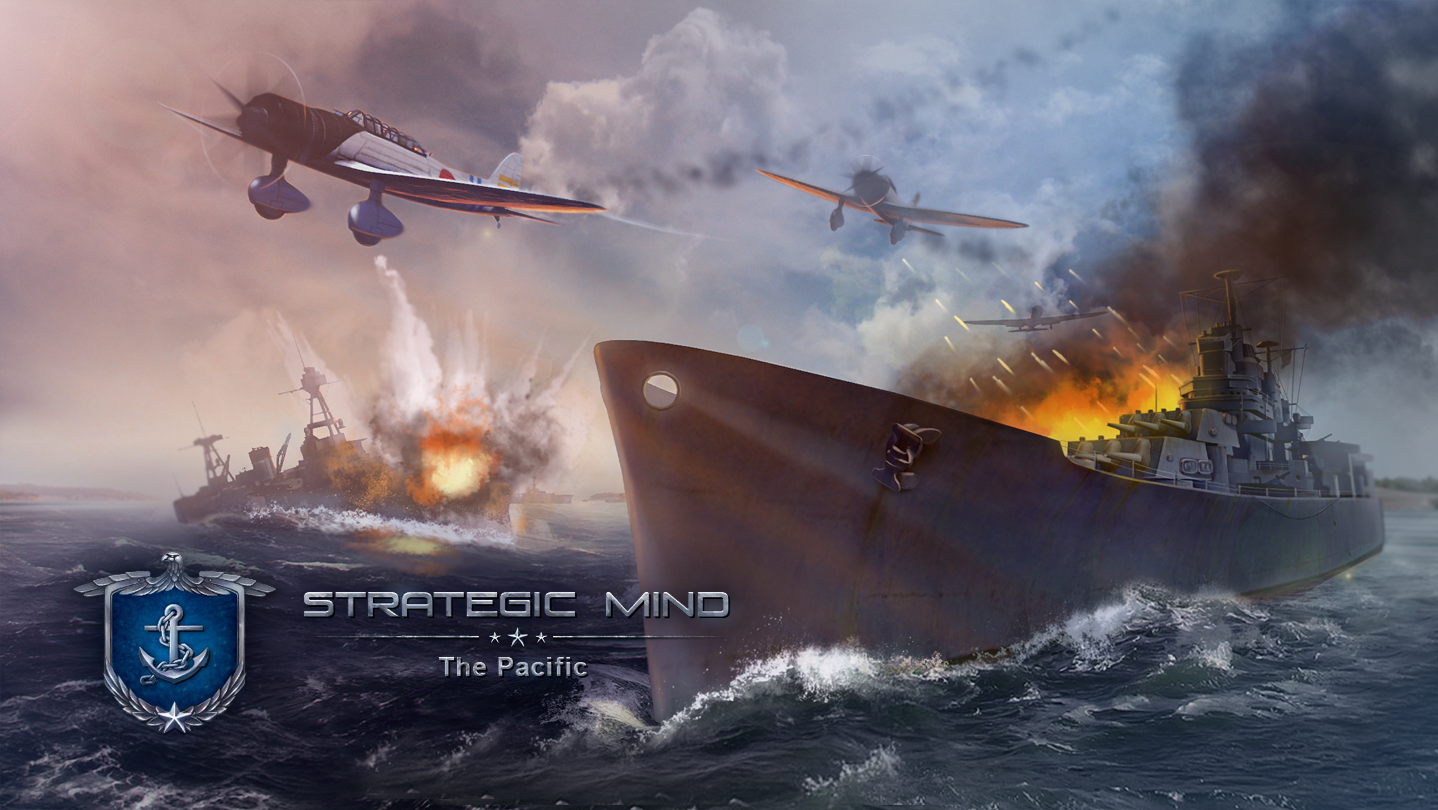
Strategic Mind: The Pacific is a turn-based operational strategy game covering the WW2 conflict between the United States and Imperial Japan across the Pacific Ocean. You command naval fleets, carrier air wings, ground forces, and submarine groups across historically grounded scenarios, switching between two full campaigns - one for each side. That dual-perspective structure is the headline feature, and for history enthusiasts it genuinely delivers: each campaign has its own command roster, its own tech progression, and its own set of historical engagements from Pearl Harbor to the island-hopping campaigns of the later war. From a systems perspective, the game leans into unit management and resource allocation more than pure tactical maneuvering. You spend prestige points earned from mission performance to reinforce, upgrade, and acquire units between missions. That loop is familiar to anyone who has played the old Panzer General lineage, and Starni Games wears that influence openly. Carrier coordination, combined arms timing, and supply line awareness all matter, though the AI does not always give you a fight worthy of the mechanics underneath. On lower difficulties it can be passive to a fault, which lets you test build ideas freely but undercuts tension in the mid-campaign. For newcomers to the sub-genre, there is a real argument that this is an accessible entry point precisely because the scenario structure keeps the strategic scope manageable. You are not running a global economy or managing diplomatic spreadsheets - each mission has defined objectives and a clean end state. The tutorial covers core concepts adequately without being condescending, and the historical briefings do real work in contextualizing why you are doing what you are doing. Someone who bounced off a Paradox grand-strategy title for being too open-ended could find this format genuinely approachable. That said, the UI has friction that a more polished production would have sanded down, and some mission objectives tip from challenging into frustrating when the RNG on unit combat rolls lands badly several turns in a row. The 75 percent positive Steam rating with a Mixed label tells you something useful: most players who put time in found enough to like, but a vocal portion ran into bugs, balance inconsistencies, or pacing problems in specific scenarios. Post-launch patches addressed a number of reported issues, and the game is in a more stable state than its launch window suggested. Mod support exists but the community around it is small, so do not expect the kind of extensive content ecosystem you get from more established strategy franchises. What you get is a focused, earnest historical strategy game that rewards methodical play and punishes overextension, built by a small team with clear affection for the subject matter. If the Pacific theater is your particular interest - and the asymmetry of fighting as Japan against a resource-superior opponent is a genuinely underexplored strategic scenario - this delivers that experience better than most alternatives in the genre. Manage your expectations around AI quality and UI polish, and there is a solid 30 to 50 hour campaign experience here for the right player.

Strategy & simulation
Tags
System Requirements
Minimum
- Processor
- Dual-core Intel or AMD, 2.0 GHz or faster
- Memory
- 4 GB RAM
- Graphics
- Nvidia GTX 750 Ti or better or AMD HD 7870 or better
- DirectX
- Version 11 HDD…
Recommended
- Processor
- Dual-core Intel or AMD, 2.5 GHz or faster
- Memory
- 8 GB RAM
- Graphics
- AMD RX 470 or Nvidia GTX 1050 or better
- DirectX
- Versi…
Keep exploring
Community Discussion
Be the first to comment on Strategic Mind: The Pacific.
Reviews & Ratings
Game Info
- Developer
- Starni Games
- Publisher
- Starni Games
- Release Date
- Oct 25, 2019