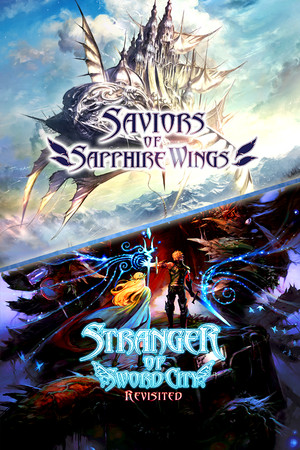
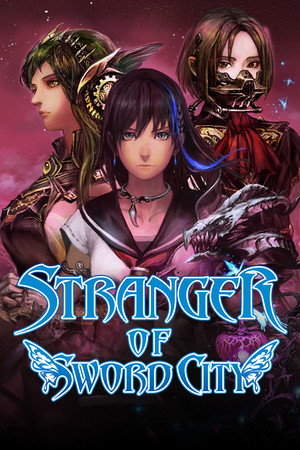
Stranger of Sword City
If you ever thought Wizardry needed anime portraits and a permadeath system that will personally insult you, Stranger of Sword City delivers exactly that, bruises included.
GamerScout Verdict
Best for hardcore dungeon crawler fans who treat permadeath as a design philosophy, not a punishment.
Compare Prices(8 stores)
Every store in this table quotes us in euros, so the EUR figure is the price the seller actually set, not our arithmetic — which is why EUR is also the currency we rank in. We only list an offer here when the store gives us its price in euros, so nothing in this table is a number we invented.
Pick USD, PLN, GBP, CAD or AUD in the header and we convert from EUR at the European Central Bank reference rate — converted amounts are prefixed with ~. Your bank or the store may apply a different rate at checkout. We never hide offers based on where you are: everyone sees this whole table.
We may earn a commission when you buy games through links on this page — at no extra cost to you. It never affects our rankings or verdicts.
Price History
Screenshots & Media
About Stranger of Sword City
I went in expecting a competent JRPG with some dungeon crawling on the side. What I got was a grid-based first-person labyrinth that demands your full attention from the first encounter, and will calmly delete party members you spent an hour building the moment a high-level enemy decides your Knight looks tasty. That is the essential pitch and the essential warning for Stranger of Sword City, a turn-based dungeon crawler from Experience Inc. that lands somewhere between old-school Wizardry worship and modern anime JRPG aesthetics. The world setup is genuinely decent. You survive a plane crash into a dimension called Escario, where other plane-crash survivors have formed a mercenary guild called the Strangers. Three factions compete for your loyalty: the queen, a powerful corporation operating out of the city slums, and the Strangers' Guild itself. The faction system has real texture; you are not forced to alienate rivals early, and the relationships between the faction heads shape how the story develops. It is not Disco Elysium-level political writing, but it does more than most dungeon crawlers bother to do. The main knock on the narrative is that your custom-built party members are functionally mute props. They hold beautiful anime portraits and then stand around saying nothing, which makes the story feel like it is happening to you rather than with you. Where the game earns its keep is in the class and multiclass system. You build a party of up to six, choosing from classes including Fighter, Knight, Samurai, Cleric, Wizard, Ranger, Ninja, and Dancer, then slot them into front and back rows. Characters can reclass up to five times in a single playthrough, carrying learned skills into new class paths. The catch is that each reclass halves your current level, so every build decision is also a sacrifice calculation. A Samurai picking up Dual Wielding at level 1 before reclassing into Fighter, then hunting Cleric's condition-immunity passive later, is the kind of layered planning the game rewards. Age at character creation also affects stat allocation and recovery time after death, so the spreadsheet starts at the character screen and never really ends. The dungeon crawling itself is pure old school: grid movement, mandatory trap disarming, no saving outside of town, and a permadeath-adjacent system where fallen characters require real-time recovery or are gone for good. The smartest mechanical addition is the ambush system, where you spend Divinity points to hide at specific spawn locations and wait for elite enemies. Kill the group's leader before it escapes and you get a quality chest of gear. It is tense, tactical, and one of the few moments where the game feels genuinely inventive rather than reverential. The flip side is that the grinding is relentless. The dungeon textures are bland, the 3D environments do not match the quality of the 2D portraits, and the combat animations are minimal enough that watching battles play out can feel like reading a log rather than watching a fight. The PC port runs cleanly at full screen and supports both controller and keyboard-and-mouse input, though it carries some console-origin quirks like button-number labels on menus that do not respond to keyboard numbers. The PictureGate feature letting you import custom character portraits is a fun addition that the game fails to explain anywhere in-game. If you are coming to this expecting a narrative RPG with characters you care about, you will leave disappointed. If you are the kind of player who finds pleasure in optimizing a six-person team across a punishing series of labyrinths and considers losing a Ninja to a random wyvern a lesson rather than a tragedy, this is exactly calibrated for you.

RPGs
Tags
System Requirements
Minimum
- OS
- Windows 8/7/Vista
- Memory
- 1 GB RAM
- DirectX
- Version 9.0c
- Storage
- 1 GB available space
- Graphics
- VRAM 256MB
- Processor
- Pentium 4 2.40 GHz
- Sound Card
- DirectX 9.0c
Recommended
- OS
- Windows 8/7/Vista
- Memory
- 2 GB RAM
- DirectX
- Version 12
- Graphics
- VRAM 512MB
- Processor
- Core 2 Duo
- Sound Card
- DirectX 12
Keep exploring
Community Discussion
Be the first to comment on Stranger of Sword City.
Reviews & Ratings
No ratings available
Game Info
- Developer
- Experience Inc.
- Publisher
- NIS America, Inc.
- Release Date
- Jun 6, 2016