
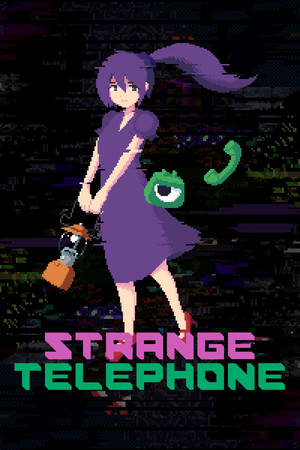
Strange Telephone
Dial a six-digit number, fall into a pocket nightmare, collect something unsettling, repeat. Under two hours to finish, but the eleven endings and a quietly buried hidden story give it more texture than that runtime suggests.
GamerScout Verdict
Best for players who want a strange, handcrafted two-hour mood piece with eleven endings and a mystery the game never explains for you.
Compare Prices(4 stores)
Every store in this table quotes us in euros, so the EUR figure is the price the seller actually set, not our arithmetic — which is why EUR is also the currency we rank in. We only list an offer here when the store gives us its price in euros, so nothing in this table is a number we invented.
Pick USD, PLN, GBP, CAD or AUD in the header and we convert from EUR at the European Central Bank reference rate — converted amounts are prefixed with ~. Your bank or the store may apply a different rate at checkout. We never hide offers based on where you are: everyone sees this whole table.
We may earn a commission when you buy games through links on this page — at no extra cost to you. It never affects our rankings or verdicts.
Price History
Screenshots & Media
About Strange Telephone
I keep coming back to this one not because it demands a lot, but because it asks such a quietly weird question: what if the address book was infinite and most of it was haunted? Solo developer yuta built Strange Telephone around a deceptively simple hook - protagonist Jill and her one-eyed companion Graham, a sentient flying telephone, are trapped in a void called the Core with a locked door in front of them. You dial six-digit numbers to summon small pocket worlds, gather items, and piece together what you need to get that door open. Each world is only a couple of screens wide, and walking off one edge slides you sideways into the next, which is probably something completely different from what you just left. It is disorienting in exactly the right way. The mechanical vocabulary is minimal: walk, examine, pick up items, use them from a small inventory. There are no combat systems, no stat screens, no timers except a creeping instability meter that rises when you linger too long in any single world - a glitch-pressure mechanic that nudges you to keep moving without ever feeling punishing. A Sun Lantern can slow that drift, but eventually Graham hangs up and pulls you home. That rhythm, dial in, explore before the world frays, retreat, try another number, gives the game a kind of tidal momentum that suits its dreamy register. What the game is genuinely proud of - and earns the right to be - is its eleven endings and the hidden architecture threading all of them together. The developer has said openly that every ending, every character, every object design contains fragments of a riddle pointing at a deeper backstory that the game never explains aloud. Endings range from the straightforward Normal route using the Blue Key, to stranger detours: giving a Repair Screw to a one-armed eye entity called Mieru opens the Night Wind path; finding Phonium in the SoulRoom and showing it an Incandescent Light Bulb leads to Graham's Soul; one ending even boots an embedded older version of the game. The community has mapped most of it, and a full guide with tiered spoilers exists on the Steam forums if you want the handrail. But the first run without one, genuinely lost in the phonebook, is the experience the game is designed for. The criticisms are fair and worth hearing before you commit. Total playtime to see everything lands somewhere around two hours. The pixel art is handsome and the soundtrack is the kind of lo-fi ambient score that does real atmospheric work, tagged by players as a genuine highlight, but this is not a game with mechanical depth or puzzle complexity to pad that runtime. If surreal atmosphere alone does not sustain you, the thinness shows. It draws obvious comparisons to Yume Nikki and its descendants, and yes, the DNA is visible in the logic-free creature design and the dream-world hopping. But the phone-number generation system, the glitch meter, and the layered ending structure give it enough of its own identity to stand separately. Steam players have landed at around 83 percent positive across several hundred reviews, which tracks - it is a game that lands hard for its audience and sits politely unnoticed by everyone outside it.

Indie & narrative
Tags
System Requirements
Minimum
- OS
- Windows XP SP2+
- DirectX
- Version 9.0
- Graphics
- DX9 (shader model 3.0) or greater
- Processor
- SSE2 instruction set support or greater
Keep exploring
Community Discussion
Be the first to comment on Strange Telephone.
Reviews & Ratings
No ratings available
Game Info
- Developer
- HZ3 Software
- Publisher
- PLAYISM
- Release Date
- Jan 21, 2019