Stonemachia
A pawn climbing toward Heaven through a plague-shattered Milan: Stonemachia earns every comparison to Souls and Sekiro while sounding like nothing else in the genre.
GamerScout Verdict
Worth it for souls-like fans who want a debut with a genuinely original identity and can accept rough edges alongside the brilliance.
Compare Prices(1 stores)
Every store in this table quotes us in euros, so the EUR figure is the price the seller actually set, not our arithmetic — which is why EUR is also the currency we rank in. We only list an offer here when the store gives us its price in euros, so nothing in this table is a number we invented.
Pick USD, PLN, GBP, CAD or AUD in the header and we convert from EUR at the European Central Bank reference rate — converted amounts are prefixed with ~. Your bank or the store may apply a different rate at checkout. We never hide offers based on where you are: everyone sees this whole table.
We may earn a commission when you buy games through links on this page — at no extra cost to you. It never affects our rankings or verdicts.
Price History
Screenshots & Media
About Stonemachia
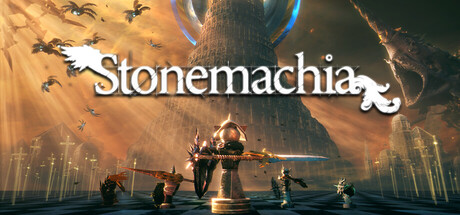
My first few hours with Stonemachia felt like stumbling into someone's fever vision of Dante filtered through a Renaissance art history textbook, and I mean that as high praise. You play as Zefiro, a chess pawn with the rare ability to transform into other pieces, picking your way through Medhelan, a distorted, allegorical version of Milan consumed by the Plague of Angels. The enemies are not generic fantasy creatures: they are vedovelle drinking fountains, baroque sculptures, and architectural fragments from Italian cultural memory, all turned hostile. That specificity of setting, the commitment to a single, strange aesthetic key, is what keeps Stonemachia from feeling like just another indie souls-like pitch. Combat lands somewhere between Dark Souls and Sekiro in pacing, faster and slightly more forgiving than FromSoftware's heavier titles, but built on the same fundamentals of reading attack patterns, timing your parries, and punishing openings. The parry is the central pillar here, not a safety net. A perfect block builds a charge for a meaningful counter, and a perfect dodge briefly borrows the Queen's attack. Health does not regenerate passively: a floating orb refills only when you defeat enemies or land successful parries, which pushes you to stay aggressive even when your health is critical. The transformation system is where the game genuinely separates itself. Swapping between Pawn, Rook, Knight, Bishop, and eventually Queen at chessboard checkpoints (the game's equivalent of bonfires) changes not just your moveset but how your shield behaves in each encounter. The shield is not a passive blocker; its properties shift with every piece you have equipped, which means learning a new transformation is almost like starting a new build mid-run. Later chapters demand juggling multiple forms during a single fight, so getting comfortable early is not optional. The world design is quietly excellent. Stonemachia threads its environments together with shortcuts that gradually reframe confusing areas into ones that feel intimately known, and the architecture does constant thematic work: climbing towers that evoke the Duomo di Milano, crossing canals that feel halfway between Venice and Yharnam. The soundtrack does an enormous amount of heavy lifting for the atmosphere, choral writing that leans into the game's inverted theology, Italian musical influences in the boss themes, a soundscape that makes even minor corridor encounters feel weighted with consequence. The storytelling is intentionally opaque, theatrical narration in cutscenes, silence elsewhere, ideas about ascension and divine corruption half-buried in item descriptions and environmental cues. You will understand the mood before you understand the plot, and that is a deliberate choice the game earns through its visual commitment. There are rough edges that Crossfall Games, a tiny debut studio, has not fully sanded down. Enemy AI is inconsistent: some encounters read as choreographed and crisp, others feel sloppy. The camera struggles against larger bosses and clips at the worst moments. Some areas are closer to hallways than spaces, and experienced players may find themselves sprinting past optional fights because the incentive structure does not always reward engagement. A handful of technical hiccups and at least one hard crash have been reported, though post-launch patches have already started addressing these. The visual language of stone-on-stone combat can also hurt readability in busier encounters. These are real complaints, not minor quibbles, and they matter more if you are expecting a polished genre entry than if you are happy siding with the underdog. For those of us who still get excited about a small studio betting everything on one strange idea, Stonemachia is precisely that bet. The chess transformation mechanic is not a marketing gimmick; it is the actual structural logic of the game. The world of Medhelan has a sense of artisanal construction that big-budget releases rarely produce. It is janky in places. It is also genuinely unlike anything else in the genre right now, and that counts for a great deal.

Indie & narrative
Tags
System Requirements
Minimum
- OS
- Windows 10 64-bit
- Processor
- Ryzen 5 ryzen 5 PRO 3350G
- Memory
- 8 GB RAM
- Graphics
- NVIDIA GeForce® GTX 1650 SUPER™
- DirectX
- Version 12
- Storage
- 15 GB a…
Recommended
Requires a 64-bit processor and operating system
Keep exploring
Community Discussion
Be the first to comment on Stonemachia.
Reviews & Ratings
Game Info
- Developer
- Crossfall Games
- Publisher
- Crossfall Games
- Release Date
- May 26, 2026