
Steve's Warehouse: Physics. Roguelike. Chaos.
Balatro taught you card synergies; Suika taught you to panic when things stack up. Steve's Warehouse charges you both tuition at once, and at this price, that's a fair deal.
GamerScout Verdict
Worth it for fans of Balatro-adjacent run builders who want a 45-minute physics-chaos loop with genuine passive combos.
Compare Prices(7 stores)
Every store in this table quotes us in euros, so the EUR figure is the price the seller actually set, not our arithmetic — which is why EUR is also the currency we rank in. We only list an offer here when the store gives us its price in euros, so nothing in this table is a number we invented.
Pick USD, PLN, GBP, CAD or AUD in the header and we convert from EUR at the European Central Bank reference rate — converted amounts are prefixed with ~. Your bank or the store may apply a different rate at checkout. We never hide offers based on where you are: everyone sees this whole table.
We may earn a commission when you buy games through links on this page — at no extra cost to you. It never affects our rankings or verdicts.
Price History
Screenshots & Media
About Steve's Warehouse: Physics. Roguelike. Chaos.
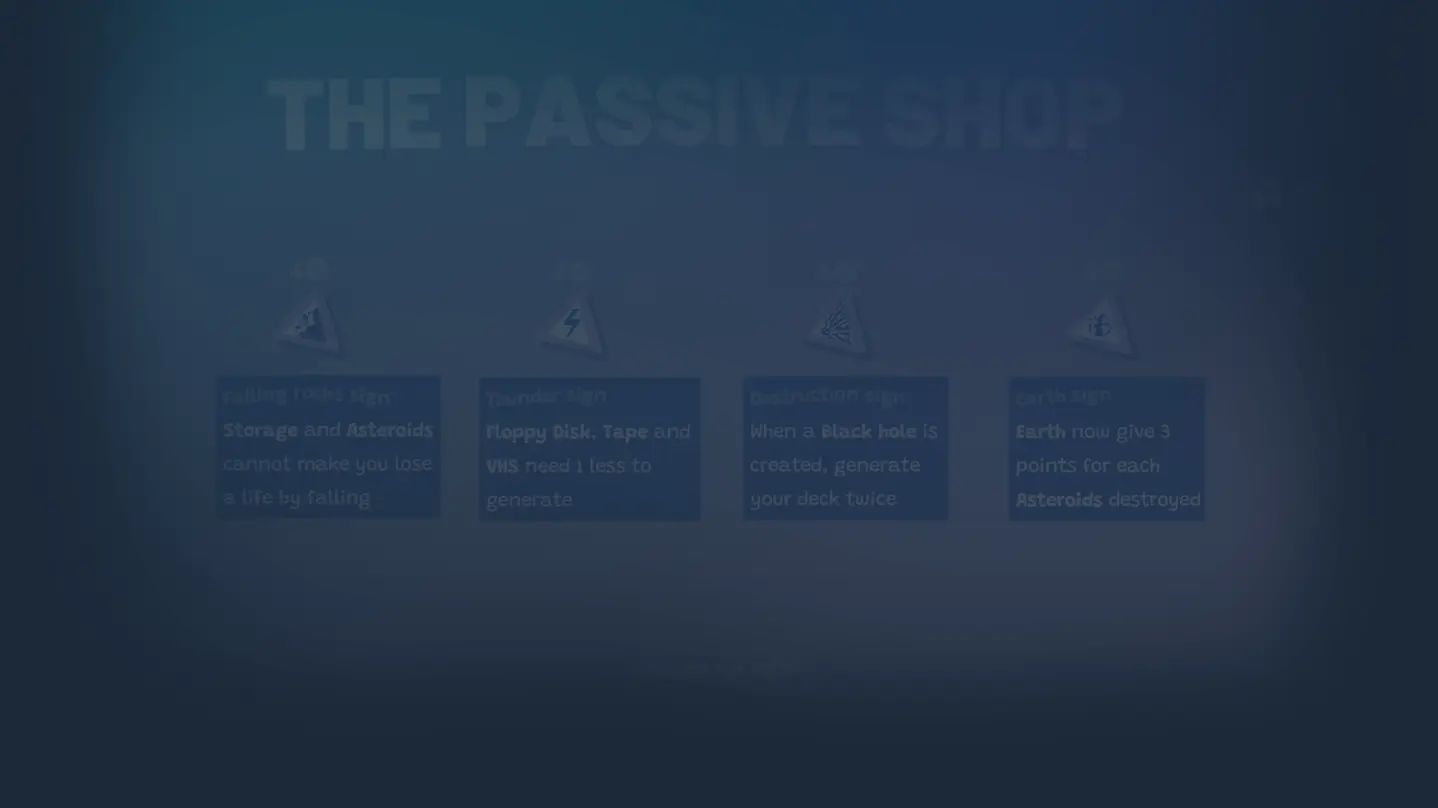
I keep a mental checklist for hybrid-genre roguelikes: does the deckbuilding layer add real decisions, or is it just a shop screen bolted onto something else? Steve's Warehouse clears that bar, though not by a massive margin. What it does well is make the two halves feel genuinely dependent on each other. You draft your object pool from families ranging from Fruits and Animals to Celestials, Transportations, and Sports Balls, then drop them into a physics sandbox where the actual score pressure comes from keeping objects from spilling out. Every run is a small build puzzle before it becomes a dexterity puzzle, and that sequencing is what makes it stickier than a straight Suika clone. The passive system is where the strategy gets interesting. With over 40 passives to find across a run, the combinations range from functional to genuinely absurd: routing all objects into car transformations, stacking rotation effects until the arena looks like a blender, or building point engines around bombs and TNT detonations. The 8 object families each interact with physics differently, which means your passive picks should ideally account for how your chosen family behaves under gravity and collision pressure. That's a real decision tree. The cross-archetype synergy problem that some community members have flagged is legitimate, though: once you move past the fruit-and-animal starting interactions, the incentive to mix families fades, and runs can start to feel like "pick whatever fits your archetype and ignore the rest." The meta width is there on paper; it just isn't fully unlocked by the current design. For newcomers to this hybrid style, the game is approachable. The tutorial introduces the fruit and animal families first, which happen to have the densest interaction web, so you learn the system with its most legible examples before the stranger families enter the picture. The 7 rule-altering challenges and per-arena bosses with unique modifiers give you a reason to return after the main loop clicks, and the achievement structure clearly has some depth for completionists hunting the last few passives. The Steam Deck verification means controller players can take it off the desk without penalty, which suits the game's pacing well. The honest ceiling here is session length, not overall depth. This is a game that fits in an hour, not a weekend. The roguelite loop is short by design, closer to Luck be a Landlord than Slay the Spire in terms of run duration and systemic complexity. If you want a game that will still surprise you at the 50-hour mark, this probably isn't it. If you want something that delivers a clean synergy payoff in under an hour and has enough build variety to stay interesting across ten or fifteen sessions, it earns its place in the rotation. The Very Positive reception on Steam, sitting around 89-90% positive across its user reviews, reflects that accurately: this is a small, well-executed idea, not an overreaching one.

Strategy & simulation
Tags
System Requirements
Minimum
- OS
- Windows 7 with SP1
- Memory
- 2 GB RAM
- Storage
- 80 MB available space
- Graphics
- Nvidia GeForce 9600 GT or AMD Radeon HD 2400
- Processor
- Intel or AMD Dual Core CPU
Recommended
- OS
- Windows 10/11
- Memory
- 8 GB RAM
- Storage
- 80 MB available space
Keep exploring
Community Discussion
Be the first to comment on Steve's Warehouse: Physics. Roguelike. Chaos..
Reviews & Ratings
No ratings available
Game Info
- Developer
- Definitely Named Steve
- Publisher
- Abiding Bridge
- Release Date
- Jul 22, 2025