
Stephen's Sausage Roll
One of the most deceptively brutal puzzle games ever shipped by a single person. If you bounced off The Witness, this will finish the job.
GamerScout Verdict
Essential for hardcore puzzle fans who want pure design over hand-holding; everyone else should approach with serious caution.
Compare Prices(5 stores)
Every store in this table quotes us in euros, so the EUR figure is the price the seller actually set, not our arithmetic — which is why EUR is also the currency we rank in. We only list an offer here when the store gives us its price in euros, so nothing in this table is a number we invented.
Pick USD, PLN, GBP, CAD or AUD in the header and we convert from EUR at the European Central Bank reference rate — converted amounts are prefixed with ~. Your bank or the store may apply a different rate at checkout. We never hide offers based on where you are: everyone sees this whole table.
We may earn a commission when you buy games through links on this page — at no extra cost to you. It never affects our rankings or verdicts.
Price History
Screenshots & Media
About Stephen's Sausage Roll
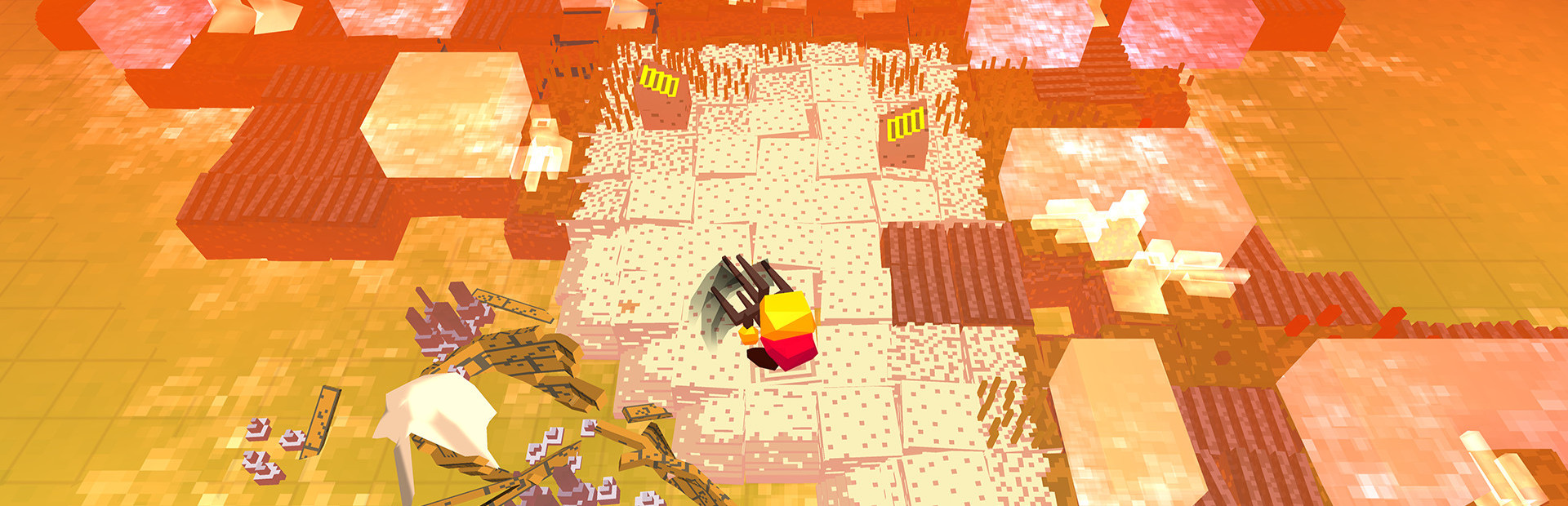
I put this one down twice before I finally let it beat me into submission, and that slow capitulation turned out to be the point. Stephen's Sausage Roll is a Sokoban-descended grid puzzler where every level asks you to cook a set of sausages on grill tiles without burning a single side or losing one to the surrounding water. That description sounds manageable. It absolutely is not. The core interaction is stranger than it first appears. Your character and their oversized fork each occupy their own tile, so the two of you take up two squares at once. You can move forward and backward, and you can rotate in place, but strafing is off the table entirely. This means navigating tight island spaces requires thinking three or four moves ahead just to face the right direction, before you have even begun to reason about where the sausages need to go. Each sausage has four cookable surfaces, and grill tiles cook whatever they touch on contact, so a single accidental re-roll burns a side and ruins the puzzle. The undo button becomes a close friend. The game splits across multiple sections, each requiring all puzzles cleared before progressing, and later areas layer in mechanics like skewering sausages onto the fork, climbing on top of them, and detaching the fork from your character entirely. None of these arrivals are telegraphed with tutorials. You find them the same way you find everything here: by stumbling into a situation that shouldn't work and quietly watching it work. That discovery loop is where Stephen's Sausage Roll earns its Metacritic 90. The best moments feel less like solving a puzzle and more like suddenly understanding a language you didn't know you were learning. Community players note the game feels ahead of its time, having established conventions around single-mechanic depth and overworld-integrated puzzle design that later puzzlers like Baba Is You built entire identities around. A thin narrative runs through stone tablets scattered in the overworld, cryptic and minimal, which suits the tone perfectly. This is not a game that wants to talk to you. It wants to watch you think. The criticism worth taking seriously is that the back half loses some of its elegance. Players who complete the game frequently note that worlds five and six lean harder into logistical sausage-shuffling than into genuine insight moments, and a difficulty spike around the midpoint can feel more like attrition than enlightenment. The low-poly aesthetic is functional rather than beautiful, and the camera angle occasionally obscures which face of a sausage has been cooked, which adds a layer of frustration that feels unintentional rather than designed. Completion runs at roughly 16 hours for determined players, though that number swells considerably if you refuse outside help on the harder islands. For a certain kind of player, the ones who treat puzzle games as a private conversation with a designer, this is a landmark. For anyone else, the lack of scaffolding, the unintuitive controls, and the total absence of difficulty gradation will feel hostile from the first level. That honest divide is something I respect rather than apologize for.

Indie & narrative
Tags
System Requirements
Minimum
- OS
- Windows XP+
- Memory
- 2 GB RAM
- DirectX
- Version 9.0
- Storage
- 500 MB available space
- Graphics
- DX9 / SM2-compatible card ( generally everything made since 2004 should work )
- Processor
- 1.8 GHz
Keep exploring
Community Discussion
Be the first to comment on Stephen's Sausage Roll.
Reviews & Ratings
Game Info
- Developer
- increpare games
- Publisher
- increpare games
- Release Date
- Apr 17, 2016
